

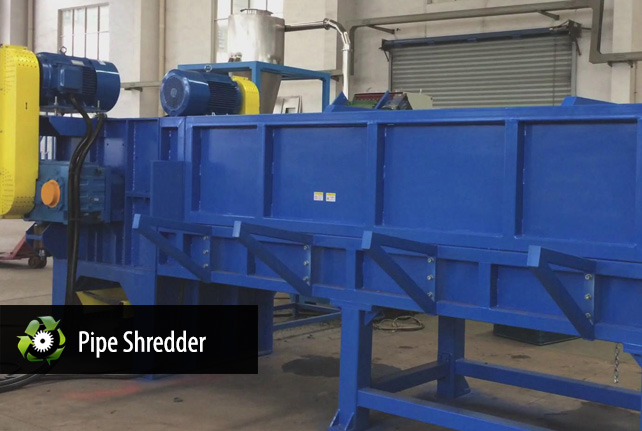
The pipe shredder is also known as a pipe granulator. It can crush a wide range of pipe materials including HDPE pipes, PVC pipes, hoses, water pipes, lump materials, hollow sheets, and more.
Specifications
| Model # | Motor power | Rotating Speed | Capacity | Rotary diameter |
| GS-1500 | 75kw x2 | 30 rpm | 4 | ⌀1500mm |
| GS-1000 | 55kw x2 | 40 rpm | 2.5 | ⌀1000mm |
| GS-800 | 45kw x2 | 46 rpm | 2 | ⌀800mm |
| GS-600 | 37kw x2 | 60 rpm | 1.2 | ⌀600mm |
Additional Images
Place an Order
The general lead time for all single-piece, standard equipment orders is 30 days. For custom orders or complete washing lines, the lead time is between 60 – 90 days. The actual lead time will depend heavily on the complexity of the project as well as the amount of machinery we have in queue at the time of your order.
Contact us to discuss pricing and ordering details. Here is a brief summary of our ordering procedures.
Frequently Asked Questions
What materials can the pipe shredder process?
It handles HDPE pipes, PVC pipes, hoses, water pipes, lump materials, and hollow sheets. The low-speed, high-torque cutting system is built for bulky, rigid items that would jam a high-speed granulator. Long or coiled pipes should be cut or straightened to fit the feed opening, and heavily contaminated pipe can be paired with a washing stage downstream.
How do I choose between the GS-1500, GS-1000, GS-800, and GS-600?
Size by pipe diameter and required throughput. The GS-1500 is the largest (1500 mm rotary diameter, dual 75 kW motors, highest rated output), stepping down to the GS-600 (600 mm diameter, dual 37 kW motors) for smaller volumes. Match the model to your biggest pipe size and peak feed rate, and confirm your electrical supply supports the dual-motor configuration.
Why is it called both a shredder and a granulator?
The names overlap because this machine does coarse size reduction like a shredder but produces a regrind-like output similar to a granulator. The key difference is the cutting action: slow rotation (30–60 rpm) with high torque tears through thick-walled pipe without the heat and dust of high-speed granulation. Either way, the output is sized for reprocessing.
What are the power and installation requirements?
Depending on the model, the machine runs dual motors from 2 x 37 kW up to 2 x 75 kW, so three-phase industrial power with properly rated breakers and cabling is essential. Allow floor space for feeding long pipes, a discharge conveyor or bin for the crushed output, and a solid foundation — crushing thick-walled pipe generates significant cutting forces.
What maintenance does a pipe shredder need?
The low rotational speed keeps wear modest, but thick-walled pipe is abrasive, so inspect the cutting blades regularly for chipping and rotate or replace them as needed. Keep bearings lubricated, check belt or coupling condition, and clear any wrapped material from the rotor. Keeping a spare blade set on site minimizes downtime during changeovers.
What happens to the crushed pipe afterwards?
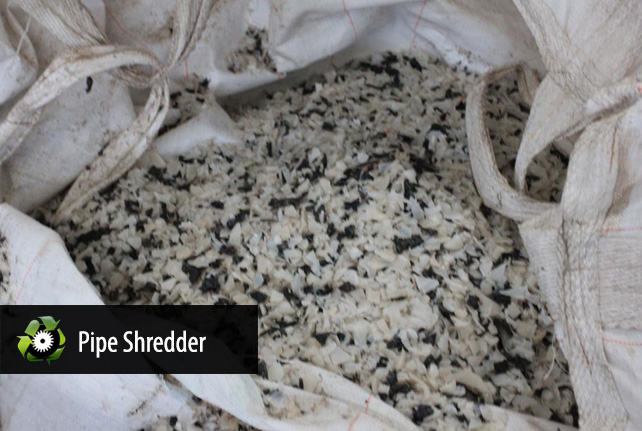
The crushed material is a uniform regrind that can go directly back into extrusion, compounding, or a pelletizing line. If the pipe is dirty — for example agricultural or drainage pipe — route the output through a washing and drying stage first so contaminants do not end up in the final pellets. ASG can configure the shredder to feed a complete rigid plastic recycling line.