

In plastic recycling systems, shredders are often described as machines that “make material smaller.” That description is technically correct but strategically incomplete. A plastic shredder’s real role is volume control and process protection, especially in modern, high-capacity recycling lines where stability matters more than raw throughput.
For North American recyclers dealing with bulky drums, crates, purgings, and mixed bales, understanding what a shredder actually does to the process — not just to the material — is the difference between a line that runs smoothly and one that constantly fights jams, overloads, and premature wear.
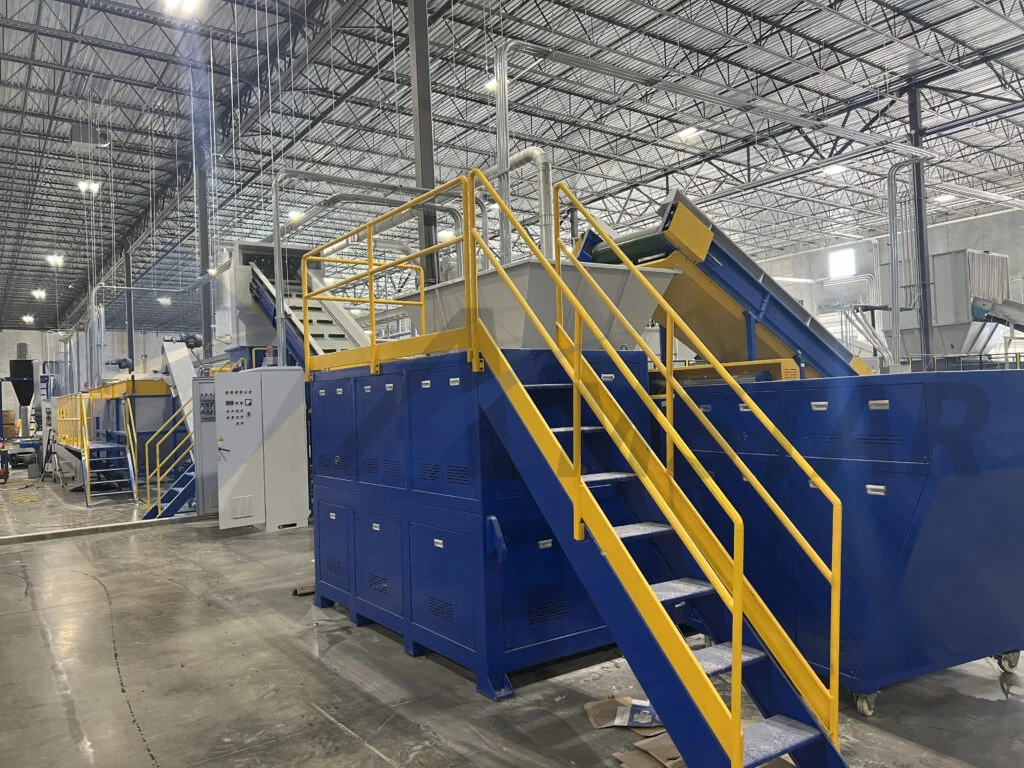
Shredding as the First Step of System Stabilization
Unlike granulators, plastic shredders typically process bulky waste, irregular shapes, and mixed or contaminated plastics. The goal at this stage is not precision, but control.
By breaking large plastics into manageable pieces, the shredder reduces material volume, creates uniform feeding conditions, and protects downstream machines from shock loads. In this sense, shredding is a defensive process — it prepares the line for stable operation before any precision work begins.
Why Shredders Focus on Torque, Not Speed
Plastic shredders work at low speed and high torque for a reason. This design allows them to power through thick-walled parts, hollow containers, pipes, crates, injection rejects, and even materials with embedded metal or dirt without stalling or shattering.
Low-speed shredding also minimizes heat generation and reduces the risk of melting, which makes it ideal for pre-processing before washing or granulation. Heat-sensitive materials such as PET and thin-wall HDPE benefit in particular, since premature softening would smear contaminants into the plastic instead of liberating them.
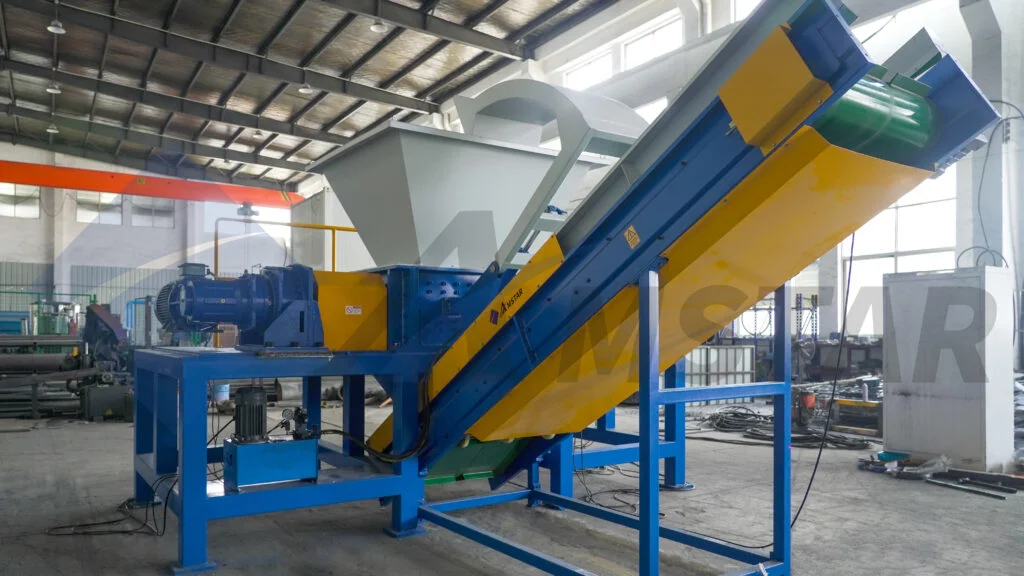
Output Quality: Shape Matters More Than Final Size
Unlike granulators, shredder output is intentionally coarse. What matters is whether the material can be conveyed smoothly, fed evenly into the next machine, and moved without bridging or blocking.
A well-configured plastic shredder produces pieces that are consistent enough to move, not fine enough to finish. This is why shredders are commonly followed by crushers or granulators in complete recycling lines: each machine does the job it is best at, instead of one machine struggling to do everything.
Single Shaft vs Double Shaft: Choosing the Right Shredder Type
Different shredder types serve different system roles, and the choice depends less on rated capacity than on material unpredictability.
| Shredder Type | Typical Use | Key Advantage |
| Single Shaft Shredder | Controlled output, cleaner material | Uniform discharge size |
| Double Shaft Shredder | Heavy-duty, mixed waste | Strong tearing capability |
| Four Shaft Shredder | E-waste, precision pre-shredding | Tight size control |
For recyclers processing post-consumer film bales or agricultural film, shredding is often paired with densifying — see how a film shredding and densifying line turns bulky film into dense, conveyable material ready for washing or pelletizing.
How Shredders Protect Downstream Equipment
One overlooked function of a plastic shredder is risk reduction. By pre-shredding material, the system reduces impact load on granulators, lowers blade wear, prevents sudden torque spikes, and improves extrusion feeding stability.
In many plants, adding a shredder upstream extends granulator blade life by a significant margin. The same logic applies further downstream: uniform, pre-sized feed improves washing efficiency and keeps a centrifugal dryer balanced, since evenly sized particles dewater far more predictably than a mix of bulky chunks and fines.
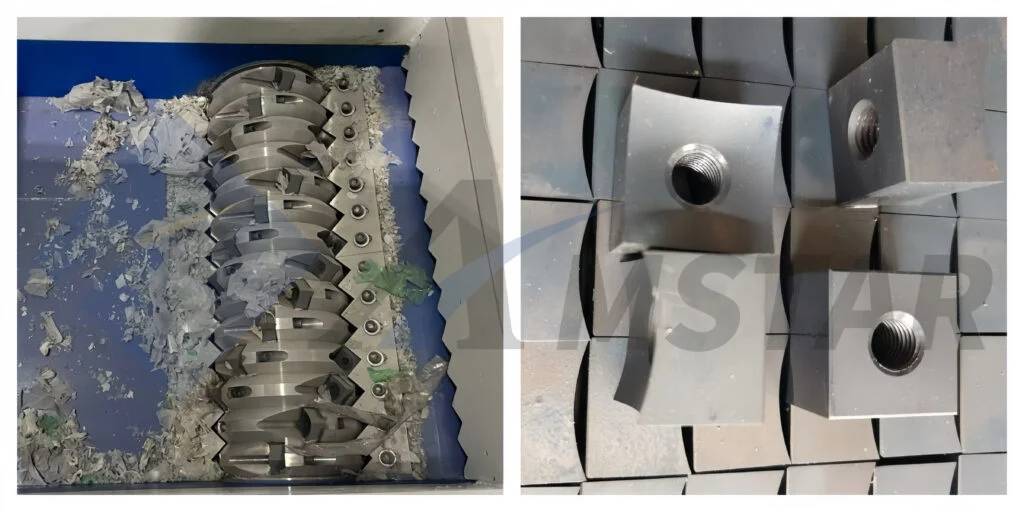
Shredders as Throughput Regulators
In automated recycling lines, shredders often act as throughput regulators. With controlled feeding systems they match line speed, absorb material variation, and prevent downstream overload.
Rather than pushing maximum output, an industrial plastic shredder helps maintain continuous, predictable flow. For operations running rigid plastics such as crates, drums, and purgings through a rigid plastic recycling line, that steadiness is what keeps the washing and drying stages operating at their design efficiency.
Maintenance Tips for Industrial Plastic Shredders
Shredders are forgiving machines, but a few maintenance habits separate reliable units from chronic headaches. Inspect cutters regularly and rotate or replace them before they go fully dull — dull cutters tear instead of cutting, raising power draw and producing oversized, stringy pieces that bridge downstream. Keep an eye on cutter clearances, gearbox oil condition, and, on ram-fed models, hydraulic pressure and seal condition. Screens or discharge grids should be checked for wear and blinding, especially with dirty feedstock. Most importantly, train operators to stop the machine for tramp metal rather than forcing it through: a shredder will survive the occasional surprise, but repeated abuse shortens gearbox and cutter life dramatically.
Plastic shredders are not designed to finish the job — they are designed to make everything after them easier. By controlling volume, absorbing shock, and stabilizing material flow, a shredder quietly determines whether a recycling line runs smoothly or struggles under stress. In modern plastic recycling, shredding is no longer optional — it is process insurance.
Frequently Asked Questions
What is the difference between a plastic shredder and a granulator?
A shredder is a low-speed, high-torque machine that tears bulky or irregular plastics into coarse, manageable pieces, while a granulator is a high-speed cutting machine that produces finer, more uniform regrind. In most recycling lines the shredder comes first: it controls volume and protects the granulator from shock loads, and the granulator finishes the size reduction.
When does a recycling line actually need a shredder?
A shredder earns its place when the feedstock is bulky, irregular, or unpredictable: drums, crates, pipes, purgings, injection rejects, or mixed bales. If your line suffers from bridging in hoppers, uneven feeding, or frequent granulator overloads, an upstream shredder usually stabilizes the whole process.
Should I choose a single shaft or a double shaft shredder?
Choose a single shaft shredder when you want more controlled, uniform discharge from relatively clean material. Choose a double shaft shredder for heavy-duty, mixed, or contaminated waste where aggressive tearing matters more than output consistency. Four shaft designs suit precision pre-shredding tasks such as e-waste.
What materials can an industrial plastic shredder handle?
Industrial shredders handle thick-walled parts, hollow containers, pipes, crates, drums, film bales, and injection molding rejects, including PP, HDPE, LDPE, PET, PS, and ABS. Low-speed, high-torque designs also tolerate a degree of contamination such as dirt or small metal inclusions without catastrophic damage.
What output size does a plastic shredder produce?
Shredder output is intentionally coarse, typically in the range of 30 to 100 mm depending on the screen or grid configuration. The goal is not a finished particle size but pieces that convey smoothly, feed evenly into the next machine, and do not bridge or block downstream equipment.
Does pre-shredding really extend granulator blade life?
Yes. By breaking bulky items into smaller, more uniform pieces, the shredder removes the impact peaks that chip or dull granulator knives. Plants that add an upstream shredder commonly report noticeably longer intervals between blade changes and more stable granulator power draw.
How do I size a shredder for my line capacity?
Size the shredder to the peak incoming material flow, not the average, and leave headroom for surges. The key variables are bulk density of the feedstock, the coarsest items you must process, and the downstream granulator throughput. A supplier should validate sizing against your actual material samples, not catalog numbers alone.
What maintenance does a plastic shredder require?
Routine maintenance focuses on blade or cutter inspection and rotation, checking clearances, gearbox oil, hydraulic system condition on ram-fed models, and screen or grid wear. Because shredders run at low speed, wear is gradual, but running with dull cutters raises power consumption and produces oversized, stringy output.
Can a shredder process contaminated or mixed plastics?
That is exactly what shredders are built for. Unlike granulators, which prefer consistent feed, shredders tolerate mixed bales, dirty agricultural film, and bulky items with embedded contaminants. For heavily soiled material, the shredder is normally followed by a washing stage such as a rigid plastic washing line or a film washing line.
Inquiries
To learn more about this product, please send us a message using the form below: