

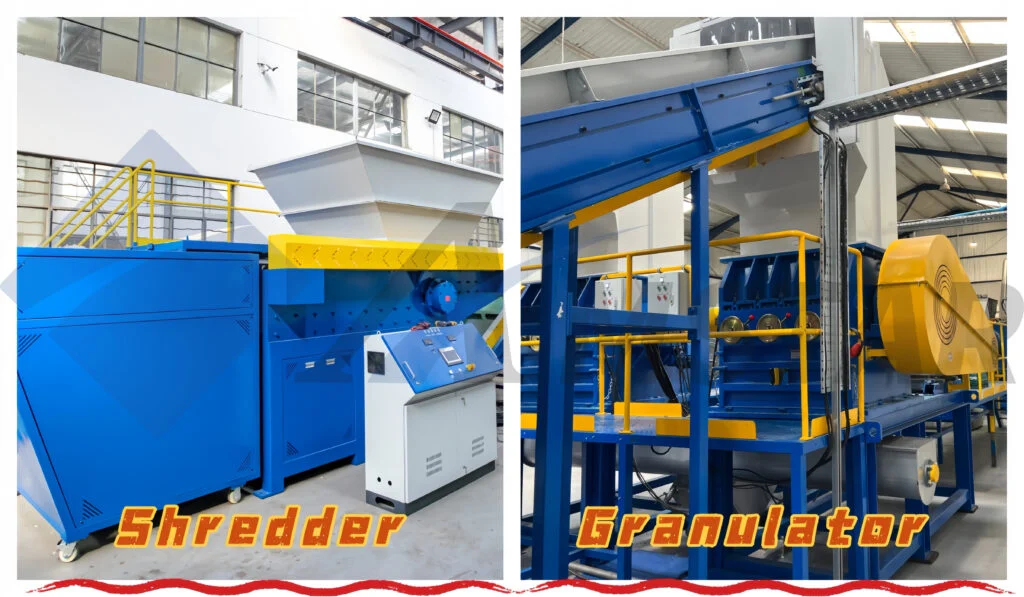
In plastic recycling systems, a plastics shredder and a plastics granulator are both size-reduction machines — but they serve very different purposes. Mixing them up is one of the most common and expensive mistakes buyers make when planning a recycling line: an oversized granulator fed with whole drums will jam and break blades, while a shredder alone cannot produce flakes clean or uniform enough for washing or pelletizing.
This guide explains what each machine does, how they differ in working principle, output size, and position in the line, and how to decide whether you need one, the other — or both working together.
What Is a Plastics Shredder?
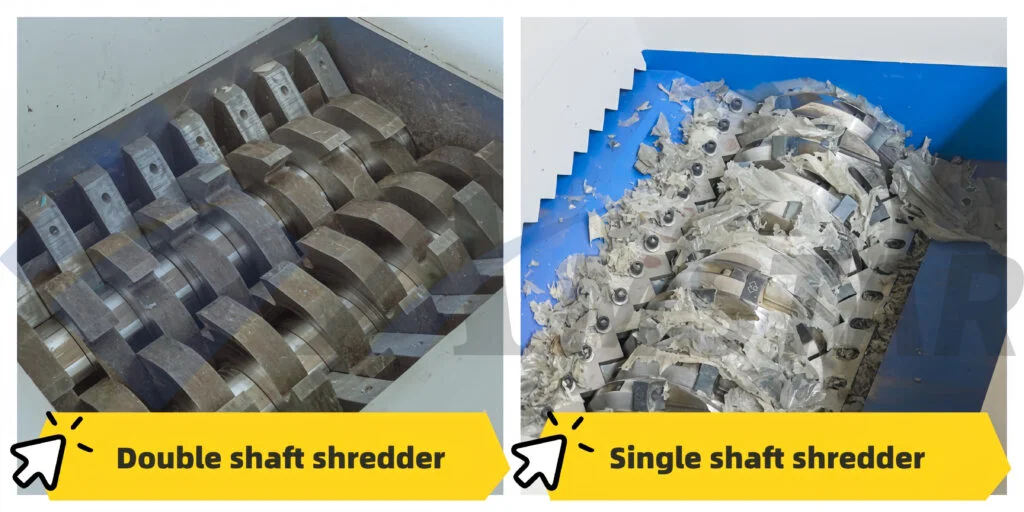
A plastics shredder is designed for primary size reduction. It breaks down large, thick, or bulky plastic waste into rough, irregular pieces, typically in the 30–100 mm range. Shredders run at low speed and high torque, which lets them tear through tough materials without the shock loads that would destroy a high-speed machine.
Typical applications
- Plastic drums, barrels, and containers
- HDPE and PVC pipes and profiles
- Pallets, crates, and IBC containers
- Baled film, woven bags, and jumbo bags
- Injection molding purgings and lumps
Key characteristics
- Low speed (typically 60–120 rpm), high torque drive
- Strong tolerance to mixed, dirty, or contaminated feedstock
- Hydraulic pusher on single-shaft models keeps feeding continuous
- Ideal as the first stage in a complete recycling line, protecting downstream equipment from oversized pieces
What Is a Plastics Granulator?
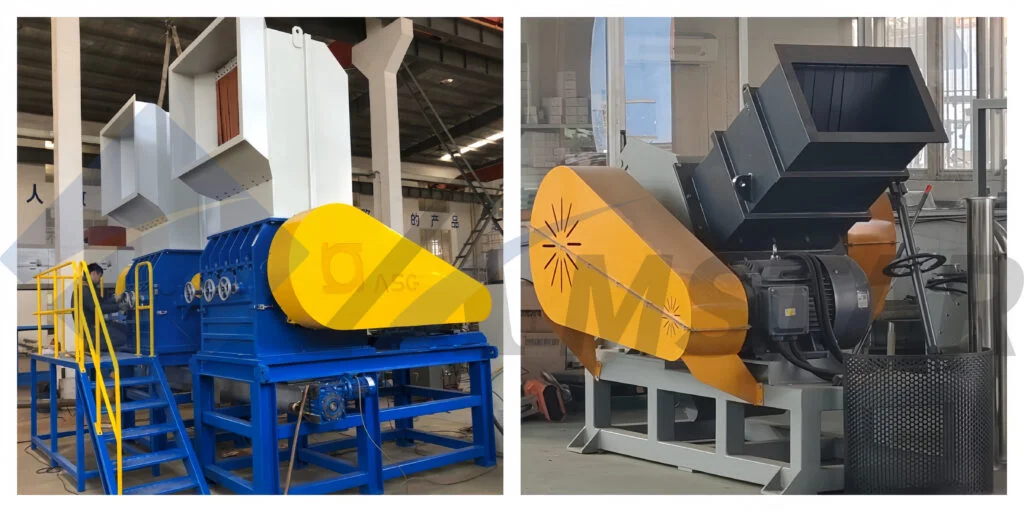
A plastics granulator performs secondary size reduction. High-speed rotating knives cut material against fixed bed knives, and a screen under the cutting chamber controls the output size — usually 3–12 mm. The result is small, uniform flakes ready for washing, drying, or extrusion.
Typical applications
- PET bottles and preforms
- Injection molding scrap and runners
- Thin-walled rigid plastics (tubs, lids, trays)
- Shredded material coming from a primary shredder
Key characteristics
- High-speed rotor (400–600 rpm) with replaceable knives
- Interchangeable screens define flake size precisely
- Produces consistent flakes that wash evenly and feed extruders smoothly
- Requires reasonably pre-sized feed — whole drums or long pipes will damage knives and screens
Side-by-Side Comparison
The table below summarizes the practical differences that matter when specifying equipment:
| Item | Plastics Shredder | Plastics Granulator |
| Main function | Coarse primary size reduction | Fine secondary size reduction |
| Working speed | Low speed, high torque (60–120 rpm) | High-speed cutting (400–600 rpm) |
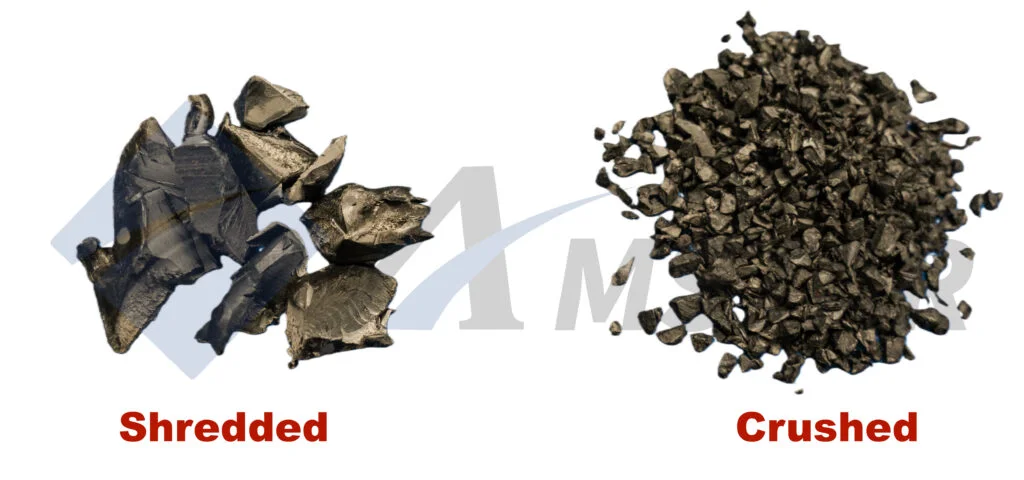
| Output size | 30–100 mm, irregular pieces | 3–12 mm, uniform flakes |
| Screen used | Usually none (some models optional) | Yes — defines output size |
| Typical position | First stage of the line | Second stage, before washing or extrusion |
| Feed tolerance | High — handles mixed, dirty, bulky waste | Low — needs pre-sized, consistent feed |
| Noise level | Relatively low | Higher — hearing protection recommended |
| Blade maintenance | Less frequent sharpening | Regular knife sharpening and gap adjustment |
How Shredders and Granulators Work Together
In a well-designed recycling line, the shredder and granulator are not alternatives — they are consecutive stages. The shredder takes in whole drums, pipes, or bales and reduces them to handleable pieces; the granulator then refines those pieces into uniform flakes. This two-step approach keeps each machine operating in its comfort zone: the granulator never sees an oversized lump that could shatter a screen, and the shredder never has to produce fines it was not built for.
You will see this arrangement in most complete systems — for example, a PET bottle recycling line typically debales and pre-shreds whole bottles before granulation, a rigid plastics line for HDPE, PP, and PS shreds drums and crates ahead of the granulator, and a PP/PE film washing line uses shredding to open up bales before fine cutting. Skipping the first stage to save money usually costs more later in blade replacements and downtime.
Selection Notes
When specifying either machine, start from the material, not the capacity plate. Confirm the material shape, wall thickness, contamination level, and target output size, and decide whether the machine will feed a granulator, a washing line, or an extruder. Rotor design, screen size, motor power, hydraulic pusher settings, and blade material should all be matched to the application — a shredder sized only by tons per hour, without considering what it actually has to chew through, is a common source of disappointment.
- Choose a shredder if you handle large, thick, or irregular plastic waste and need a forgiving first stage.
- Choose a granulator if your feed is already manageable and you need uniform flakes for washing or extrusion.
- Choose both if you want a stable, high-efficiency line where each machine does what it does best.
A shredder is not a replacement for a granulator — and a granulator is not designed to replace a shredder. The best results come from using each machine where it works best, very often as a shredder + granulator combination at the front of the line.
Frequently Asked Questions
Can a plastics shredder replace a granulator?
No. A shredder produces coarse, irregular pieces (typically 30–100 mm) that are too large and uneven for washing tanks or extruders. A granulator refines those pieces into uniform 3–12 mm flakes. They perform different stages of size reduction.
Can a granulator handle whole plastic drums or pipes?
It should not. Granulators run at high speed with tight knife gaps and screens; feeding whole drums, long pipes, or metal-contaminated lumps risks breaking knives, cracking screens, and stalling the motor. Pre-shred bulky items first.
What output size does a plastics granulator produce?
Most granulators produce flakes in the 3–12 mm range, set by interchangeable screens. Smaller screens give finer flakes for applications like PET bottle flake, while larger screens suit rigid regrind headed for extrusion.
Which machine comes first in a recycling line?
The shredder always comes first. It reduces whole items to a size the granulator can accept safely, then the granulator produces the final uniform flake for washing, drying, or pelletizing.
Do I need both a shredder and a granulator?
It depends on your feedstock. If you receive only small, uniform scrap (e.g., injection molding runners), a granulator alone may be enough. If you handle drums, pipes, pallets, or bales, you need a shredder ahead of the granulator for a stable, low-maintenance operation.
Can one machine process both film and rigid plastics?
Shredders can often handle both with the right rotor and feeding configuration, but granulators usually need different knife and screen setups for film versus rigid material. Many plants dedicate one line per material family for consistent quality.
How does maintenance differ between the two?
Shredder blades need sharpening or replacement less often thanks to low-speed operation, but the drive and hydraulics need regular checks. Granulator knives need more frequent sharpening and precise gap adjustment, plus screen inspection for wear or cracking.
Is a shredder quieter than a granulator?
Generally yes. Low-speed, high-torque shredding is quieter than high-speed knife cutting. Still, both machines should be installed with proper guarding, and operators near a granulator should wear hearing protection.
Can shredded material go directly to an extruder?
Usually not. Extruders need consistent, small feed for stable melting and output. Shredded pieces are too coarse and irregular; running them through a granulator first gives the uniform flakes an extruder or pelletizing line requires.
What capacity should I choose for each machine?
Size both machines to the bottleneck of your line — usually the washing or extrusion stage — with some margin. The shredder should comfortably outpace the granulator so the granulator never starves, and both should match the material bulk density you actually process, not just a nameplate tons-per-hour figure.
Inquiries
To learn more about shredders, granulators, or a complete size-reduction setup for your material, send us a message using the form below: