

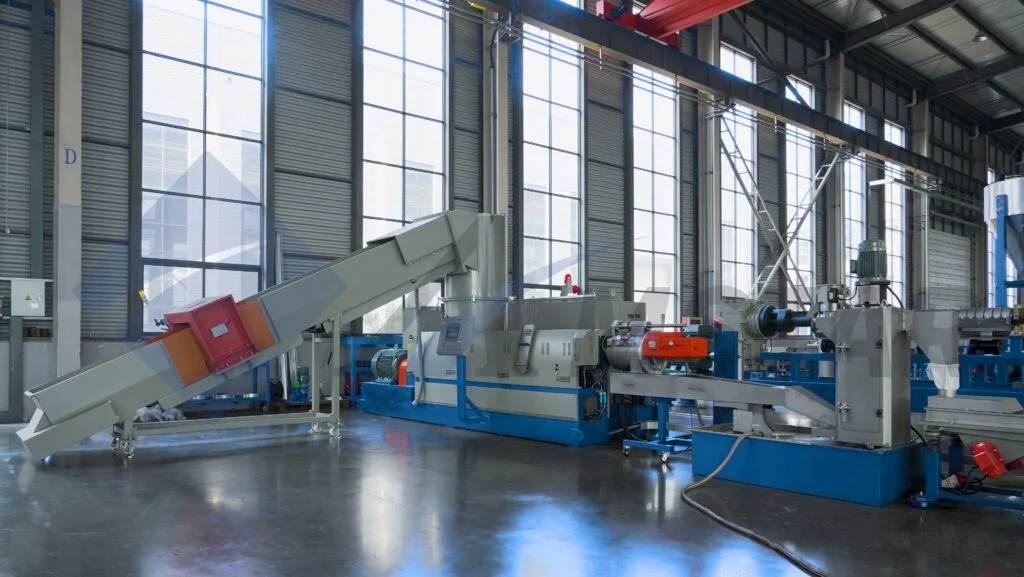
When building a plastic recycling line, choosing the right pelletizing system is one of the most consequential decisions you will make. The pelletizer determines the quality, uniformity, and market value of your final recycled pellets — and the wrong choice can mean inconsistent output, excessive energy use, or constant die blockages. Among all plastic pelletizing machines, single screw pelletizers and twin screw pelletizers remain the two most widely used technologies.
This article compares both systems in practical terms — working principle, material fit, energy use, and maintenance — so you can select the right one for your materials and production goals.
How a Single Screw Pelletizer Works
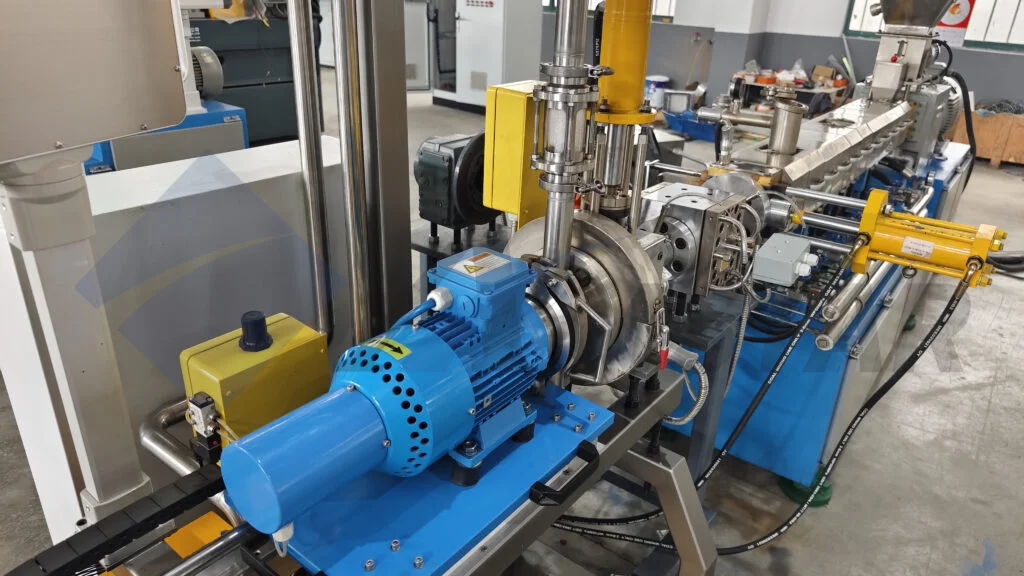
A single screw pelletizer uses one rotating screw inside a heated barrel to convey, melt, compress, and pressurize plastic. The molten plastic is pushed through a die head and cut into pellets — by water-ring cutting, strand cutting, or underwater pelletizing, depending on the material and capacity.
Key features
- Simple mechanical structure — fewer wearing parts, easy to maintain
- Stable output with uniform, zoned barrel heating
- Energy-efficient for clean, consistent feedstock
- Works with water-ring, strand, or underwater pelletizing heads
- Lower investment and operating cost per ton of output
Inside the barrel, the screw is divided into three functional zones. The feed zone conveys flakes forward, the compression zone melts and compacts them while venting trapped air and moisture, and the metering zone homogenizes the melt and builds the pressure needed to push it through the die. Consistent feeding is critical here — a starve-fed or surging hopper shows up immediately as output variation, which is why many lines pair the pelletizer with a densifier or force feeder upstream.
How a Twin Screw Pelletizer Works
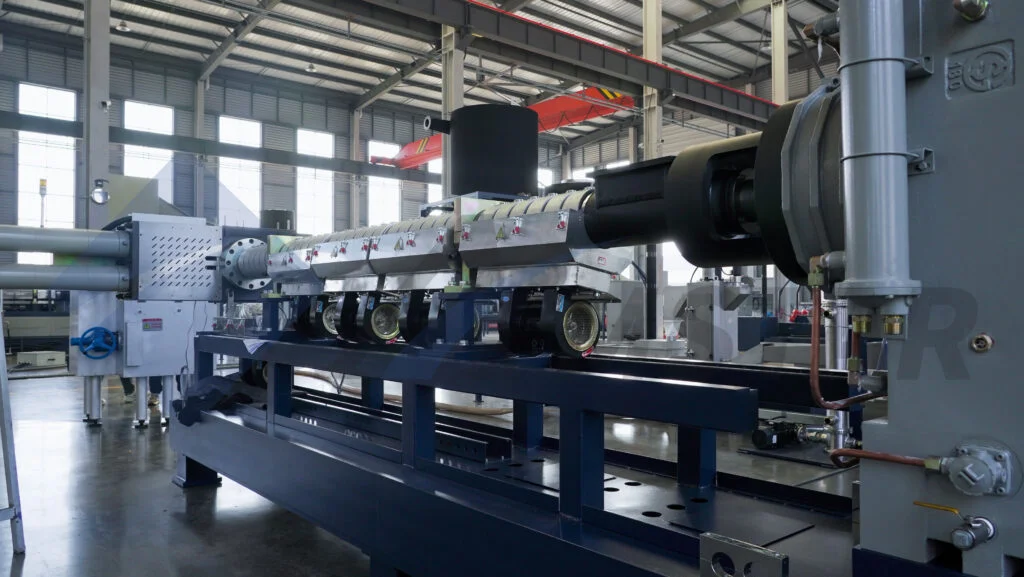
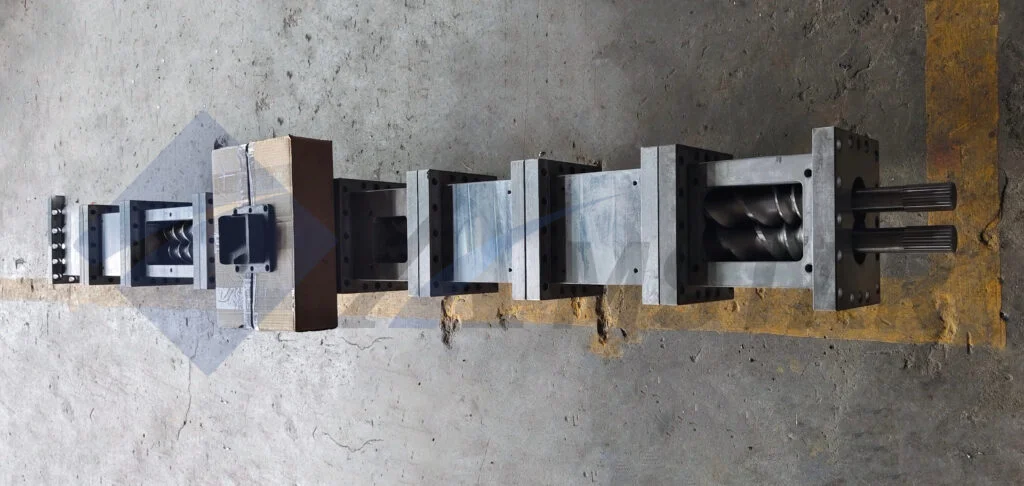
A twin screw pelletizer uses two intermeshing screws rotating inside the barrel. The screws wipe each other as they turn, creating stronger mixing, shearing, and dispersing effects than a single screw can achieve. This self-wiping action also gives the machine a self-cleaning effect that reduces material residue and color-change purging time.
Key features
- Excellent distributive and dispersive mixing for additives and fillers
- Strong shear force for fiber-filled or additive-heavy materials
- Self-cleaning screws — faster material and color changeovers
- Precise control of melt temperature and residence time
- Handles heat-sensitive and high-viscosity formulations better
Because each screw wipes the other, dead spots are virtually eliminated inside the barrel. That is why twin screws handle heat-sensitive materials such as PET and PVC compounds with far less thermal degradation than a single screw, where material can linger in stagnant zones.
Head-to-Head Comparison
The right choice comes down to what you feed the machine and what quality you need from the pellets:
| Item | Single Screw Pelletizer | Twin Screw Pelletizer |
| Mixing ability | Basic conveying and melting | Strong mixing, shearing, dispersing |
| Best feedstock | Clean, consistent PE/PP regrind | Filled, reinforced, or blended materials |
| Energy efficiency | Higher for standard materials | Lower per ton, but justified by pellet value |
| Maintenance | Simple, low cost | More complex screw configuration |
| Color/material changeover | Longer purging time | Fast, self-cleaning |
| Investment cost | Lower | Higher |
| Typical use | Mainstream recycling pelletizing | Compounding and engineering plastics |
Matching the System to Your Material
Choose a single screw pelletizer if you process:
- PE/PP film flakes from a washing line
- HDPE or PP rigid regrind
- General recycled plastics with stable, predictable quality
- High-output pelletizing where energy cost per ton matters most
Best for recyclers who prioritize stability, low operating cost, and easy maintenance — for example, the pelletizing stage after a PP/PE film washing line, where clean flakes feed directly into the extruder.
Choose a twin screw pelletizer if you process:
- Plastics with additives, fillers, or reinforcements (CaCO3, talc, glass fiber)
- Engineering plastics such as PC-ABS, PA, or PP-GF
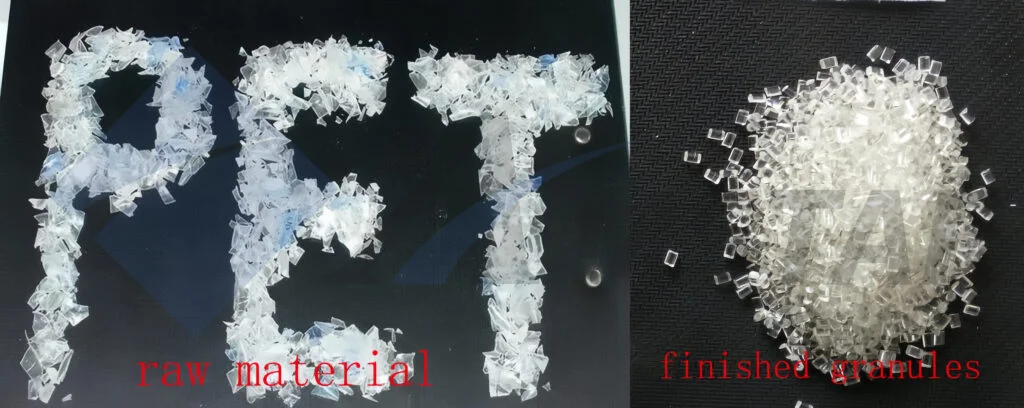
- PET bottle flakes requiring consistent intrinsic viscosity
- Any job involving material blending, coloring, or compounding
- Heat-sensitive formulations needing precise temperature control
Best for advanced compounding and high-value recycled pellet applications, where pellet uniformity and formulation accuracy justify the higher investment.
Two-Stage Setups: Using Both
Many plants do not choose at all — they combine both systems in a two-stage pelletizing setup. A twin screw handles the first stage (melting, mixing, devolatilizing difficult material), and a single screw provides high-pressure, stable extrusion through the die in the second stage. This combination delivers the best pellet quality for contaminated or hard-to-process feedstock, such as heavily printed film or mixed rigid regrind.
When budgeting, remember the extruder is only part of the pelletizing investment. Die heads, cutting systems, water treatment, dryers, and controls typically add a significant share on top of the extruder itself — always compare complete system quotations rather than bare extruder prices.
Upstream, proper preparation matters as much as the extruder choice: a centrifugal dryer that brings flake moisture down before extrusion prevents bubbles and surging, and a film shredding and densifying line can pre-compact fluffy film into dense, free-flowing feed that any pelletizer handles more easily.
Frequently Asked Questions
Which pelletizer is better for recycling PE film?
For clean, washed PE film flakes, a single screw pelletizer is usually the most economical choice — it is energy-efficient and simple to run. If the film is heavily printed, contaminated, or needs additives compounded in, a twin screw gives better melt quality and pellet consistency.
Can a single screw pelletizer handle PET flakes?
It can, but PET is demanding: it must be thoroughly dried (moisture causes hydrolysis and IV drop) and benefits from the stable melt a twin screw provides. For food-grade or high-IV bottle-to-bottle applications, twin screw systems are generally preferred.
Why is a twin screw pelletizer more expensive?
Two precision-machined intermeshing screws, a segmented barrel, and more complex drives and controls raise the manufacturing cost. The premium pays back when you produce compounded or engineering-grade pellets that sell at higher prices.
What is the self-cleaning effect of a twin screw?
The two screws wipe each other’s surfaces as they rotate, continuously clearing material from the screw flights and barrel wall. This reduces residue buildup, shortens color-change purging, and keeps melt residence time consistent.
Which system uses less energy per ton?
For clean, standard materials, the single screw wins on energy per ton because of its simpler drive and lower melt-processing intensity. With difficult materials, a twin screw can actually be more efficient overall by avoiding rework and off-spec pellets.
Can I add fillers like CaCO3 with a single screw?
Small, well-dispersed filler loadings are possible, but a single screw cannot disperse high filler or glass-fiber loadings uniformly. For filled or reinforced compounds, a twin screw is the right tool.
What pelletizing head should I use — strand, water-ring, or underwater?
Strand cutting is simple and common for rigid regrind; water-ring cutting suits high-output film pelletizing; underwater pelletizing gives the most uniform, dust-free pellets for high-value applications. Both single and twin screw extruders can be paired with any of the three.
How important is drying before pelletizing?
Critical. Surface moisture turns to steam in the barrel, causing bubbles, surging, and degraded pellets. Flakes should be mechanically dewatered and thermally dried to well under 1% moisture (lower for PET) before entering the extruder.
What is a two-stage pelletizing setup?
Two extruders in series: typically a twin screw first for melting, mixing, and venting, followed by a single screw for stable high-pressure extrusion through the die. It is the preferred configuration for contaminated film, mixed regrind, and other difficult feedstocks.
How do I choose the right capacity?
Match the pelletizer to your upstream washing or shredding output, not to a theoretical maximum. Running an extruder half-empty wastes energy and destabilizes melt; running it overfull causes surging and die blockages. Size for your real, sustained feed rate with 10–20% margin.
Inquiries
To learn more about single screw and twin screw pelletizing systems for your material, send us a message using the form below: