

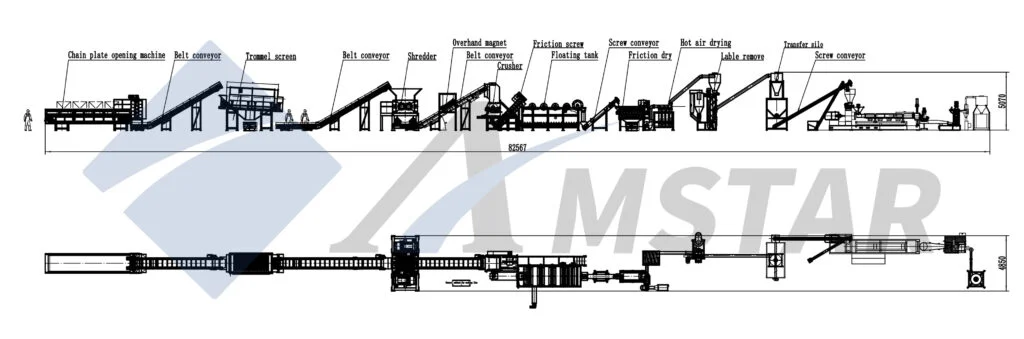
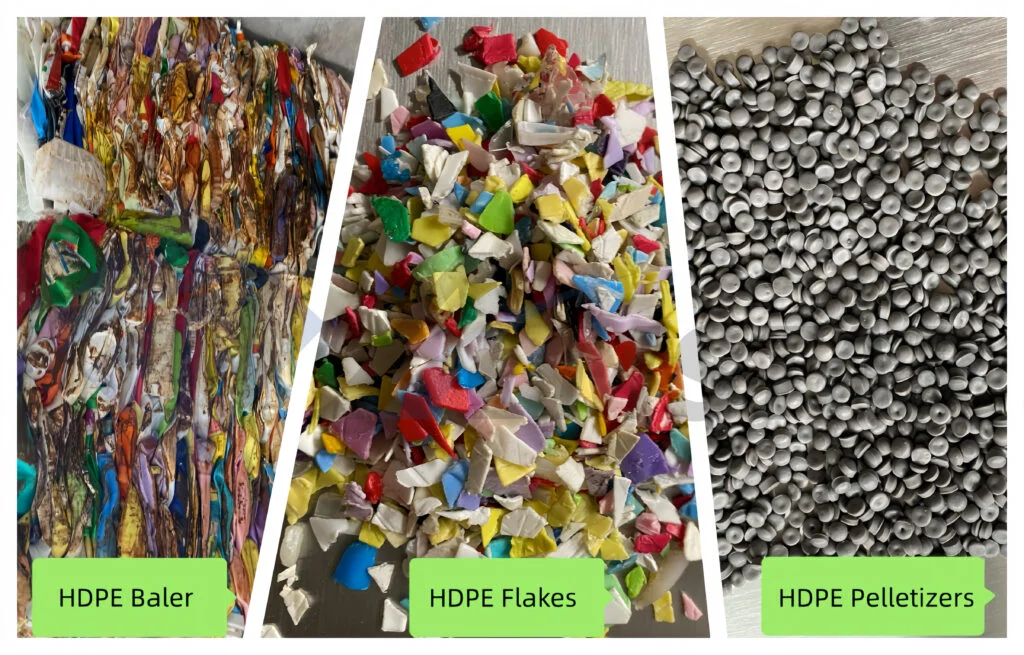
Our 1000 kg/hr HDPE Plastics Recycling Line is designed for processors who need a complete, high-efficiency solution from bale opening → shredding → crushing → washing → pelletizing.
This system delivers stable output, low energy consumption, and consistent pellet quality for bottle-to-bottle, bottle-to-film, or injection-grade applications.
Process Flow & Line Configuration
Shredding & Washing Line
The shredding and washing section is designed to handle baled HDPE materials efficiently and prepare clean, dry flakes for pelletizing.
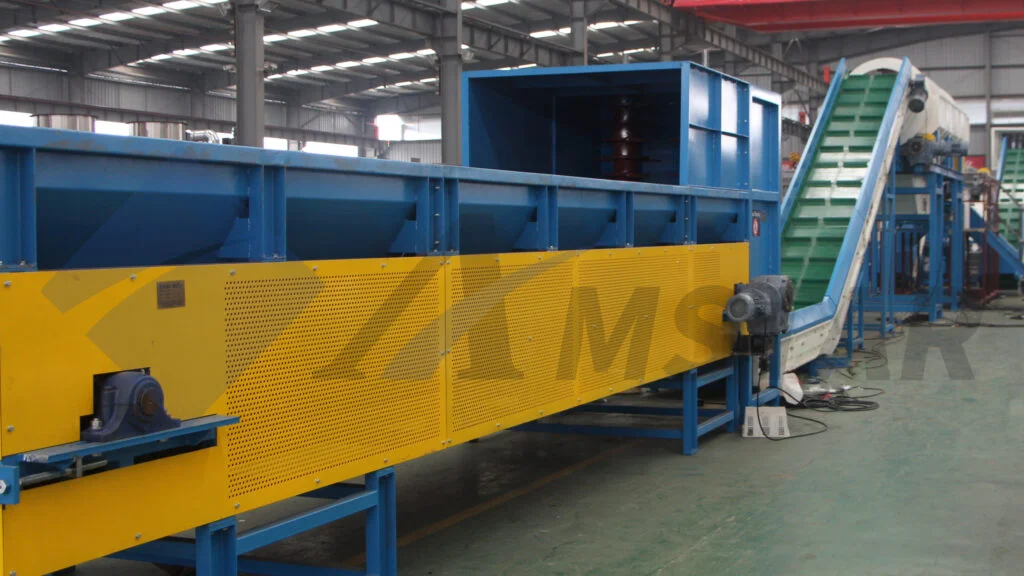
- Chain Conveyor (LBJ-1400)
Transfers baled HDPE materials into the debaling system.
- Debaler (PBJ-1000)
Breaks compacted bales into loose materials for stable downstream processing.
- Belt Conveyor (PS-1000)
Conveys loosened materials to the trommel.
- Trommel (GS-1500)
Removes sand, stones, and fine contaminants from incoming HDPE materials.
- Belt Conveyor with Magnetic Drum & Overhead Magnet (PS-1000)
Separates ferrous metals before shredding.
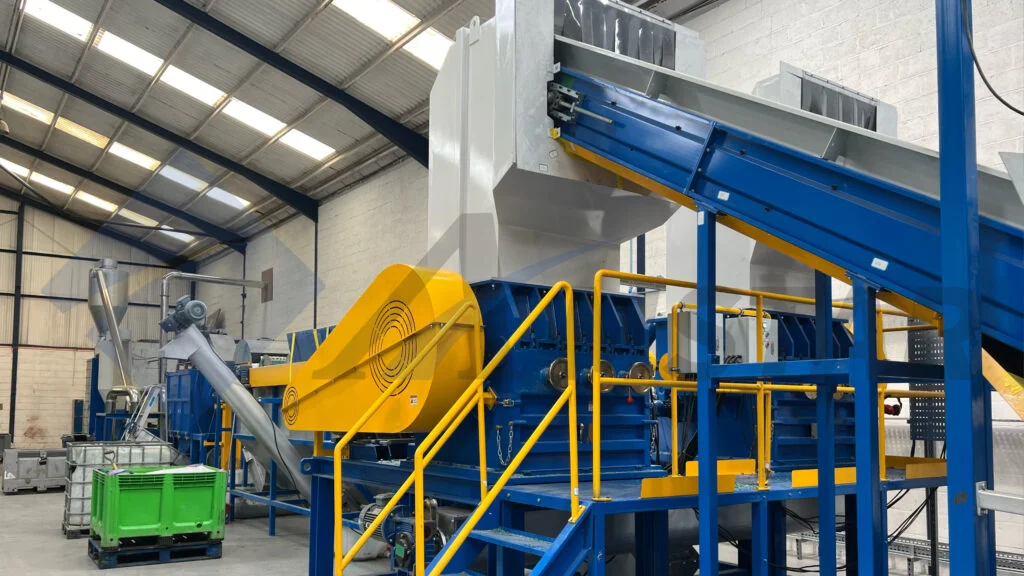
- Single Shaft Shredder (DSL-1500)
Performs primary size reduction of HDPE bottles, drums, and rigid containers.
- Belt Conveyor with Magnetic Drum & Overhead Magnet (PSL-800)
Further metal removal and material transfer to the wet crushing stage.
- Wet Crusher (SWHB1000)
Reduces material into uniform flakes while performing initial washing.
- Friction Screw (LX-500)
High-speed friction washing to remove labels, dirt, and surface contaminants.
- Floating Tank with Discharge Auger (QXC1500)
Sink-float separation to remove heavy impurities and non-HDPE materials.
- Centrifugal Dryer with Round Separator (TS1000)
Mechanical dewatering to significantly reduce moisture content.
- Hot Air Dryer (RSJ)
Further drying to ensure flakes meet pelletizing moisture requirements.
- Label Separator (PM-1000)
Separates residual labels and light contaminants from HDPE flakes.
- Transit Silo
Buffer storage for clean and dry HDPE flakes before pelletizing.
- Electric Control System
Centralized control for the shredding and washing line.
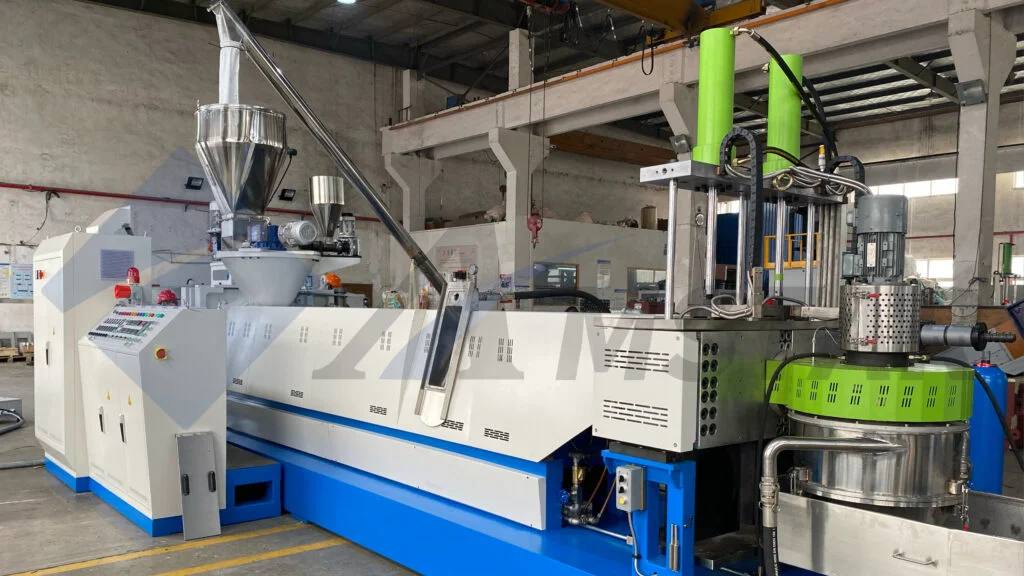
Pelletizing Line Configuration
The pelletizing section converts clean HDPE flakes into uniform pellets with stable output.
- Belt Conveyor
Feeds dried HDPE flakes from the transit silo into the pelletizing system.
- Feeder
Ensures consistent and controlled material feeding into the extruder.
- Single Screw Extruder (180 × 28)
Primary melting and plasticizing of HDPE material.
- Hydraulic Screen Changer
Removes fine contaminants and ensures melt cleanliness.
- Single Screw Extruder (200 × 10)
Secondary extrusion for pressure stabilization and improved pellet quality.
- Hydraulic Screen Changer
Final melt filtration before pelletizing.
- Water Ring Cutting System
Continuous pellet cutting with uniform pellet size.
- Storage Hopper
Collects finished HDPE pellets for packaging or storage.
- Control Cabinet
Independent control system for the pelletizing line.
Key Features
- Stable 1000 kg/hr output for HDPE bottles, jerrycans, barrels, and similar rigid plastics
- Modular design for easy layout adjustment
- High washing efficiency, ensuring low-contamination flakes
- Optional de-labeler, metal detector, steam washer, melt filter, die-face cutter
Typical Output Quality
- Flake size: 12–16 mm
- Final moisture: ≤ 2–3%
- Pellet MFI stability: Suitable for injection molding and extrusion
Get a Complete Proposal
If you’re looking for a reliable 1000 kg/hr HDPE recycling line for your factory, we can customize the layout, washing configuration, and pelletizing solution based on your actual material and budget.
Inquiries
To get the latest prices and lead times, send us a message using the form below.
Frequently Asked Questions
What materials can this HDPE recycling line process?
The line is built for rigid HDPE streams: bottles, jerrycans, barrels, drums, and similar rigid containers, typically arriving as compacted bales. The debaler, trommel, and magnetic separation stages prepare baled material for shredding, so mixed or contaminated bales can also be handled — share your feedstock details for a confirmed configuration.
What output quality does the line deliver?
Washed flakes are sized 12–16 mm with final moisture at or below 2–3% after the centrifugal and hot-air drying stages. The pelletizing section then converts clean flakes into uniform pellets with stable MFI, suitable for injection molding and extrusion applications including bottle-to-bottle and bottle-to-film production.
What are the main stages of this recycling line?
The process runs bale opening → shredding → crushing → washing → pelletizing. Key equipment includes a debaler, single-shaft shredder, wet crusher, friction screw washer, floating tank, centrifugal dryer, hot air dryer, label separator, and a two-stage single-screw extrusion pelletizing line with water-ring cutting — all under centralized electric control.
Can the line be customized for my material and budget?
Yes. The modular design allows the layout, washing configuration, and pelletizing solution to be adjusted to your actual material and budget. Optional upgrades include a de-labeler, metal detector, steam washer, melt filter, and die-face cutter. Tell us your throughput target and feedstock, and we will prepare a tailored proposal.
What capacity and energy profile should I expect?
The line delivers a stable 1,000 kg/h output for HDPE rigid plastics with low energy consumption relative to its throughput. Actual power draw depends on feedstock condition, contamination level, and operating hours. Because the system runs continuously with centralized control, staffing and per-kilo operating costs stay competitive.
What are the recycled pellets suitable for?
Pellets produced by this line suit bottle-to-bottle, bottle-to-film, and injection-grade applications, thanks to the thorough washing, controlled flake size, and stable melt filtration in the pelletizing section. If you target food-contact or other regulated applications, discuss your quality requirements with us so the line can be specified accordingly.