

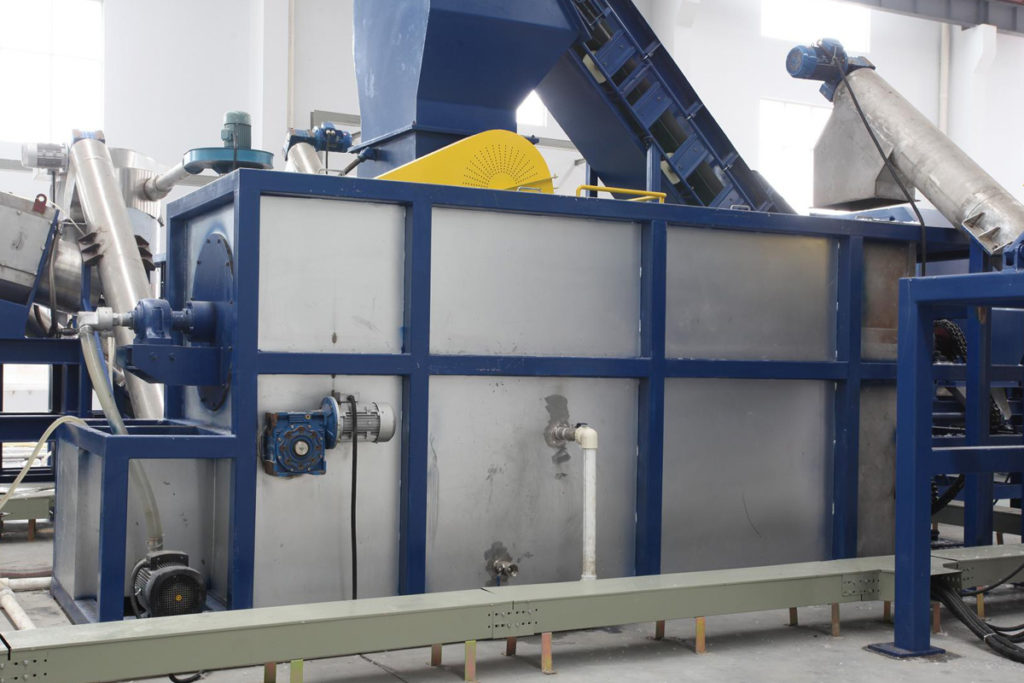
Our traditional hot water washer is a batch-style system designed to wash away hard to remove contaminations such as glues, oils, greases, and even left-over foods/liquids. For PET bottle recycling, the hot water washing process is an essential step in producing higher priced “hot washed” PET flakes.
Our hot washer system can also be used for HDPE bottle recycling, plastic film recycling, as well as other washing applications where sterilization is required.
WORKING PRINCIPLE
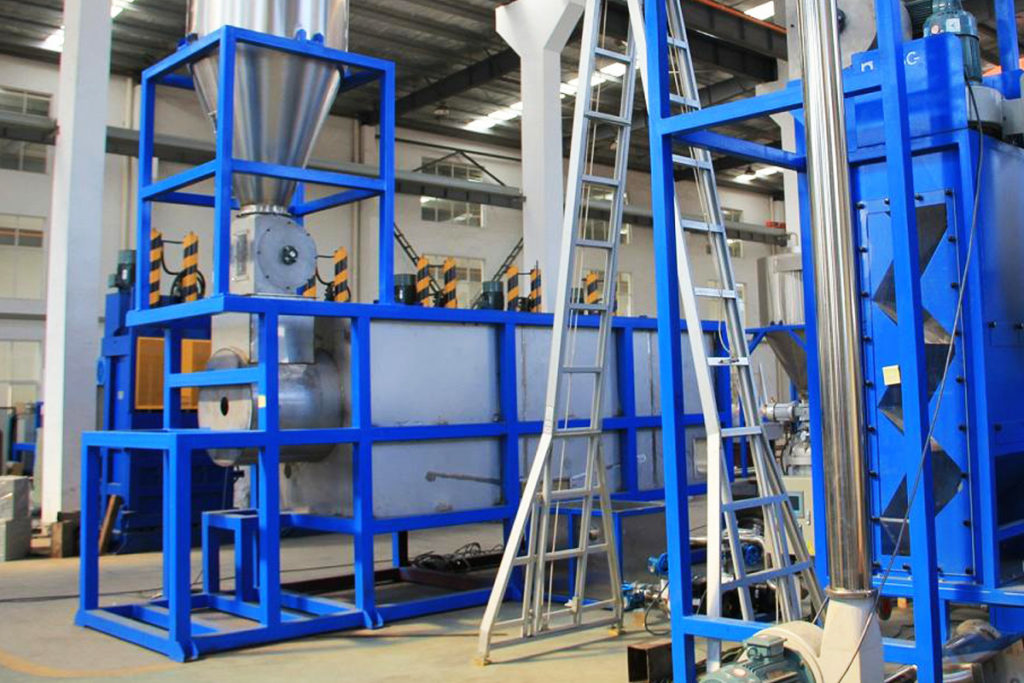
Unlike other hot water washers in the market today, our hot water system uses a large auger to transmit plastic flakes horizontally through a boiling water bath. This energy-efficient design makes use of added holes directly on the transmit auger which sprays hot water onto the plastic from within. A mesh screen tunnel surrounds the screw auger where contaminants fall through.
TECHNICAL SPECIFICATIONS
| Model #: | Main Motor Power: | Shaft Rotation Speed: | Boiler Material: | Conveyor Power: | Conveyor Speed: |
| ZG1700 | 7.5KW | 20 RPM | Type 304 Stainless Steel | 3.7KW/H | 20-80 RPM Frequency Controlled |
*Larger, more powerful models available based on your request.
ADDITIONAL IMAGES
INQUIRIES
To get the latest prices and lead times, send us a message using the form below.
Frequently Asked Questions
What contaminants does a hot washer remove?
The batch-style hot water washer targets hard-to-remove contamination: glues and adhesives, oils and greases, and leftover food or liquid residues. Hot water — often with detergent — loosens what cold washing leaves behind. That is why hot washing is the step that upgrades standard flakes into higher-priced “hot washed” PET flakes buyers pay a premium for.
Why is hot washing essential for PET bottle recycling?
Bottle-grade rPET buyers typically require hot-washed flakes because the process removes adhesives from labels and residues that cold washing cannot. Flakes that skip hot washing sell at a discount and suit fewer applications. If your target market is food-contact or high-clarity rPET, a hot washer is not optional — it is the quality gate.
Can the hot washer handle materials other than PET?
Yes. The system also works for HDPE bottle recycling, plastic film recycling, and other washing applications where sterilization is required. Hot water with the right chemistry suits any plastic where heat will not deform the material. Very heat-sensitive films should be tested first to confirm the bath temperature is safe for them.
What are the specifications of the ZG1700?
The ZG1700 runs a 7.5 kW main motor driving the auger at 20 RPM through a boiling water bath, with a 3.7 kW frequency-controlled discharge conveyor (20–80 RPM). The boiler is Type 304 stainless steel for corrosion resistance. CE certification is available, and larger or more powerful models can be built on request — confirm throughput with ASG for your line.
How does the batch-style design differ from continuous washers?
In this design, flakes travel horizontally through the hot bath on a large perforated auger that also sprays hot water from within, with a mesh screen tunnel letting contaminants fall through. Batch-style operation gives long, controlled residence time in the hot water — excellent for stubborn contamination — though continuous friction washers may suit higher-throughput lines better.
What are the power and installation requirements?
Beyond the 7.5 kW drive and 3.7 kW conveyor, the system needs a heat source to maintain the boiling bath — confirm boiler or heater sizing, steam or fuel requirements, and water/drainage connections with ASG. Plan ventilation for steam, a level floor for the stainless vessel, and access for loading flakes and removing settled contaminants. Insulation around the bath cuts running costs.