

PET bottle recycling represents a critical component of global sustainability efforts, transforming used plastic containers into valuable raw materials for new products. While consumers participate through curbside programs and recycling centers, the industrial process involves sophisticated technology and precise operational protocols. This guide provides industry professionals with comprehensive insights into PET recycling machinery, processes, and market opportunities.
Collecting PET Bottles
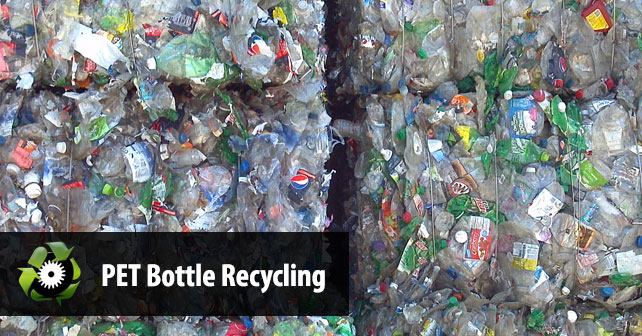
The recycling journey begins with collection systems designed for maximum efficiency and material recovery. Curbside recycling programs, often operating as single-stream systems, allow consumers to deposit various recyclables — including PET bottles, aluminum cans, glass, and paper — into unified containers. These materials undergo initial processing at Materials Recovery Facilities (MRFs) where advanced sorting technology separates different material types.
At MRF facilities, automated systems including trommels, eddy current separators, optical sorters, and magnetic separators work together to isolate PET bottles from other materials. Following sorting, PET bottles are compressed into high-density bales weighing approximately 1,000–1,200 pounds each, optimized for transportation efficiency. These bales are then shipped to specialized PET washing facilities, either domestically or internationally, for advanced processing into hot-washed flakes ready for manufacturing applications.
PET Bottle Washing and Recycling Plant Operations
Modern PET recycling facilities utilize advanced washing lines that transform baled bottles into clean, contaminant-free flakes suitable for high-value applications. The process requires precise engineering and operational expertise to achieve the purity standards demanded by manufacturers.
Upon arrival at processing facilities, color-sorted bales enter the initial processing phase. The primary objective involves thorough cleaning and contaminant removal, including labels, caps, adhesives, and residual contents. Professional-grade washing lines from manufacturers like ASG incorporate three fundamental phases: sorting, washing, and drying, each requiring specialized equipment and operational protocols.
Initial Processing and Sorting
The recycling process initiates with debaling equipment that breaks compressed bales into individual bottles. These bottles then transition to trommel separators — rotating cylindrical screens with precisely calibrated perforations — that remove small contaminants including glass fragments, stones, and residual metals. The material stream subsequently undergoes manual sorting on conveyor lines where trained operators remove non-PET materials, particularly HDPE containers and PVC contaminants that could compromise final product quality.
Granulation and Secondary Sorting
Following initial sorting, bottles proceed to industrial granulators that reduce them to 12–18mm flakes. Wet granulation systems incorporate water spray mechanisms that simultaneously cut and initiate the washing process. The resulting flakes then enter air classification systems where pressurized air streams separate lighter materials (primarily label fragments) from heavier PET flakes.
Density separation represents the next critical phase, utilizing float/sink tanks where PET flakes (density 1.38–1.40 g/cm³) sink while polypropylene and polyethylene caps (density 0.90–0.97 g/cm³) float for removal. This process ensures effective separation of different polymer types, achieving the purity levels required for premium RPET applications.
Washing and Drying Systems
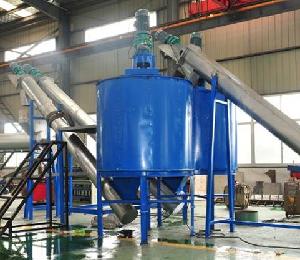
The washing phase employs multi-stage systems beginning with hot caustic wash units operating at 70–90°C. These systems effectively dissolve adhesives, remove oils and greases, and eliminate biological contaminants. Secondary friction washers provide mechanical scrubbing action to ensure thorough cleaning. Modern systems incorporate water filtration and recycling mechanisms that reduce consumption and environmental impact.
Drying processes employ centrifugal dewatering systems that remove approximately 85% of surface moisture, followed by thermal drying systems that reduce residual moisture to below 1%. This critical phase ensures that flakes meet the moisture specifications required for extrusion and manufacturing processes without compromising material properties. See how a dedicated centrifugal dewatering machine fits into the drying stage of a complete line.
RPET Products and Market Applications
The global market for recycled PET continues expanding as manufacturers seek sustainable material solutions. Clean, contaminant-free flakes serve as raw material for diverse applications across multiple industries.
Polyester Staple Fiber Production
The largest application segment involves producing polyester staple fibers for textile manufacturing. RPET fibers demonstrate properties equivalent to virgin materials while offering significant environmental benefits. These fibers manufacture clothing, carpets, upholstery, and industrial textiles, with growing demand from eco-conscious brands and consumers.
Sheet and Board Manufacturing
RPET flakes extrude into sheets and boards for packaging applications, particularly in food-grade packaging where advanced washing technology ensures compliance with safety standards. These materials also serve architectural and display applications, offering durability and sustainability advantages.
Strapping and Engineering Applications
Recycled PET produces high-strength strapping materials that compete with steel strapping in certain applications while offering corrosion resistance and handling benefits. Engineering applications include automotive components, where reinforced RPET composites provide lightweight, durable solutions.
Bottle-to-Bottle Recycling
The most technically demanding application involves closed-loop recycling where flakes undergo advanced purification processes including solid-state polycondensation to achieve food-grade quality. This application requires the highest purity standards and represents the premium segment of the RPET market.
Industry Trends and Technological Advancements
The PET recycling industry continues evolving with several significant trends shaping equipment development and operational practices:
| Trend | Impact | Implementation |
|---|---|---|
| Automation Integration | Reduced labor costs, improved consistency | Robotic sorting, AI quality control systems |
| Water Recycling Systems | Environmental compliance, reduced operating costs | Closed-loop water treatment, filtration technology |
| Energy Efficiency | Lower carbon footprint, cost reduction | Heat recovery systems, high-efficiency motors |
| Modular Design | Scalability, flexibility in operation | Plug-and-play components, customizable configurations |
Frequently Asked Questions
What is the typical capacity range for industrial PET washing lines?
Modern washing lines offer capacities from 1,000 to 10,000 kg/hour, with modular designs allowing operations to scale according to feedstock availability and market demand. Most North American plants start in the 1,000–3,000 kg/h range and expand as collection volumes grow.
How do I determine the right washing line configuration for my operation?
Line configuration depends on feedstock quality, target end markets, and available infrastructure. Assess contamination levels, desired output quality, and operational constraints — a supplier should provide a feasibility study and system recommendation based on your actual bale samples, not generic assumptions.
What maintenance should I plan for with PET recycling equipment?
Preventive maintenance typically includes regular inspection of cutting blades, bearing lubrication, motor servicing, and wear-part replacement. Modern systems incorporate monitoring technology that predicts maintenance needs and minimizes unplanned downtime.
What are the key quality parameters for RPET flakes?
Critical indicators include intrinsic viscosity (IV), moisture content, contamination levels, and color consistency. Different applications have specific thresholds, with food-grade bottle-to-bottle applications demanding the most stringent standards — typically moisture below 1% and contamination in the low parts-per-million range.
How does energy consumption vary between washing line configurations?
Energy use depends on feedstock contamination, water temperature requirements, and drying technology. Hot-wash systems operating at 70–90°C consume more thermal energy but deliver higher purity; advanced lines recover heat and recycle process water to cut operating costs significantly.
What is the difference between hot wash and cold wash in PET recycling?
Hot caustic washing at 70–90°C dissolves adhesives and removes oils, greases, and biological contaminants, producing flakes suitable for high-value applications. Cold washing uses ambient water with friction and is cheaper to run, but cannot reliably remove adhesives or meet food-grade purity requirements.
Why is float-sink separation so important in PET recycling?
PET sinks (density 1.38–1.40 g/cm³) while PP and PE caps and labels float (0.90–0.97 g/cm³), so float-sink tanks separate polymers with remarkable reliability. Removing cap material at this stage is what makes clean, single-polymer RPET flakes possible.
How dry do PET flakes need to be before extrusion?
Centrifugal dewatering removes roughly 85% of surface moisture, and thermal drying then brings residual moisture below 1%. PET is hygroscopic, so flakes destined for extrusion or solid-state polycondensation must be thoroughly dried — residual moisture causes hydrolysis that degrades intrinsic viscosity.
What does a complete PET bottle recycling line include?
A full PET bottle recycling line typically includes debaling, trommel pre-sorting, manual or optical sorting, wet granulation, float-sink separation, hot washing, friction washing, rinsing, centrifugal dewatering, and thermal drying — plus water treatment to recycle process water.
Conclusion
The PET bottle recycling industry represents a sophisticated sector combining advanced mechanical processing with growing market opportunities. Professional-grade washing lines from established manufacturers like ASG provide the technology backbone for operations seeking to produce high-quality RPET flakes for diverse manufacturing applications. Contact us to discuss your PET recycling line requirements. As sustainability requirements intensify and circular economy principles gain traction, investment in efficient, reliable recycling infrastructure offers significant strategic advantages for forward-thinking operators. The continuous technological evolution in sorting, washing, and purification processes ensures that PET recycling remains a dynamic field with ongoing opportunities for innovation and improvement.