

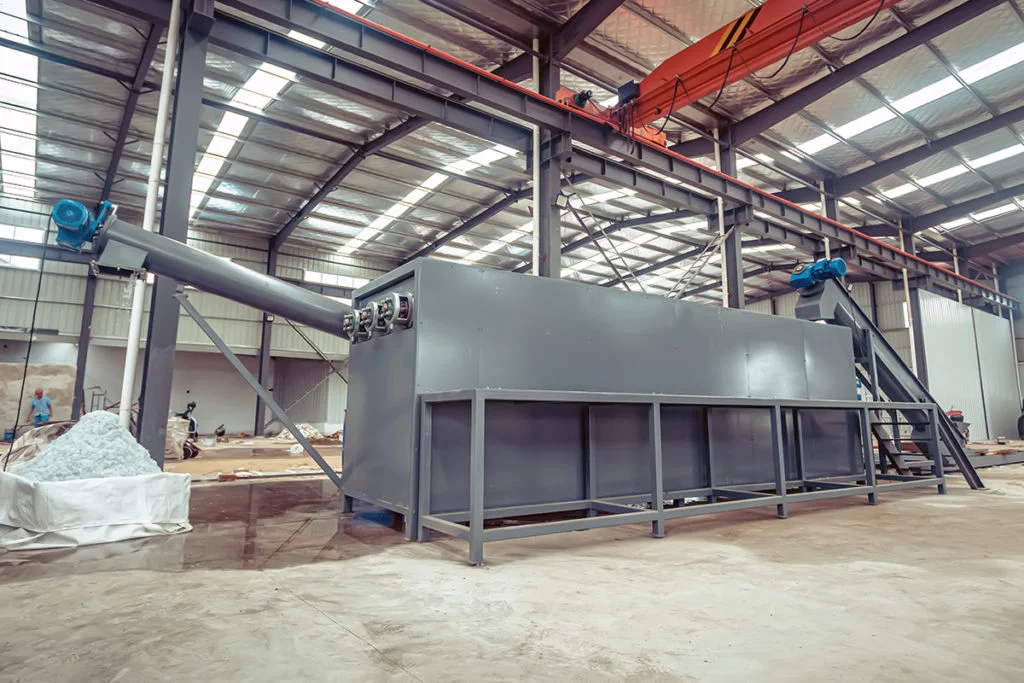
As one of our latest innovations in plastic separation technologies, this reinvented triple-row sink float separation tank has been completely redesigned to be as efficient as three traditional-style floating tanks.
WORKING PRINCIPLE
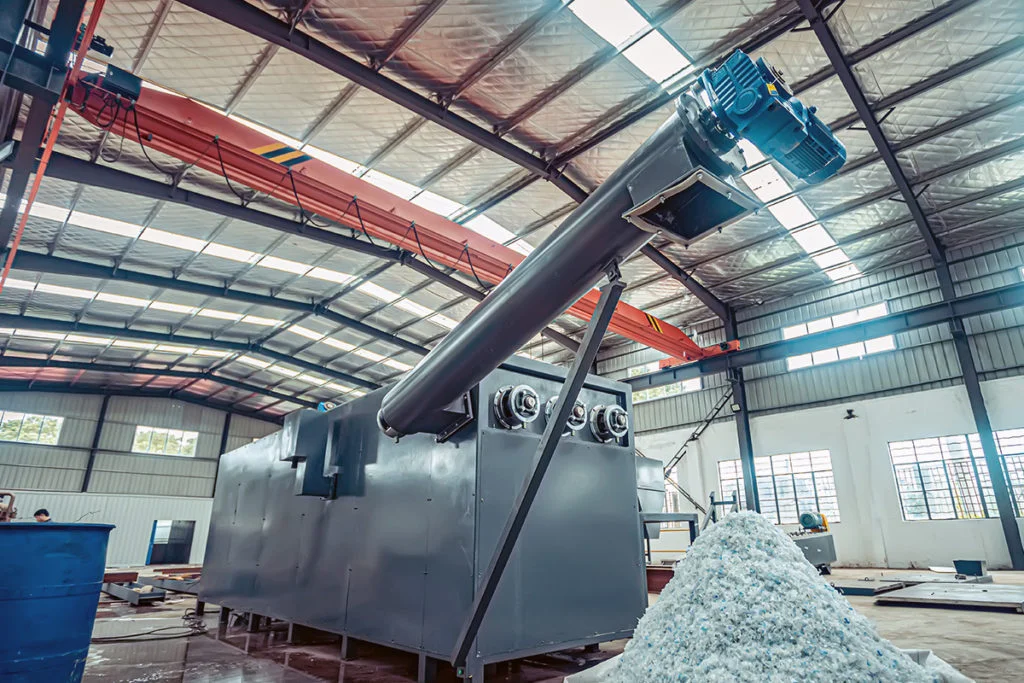
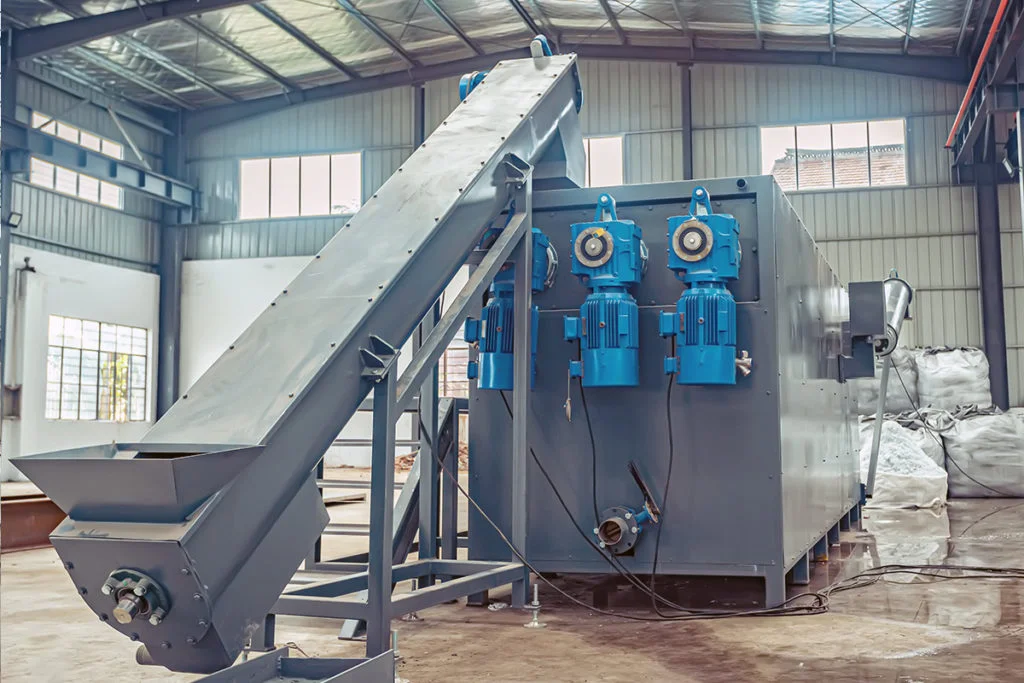
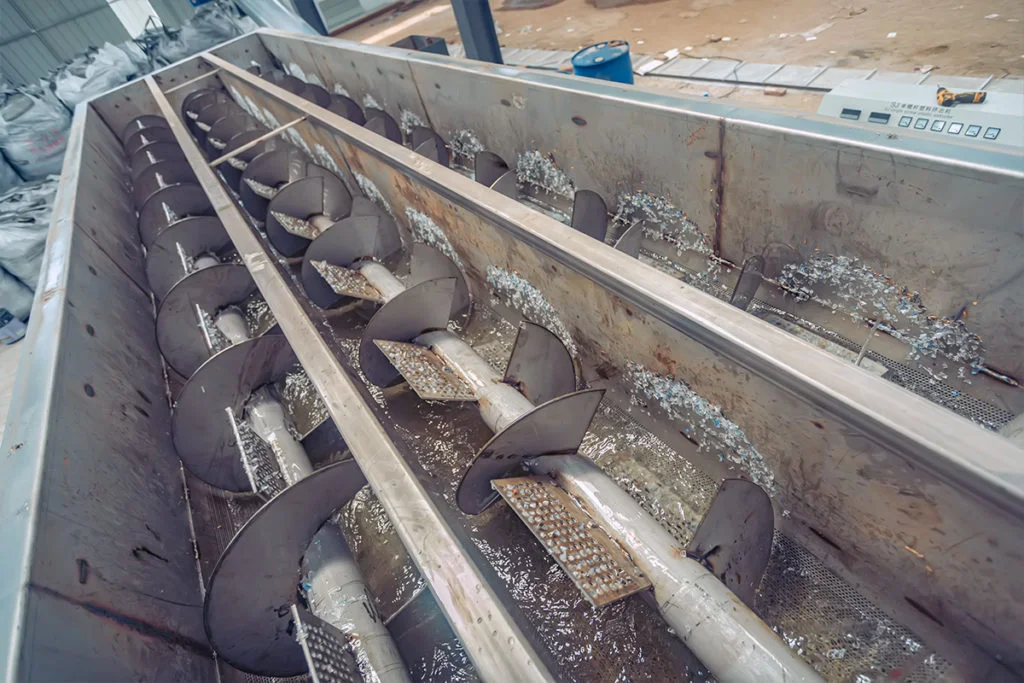
A large motor drives the three top screws pushing the plastic material forward. A mesh screen is equipped under the three screws to filter small contaminants.
Instead of having the co-mingled, dirty plastic stream travel down the tank only once as per traditional-styled tanks, this tank is spilt into three separate rows. With the material traveling three times the distance, there is plenty of time for the plastic to soak and separate completely.
Based on various testing by customers, this triple-row separation machine is extremely effective in processing highly contaminated plastics due to the extended washing times.
ADDITIONAL IMAGES
INQUIRIES
To get the latest prices and lead times, send us a message using the form below.
Frequently Asked Questions
How does sink-float separation work?
Separation is by density in water: heavier PET flakes sink while lighter contaminants — PP/PE bottle caps, label films, and other low-density plastics — float and are skimmed off. Three top screws driven by a large motor push material forward through the tank, and a mesh screen under the screws filters out small contaminants. It is a simple, chemical-free way to purify the flake stream.
Why three rows instead of one long tank?
Instead of the co-mingled plastic stream traveling down the tank once, this design splits the tank into three separate rows, so material travels three times the distance in the same footprint. The extended travel gives much longer soaking and separation time, making one triple-row tank as efficient as three traditional-style floating tanks — saving floor space while improving purity.
What contaminants does the tank remove?
The tank removes floating contaminants such as PP/PE caps and label films, sinking contaminants like mud and small stones, and fine particles captured by the mesh screen under the screws. Customer testing shows it is extremely effective on highly contaminated plastics thanks to the extended washing time. It pairs well with upstream label removal and downstream hot washing for complete purification.
Which recycling lines use this separation tank?
Sink-float tanks are core equipment in PET bottle washing lines, where separating PET flakes from PP/PE caps is essential, and they are also used in film washing lines to remove heavy contamination like sand and grit. The triple-row design suits plants processing dirtier post-consumer streams or targeting higher flake purity without adding extra tank stages.
What maintenance does the separation tank require?
Routine maintenance includes cleaning the mesh screen under the screws so small contaminants do not blind it, inspecting the three screws and drive motor, and managing water quality through recirculation and periodic purging. Because the tank has few wear parts, upkeep is modest — follow a scheduled preventive maintenance routine and monitor separation efficiency for early signs of screen or screw wear.
How much water does the tank use?
Sink-float tanks typically recirculate their process water, with makeup water added to replace evaporation and the moisture carried out with the material. The mesh screen continuously filters small contaminants, and periodic purging or filtration keeps the bath clean for consistent separation. Water consumption depends on throughput and contamination level — dirtier feed needs more frequent water exchange to maintain separation efficiency.