

Description
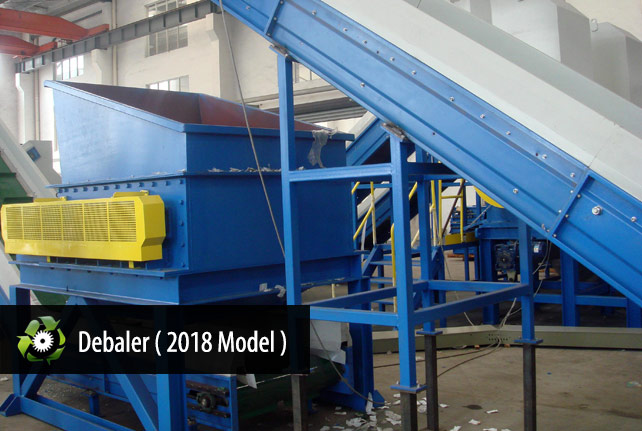
Generally, PET bottles arrive at recycling facilities in bales, these are compacted bundles of plastic bottles tied together by metal wire. The first step in the recycling process is to “debale” the bottles so they can flow freely onto the conveyor where it is usually sent to an equipment where labels are removed or the bottles are crushed. The debaler machine is therefore the first piece of machinery in our standard PET bottle washing line.
How It Works
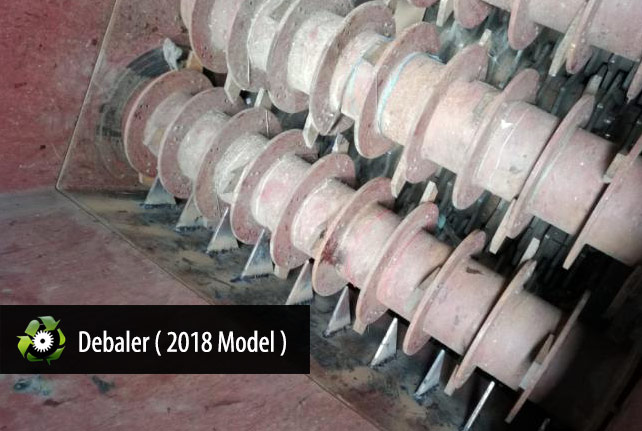
Unless you want to manually open the PET bottle bales and place them onto the conveyor, a debaler machine will go a long way in automating your operations. The manual option requires the addition of numerous employees, it is suitable for countries where manual labor is relatively cheap. For countries where the cost of manual is high, the debaler machine opens entire bales of PET bottles using slow moving hooks that grapple onto wires used tie them together. Entire bales of plastic bottles can be dropped directly into the debaler’s vertical feeder using a fork lift or similar machinery.
Models & Specifications
| Feeder Dimensions: | 1450mm x 1650mm |
| Main Motor Power: | 5.5 KW |
| Conveyor Motor Power: | 7.5 KW |
Additional Images
Place An Order
The general lead time for all single-piece, standard equipment orders is 30 days. For custom orders or complete washing lines, the lead time is between 60 – 90 days. The actual lead time will depend heavily on the complexity of the project as well as the amount of machinery we have in queue at the time of your order.
Contact us to discuss pricing and ordering details. Here is a brief summary of our ordering procedures.
Frequently Asked Questions
What does a debaler do in a PET bottle washing line?
The debaler is the first machine in the line. PET bottles arrive compacted into wire-tied bales, and the debaler breaks those bales open so individual bottles flow freely onto the conveyor. From there they move to label removal or crushing. Without this step, the rest of the washing line cannot receive a steady, metered feed of loose bottles.
What size bales can the debaler accept?
The feeder opening measures 1450 x 1650 mm and whole bales are dropped in from the top using a forklift. It is designed around standard PET bottle bales as delivered by suppliers and MRFs. If your bales run unusually large or dense, check the feeder dimensions against your bale size before ordering to avoid bridging at the inlet.
Why automate debaling instead of opening bales by hand?
Manual bale opening needs one or two workers per shift cutting wires and spreading bottles, which gets expensive where labor costs are high and creates inconsistent feed. The debaler replaces that labor with slow-moving hooks that grapple the wires automatically, giving steadier throughput and removing the safety risk of manual wire cutting.
What are the power and installation requirements?
This model uses a 5.5 kW main motor plus a 7.5 kW conveyor motor, so plan three-phase industrial power with appropriately rated breakers. Installation needs a clear area for forklift bale placement at the vertical feeder, a discharge conveyor run to your label remover or crusher, and a level foundation that can handle the machine’s dynamic load.
What maintenance does the debaler need?
Maintenance is light because the machine runs at low speed: regularly inspect the hooks and wire-grappling mechanisms for wear, lubricate moving parts on schedule, and check conveyor alignment and tension. Daily visual checks catch wire buildup or damage early. A documented maintenance routine keeps the machine reliable as the line’s first stage.
How does the debaler connect to downstream equipment?
Opened bottles discharge from the debaler onto a conveyor that feeds the next stage — typically a label remover or a crusher/granulator, then washing and drying. Because it sets the pace for the whole line, position it so the discharge conveyor interfaces cleanly with existing equipment. ASG can customize discharge heights to match your current material handling layout.