

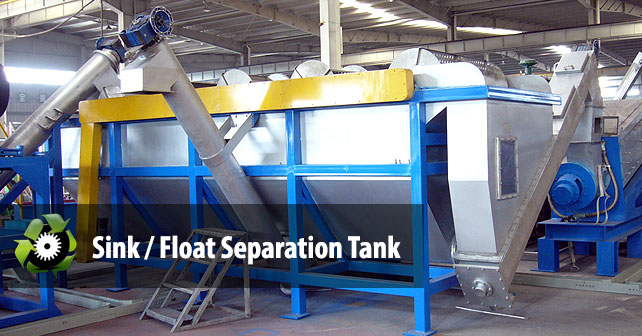
sink-float-separation-tank
Introduction to Sink Float Separation in PET Recycling
Efficiency and purity define successful PET recycling operations. A sink float separation tank is a critical component designed to segregate materials based on their density relative to water. This process is essential for removing contaminants such as polypropylene (PP) and polyethylene (PE) bottle caps from PET flakes, ensuring a higher quality end product. At ASG Machine, we engineer separation tanks that maximize operational efficacy, durability, and integration within your PET bottle washing line.
How a Sink Float Separation Tank Works
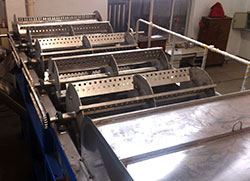
sink-float-separation-tank-sm
The principle behind sink float separation is straightforward yet highly effective. Water has a density of 1 g/cm³. Materials with a density greater than water sink, while those with lesser density float. In PET recycling, granulated bottles enter the tank where PET (density ~1.38 g/cm³) sinks, and contaminants like PP (density ~0.90-0.91 g/cm³) and PE (density ~0.91-0.97 g/cm³) float.
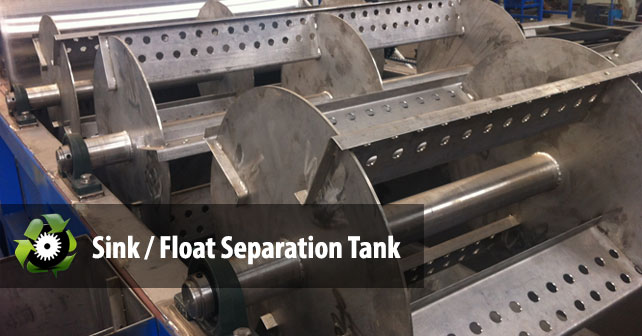
Our tanks feature specially designed rotating drums that guide floating contaminants into a collection silo. Simultaneously, screw conveyors at the bottom gather the sunken PET flakes, transferring them to the next stage—typically a friction washer or hot washer. This method ensures minimal cross-contamination and high-purity output.
Key Benefits of Using a Sink Float Separation Tank
- Enhanced Purity: Achieve up to 99% separation efficiency, crucial for meeting industry standards.
- Water Efficiency: Designed for recirculation systems, reducing water consumption and operational costs.
- Durability: Constructed with corrosion-resistant materials for long-term reliability.
- Scalability: Customizable lengths and widths to fit various production capacities.
- Low Maintenance: Simple design with easy access points for cleaning and upkeep.
Technical Specifications
To ensure optimal performance, our sink float separation tanks are available in standard and extended sizes. Longer tanks allow extended material soak time, improving cleaning and separation efficacy.
| Specification | Value |
|---|---|
| Interior Width | 1500mm – 2000mm |
| Total Length | 4 – 6 meters |
| Interior Material | Type 304 Stainless Steel |
| Exterior Frame | Carbon Steel |
| Screw Conveyor Motors | 5.5KW + 3.7KW |
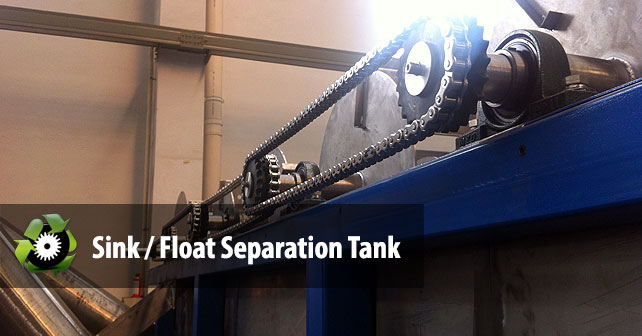
| Rotating Drum Motors | 0.37KW + 2.2KW |
The use of Type 304 stainless steel ensures resistance to oxidation and corrosion, vital for withstanding the harsh conditions of recycling environments.
Integration into Your PET Washing Line
A sink float separation tank is typically positioned after granulation and before the drying stage. Proper integration ensures smooth material flow, reduces bottlenecks, and enhances overall line efficiency. At ASG Machine, we provide end-to-end support for system design, installation, and optimization.
Industry Trends and Advancements
The recycling industry is increasingly adopting automated and AI-driven systems for better material tracking and efficiency. Modern separation tanks now often include sensors for real-time monitoring of contamination levels and water quality, aligning with sustainable practices and regulatory requirements.
Buyer’s Guide: Selecting the Right Separation Tank
When choosing a sink float separation tank, consider the following: – Throughput Capacity: Match the tank size to your hourly processing volume. – Material Compatibility: Ensure construction materials suit your specific recycling stream. – Customization Options: Look for suppliers offering tailored solutions. – After-Sales Support: Verify availability of spare parts and technical service. – Energy Consumption: Opt for energy-efficient motors and designs.
Additional Images
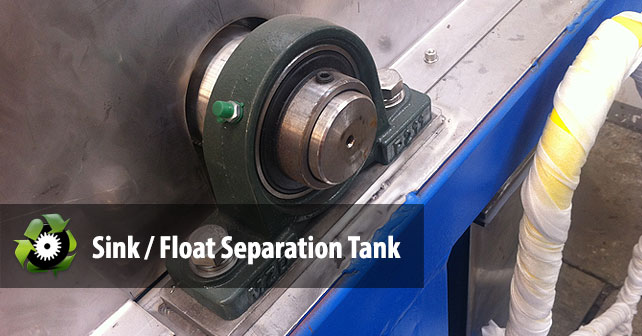
sink-float-separation-tank-01
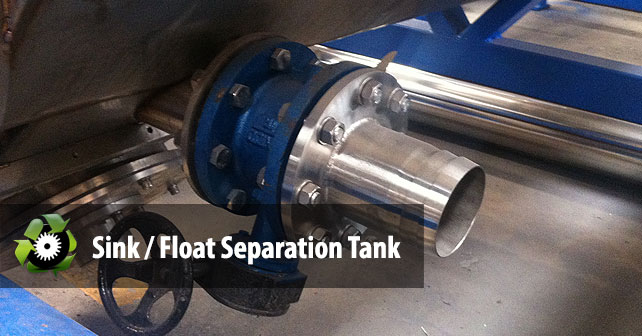
sink-float-separation-tank-02
sink-float-separation-tank-03
sink-float-separation-tank-04
Frequently Asked Questions
How often does the water in the tank need to be changed?
Thanks to a built-in water recirculation and filtration system, full water changes are rarely needed — typically only to compensate for evaporation and carry-over losses. Operators should monitor water clarity and contamination levels regularly, because dirty water lowers separation efficiency. Pairing the tank with a water treatment system keeps the loop clean and reduces fresh-water costs.
Can the tank handle other plastics besides PET?
Yes. Any feedstock where materials differ in density relative to water can be separated this way — the principle is not PET-specific. For example, the same tank design can separate polyolefins from heavier engineering plastics in mixed recycling streams. Discuss your material mix with the supplier so tank dimensions, drum speed, and screw conveyor capacity are sized for your actual throughput.
What maintenance is required?
Routine checks of the screw conveyor motors and rotating drum motors, plus inspection of interior surfaces for wear or material buildup, are advised. The Type 304 stainless steel interior resists oxidation and corrosion and needs minimal upkeep, while the carbon steel frame should be checked periodically. The simple design and easy access points keep cleaning and servicing straightforward.
Is customization available for specific plant layouts?
Yes. Tanks are available in standard and extended sizes — interior widths of 1500–2000 mm and total lengths of 4–6 meters — and longer tanks can be specified for extended soak time and better cleaning and separation. Custom motor configurations, widths, and integration features, such as connections to upstream granulators or downstream washers, are available to fit unique plant layouts.
How does this improve the value of recycled PET?
By removing floating PP and PE contaminants such as bottle caps with up to 99% separation efficiency, the resulting PET flakes reach higher purity. Higher-purity flakes command better market prices and qualify for more demanding applications, such as fiber-grade or food-grade rPET. Consistent purity also reduces rework and downstream processing costs.
Where does a sink float separation tank fit in a PET washing line?
It is typically positioned after granulation and before the drying stage. Granulated bottle flakes enter the tank, where PET sinks and is collected by bottom screw conveyors, while PP and PE caps float and are guided by rotating drums into a collection silo. Proper integration ensures smooth material flow, reduces bottlenecks, and lifts overall line efficiency.
Place An Order
Standard equipment orders typically ship within 30 days. Custom orders or complete washing lines may require 60–90 days, depending on complexity and current queue. Contact us to discuss pricing, specifications, and delivery timelines. Our team at ASG Machine is ready to assist you in enhancing your recycling operations with reliable, high-performance machinery.