

Description
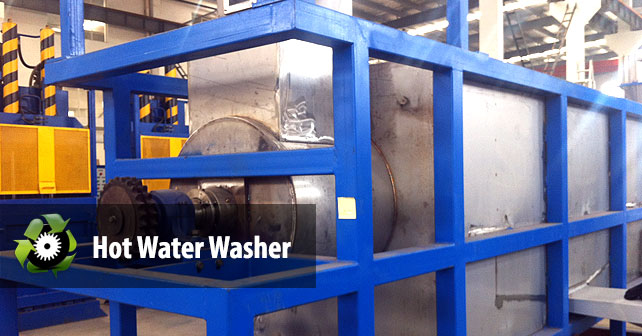
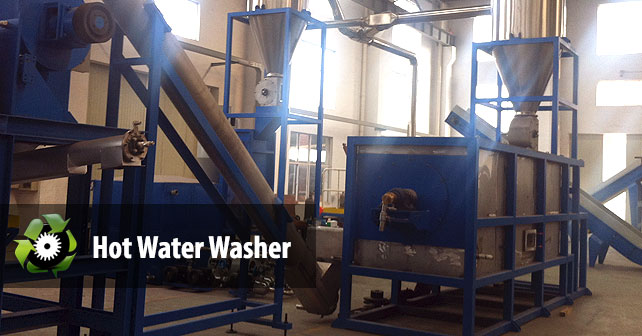
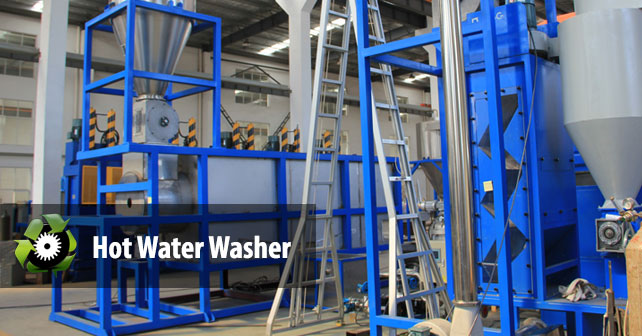
The hot washer for PET flakes is the heart of the PET bottle washing line capable of getting rid of hard to remove contamination such as glues, oils, grease, and left-over foods/liquids. For PET recycling, the hot water washing process is essential step in producing high-quality “hot washed” PET flakes that sell for much higher prices.
How It Works
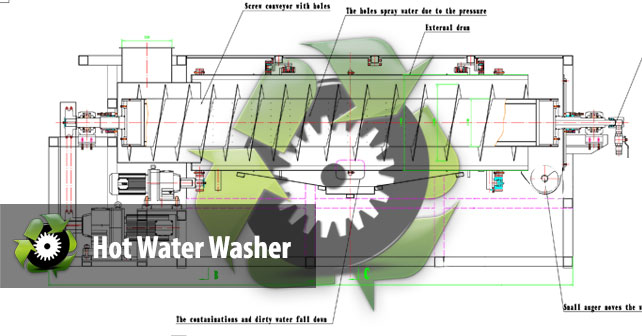
Unlike any other hot washers in the market today, our patented hot washer design uses a large screw auger to transmit PET flakes horizontally through a boiling water bath. This energy-efficient design makes use of tiny holes on the transmit auger that directly sprays hot water onto the PET flakes from the interior.
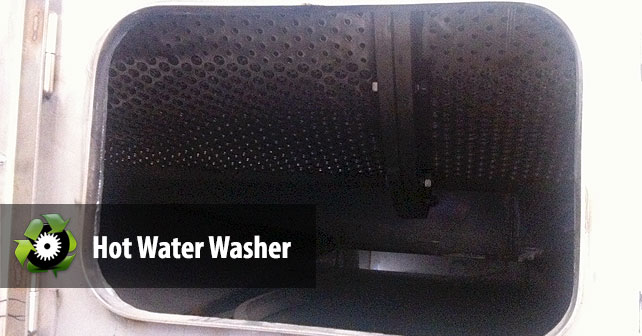
Surrounding the screw auger is a large mesh screen tunnel which keeps the PET flakes in place while smaller contaminants fall through. A diagram of our hot washer has been provided below.
Models & Specifications
| Model #: | Main Motor Power: | Shaft Rotation Speed: | Boiler Material: | Conveyor Power: | Conveyor Speed: |
| ZG1700 | 7.5KW | 20 RPM | Type 304 Stainless Steel |
3.7KW/H | 20-80 RPM Frequency Controlled |
Additional Images
Place An Order
The general lead time for all single-piece, standard equipment orders is 30 days. For custom orders or complete washing lines, the lead time is between 60 – 90 days. The actual lead time will depend heavily on the complexity of the project as well as the amount of machinery we have in queue at the time of your order.
Contact us to discuss pricing and ordering details. Here is a brief summary of our ordering procedures.
Frequently Asked Questions
What contaminants does the hot washer remove from PET flakes?
The hot washer targets the contaminants that cold washing cannot fully remove: label glues and adhesives, oils, grease, and leftover foods or liquids. Boiling water dissolves and loosens these residues while the screw auger’s friction scrubs the flakes, producing “hot washed” flakes that command significantly higher market prices than cold-washed material.
How does the patented hot washer design work?
Unlike conventional hot washers, ASG’s patented design uses a large screw auger to move PET flakes horizontally through a boiling water bath. Tiny holes on the auger spray hot water directly onto the flakes from the interior, while a surrounding mesh screen tunnel keeps flakes in place and lets smaller contaminants fall through. This design is both energy-efficient and thorough.
What are the specifications of the ZG1700 hot washer?
The ZG1700 features a 7.5 KW main motor, 20 RPM shaft rotation speed, a Type 304 stainless steel boiler, and a 3.7 KW frequency-controlled conveyor running at 20–80 RPM. All parts in contact with material are stainless steel for corrosion resistance and food-contact-safe flake quality.
Where does the hot washer fit in a PET bottle washing line?
The hot washer sits after the sink/float separation tank and before the friction washer (cold rinse) and drying stages. This placement lets it focus on dissolving glue and sterilizing flakes after bulk separation is complete. See our PET bottle recycling process and equipment guide for the full line sequence.
What maintenance does the hot washer require?
Routine maintenance includes checking the screw auger and mesh screen for wear, inspecting the heating system, and keeping water chemistry within spec. Because the machine runs in boiling water with abrasive flakes, periodic screen and auger inspection prevents unplanned downtime. Our PET recycling machine maintenance guide covers the full preventive routine.
What is the lead time for ordering a hot washer?
Standard single-piece equipment orders typically ship within 30 days of order confirmation. Custom configurations or complete washing lines require 60–90 days for manufacturing and testing, depending on project complexity and the current production queue.