

Not every shredder can handle every material. Rubber — especially whole tires with steel wire — behaves nothing like rigid plastic or film: it stretches, rebounds, and fights the blades instead of fracturing. Tire recycling adds another layer of complexity: steel wire must be liberated from the rubber chips and removed magnetically downstream, so the shredder’s output must suit the separation equipment that follows. Choosing between a dedicated rubber shredder and other industrial shredder types comes down to understanding how each machine cuts, what it tolerates, and what output it produces.
This guide compares rubber (tire) shredders with single-shaft and double-shaft industrial shredders, so you can match the right machine to your material.
Rubber Shredders (Tire Shredders)
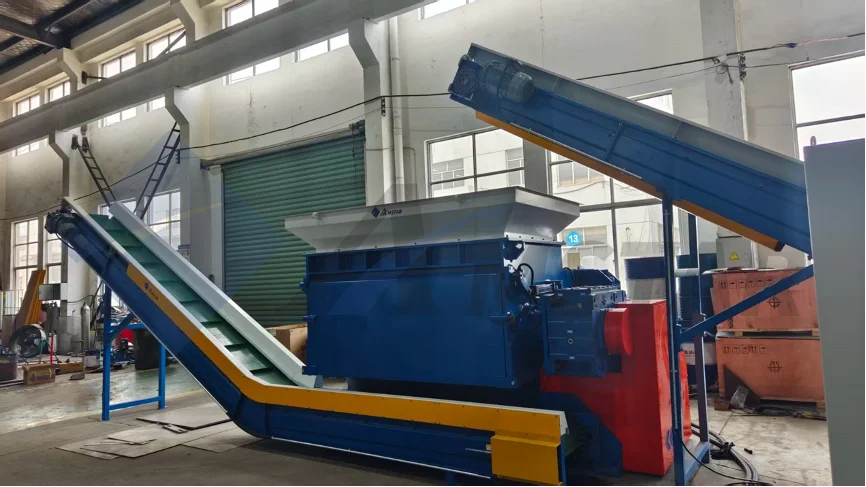
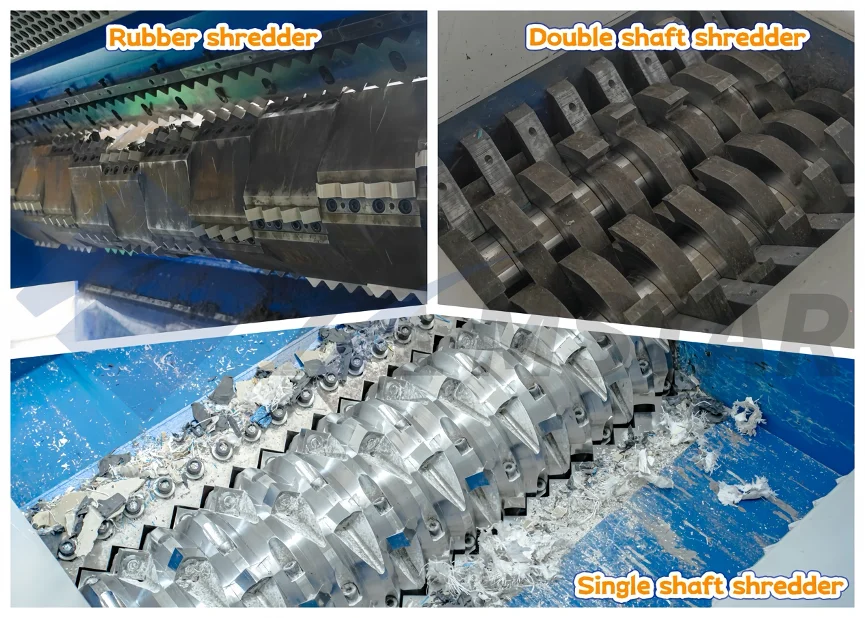
A rubber shredder is specially designed for tires, rubber blocks, conveyor belts, and other elastomer materials. It runs at low speed and high torque, using wear-resistant alloy blades to tear, shear, and cut rubber into small chips rather than trying to fracture it.
Rubber shredders are the core of tire recycling lines, where steel wire must be liberated from the rubber for downstream separation. They can process whole passenger tires, truck tires, or pre-cut rubber strips.
- Working principle: low-speed, high-torque shear cutting
- Typical output size: 30–80 mm chips, depending on screen configuration
- Key strength: handles elasticity and steel wire that would stall other machines
Single-Shaft Shredders
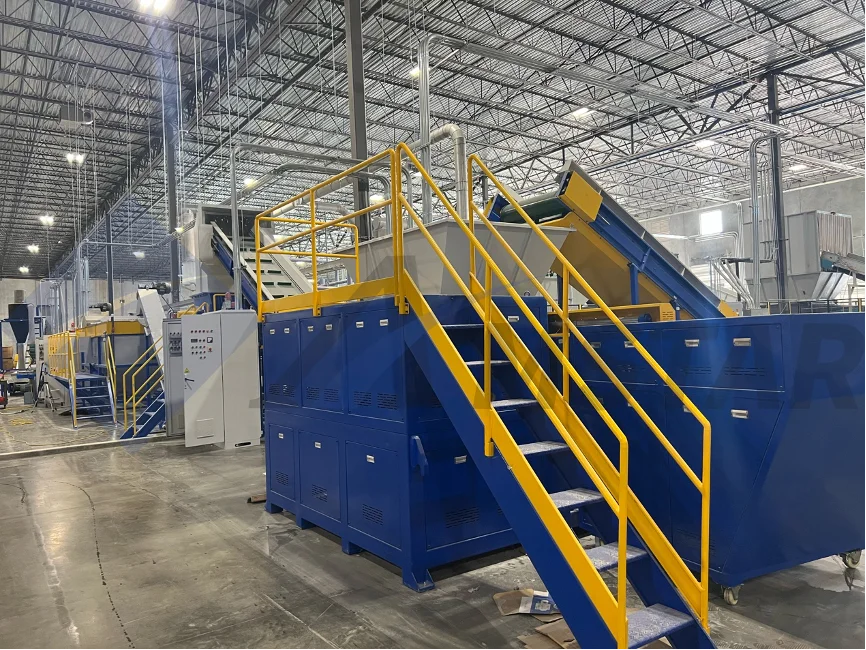
A single-shaft shredder features one rotor equipped with cutting knives that rotate against a fixed counter-knife and screen. A hydraulic pusher feeds material steadily into the rotor, giving a controlled, uniform cut.
It is ideal for plastic film, lumps, purgings, rigid plastics, and wood waste where uniform size control matters. Compared with a rubber shredder, it cuts cleaner and quieter but cannot handle whole tires or heavy steel contamination.
- Working principle: rotor + counter-knife + screen, hydraulic pusher feeding
- Typical output size: 10–40 mm, depending on screen holes
- Key strengths: clean cut, low noise, controllable output size
Double-Shaft Shredders
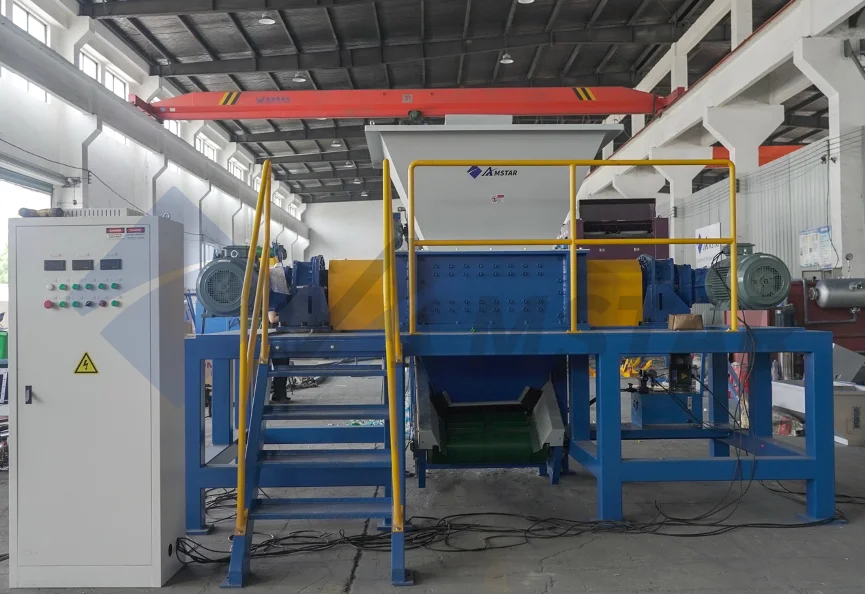
Also known as a twin-shaft shredder, this type uses two counter-rotating shafts with hooked blades that grab and rip material apart. It is built for heavy-duty applications — bulky materials like metal drums, pallets, plastic barrels, and even tires.
Because it has no screen, output size is irregular, but throughput is high and the machine shrugs off difficult, mixed feedstock that would jam a screened machine.
- Working principle: dual counter-rotating shafts, rip-and-tear action
- Typical output size: 50–300 mm (rough shredding)
- Key strengths: strong torque, low speed, low maintenance, high throughput
Quick Comparison Table
| Type | Working Principle | Ideal Materials | Output Size | Key Features |
| Rubber Shredder | Low-speed, high-torque shear cutting | Tires, rubber blocks, conveyor belts | 30–80 mm | Designed for elasticity and steel wire separation |
| Single-Shaft Shredder | Rotor + counter-knife + screen | Film, lumps, plastics, wood | 10–40 mm | Uniform output, hydraulic pusher, quiet |
| Double-Shaft Shredder | Dual counter-rotating shafts | Drums, bulky waste, tires | 50–300 mm | High throughput, coarse shredding |
How to Choose the Right Shredder
| Application | Recommended Shredder |
| Whole or truck tires | Rubber / tire shredder |
| Hard plastics, purgings, or pipes | Single-shaft shredder |
| Bulky solid waste or mixed material | Double-shaft shredder |
| Fine size reduction before pelletizing | Granulator (after shredding) |
Selection tips:
- Choose a rubber shredder when processing elastic materials or tires with steel wire rings — standard plastic shredders will stall or break blades.
- Use a single-shaft shredder for plastics where consistent flake size is required, such as rigid HDPE/PP/PS recycling lines or film washing lines.
- Pick a double-shaft shredder for coarse primary shredding of bulky or mixed waste before secondary processing.
- Add a granulator downstream if your end goal is fine, uniform flakes for extrusion or pelletizing.
- Always confirm steel contamination tolerance with the supplier before shredding tires or wire-reinforced rubber in a non-dedicated machine.
Finally, think about the full line, not just the shredder in isolation. A rubber shredder’s 30–80 mm chips still need downstream granulation and magnetic steel separation to become marketable crumb rubber, while a single-shaft shredder’s 10–40 mm flakes can often go straight to washing. Map your material flow from infeed to final product before committing to a machine — the cheapest shredder is rarely the cheapest line.
Why Choose ASG
- Application engineering: shredder rotor geometry, blade material, and screen configuration matched to your material — PET, HDPE, PP, film, or rubber.
- Built for continuous duty: heavy-duty drives, quality bearings, and precision-cut blades for stable long-shift operation.
- Complete lines, not just machines: from single-shaft and double-shaft shredders to rubber shredders, plus washing, drying, and pelletizing stages tailored to your capacity.
- Support after commissioning: installation guidance, operator training, spare parts supply, and remote technical assistance.
For related reading on the next size-reduction stage, see our guide on plastics shredders vs. granulators.
Frequently Asked Questions
Can a standard plastic shredder process whole tires?
No. Whole tires combine elastic rubber with steel wire rings — a standard plastic shredder will stall, overheat, or break blades. Use a dedicated rubber (tire) shredder designed for high-torque shear cutting and steel wire liberation.
What is the difference between a rubber shredder and a double-shaft shredder?
A rubber shredder is purpose-built for elastic materials: slower speeds, specialized blade geometry, and screens sized for rubber chips. A double-shaft shredder is a general heavy-duty machine that can rip tires coarsely but produces irregular 50–300 mm pieces — fine as a first stage, not as a finished tire chip.
What output size do tire shredders produce?
Typically 30–80 mm chips, depending on screen configuration. These chips then go to granulators or cracker mills for finer crumb rubber, with magnetic separators removing the liberated steel wire.
Single-shaft or double-shaft — which is better for plastic drums?
Both work. A double-shaft shredder handles whole drums at high throughput with coarse output; a single-shaft shredder gives controlled 10–40 mm output in one step. Choose based on whether you need coarse pre-shredding or finished flake size.
Do I need a granulator after the shredder?
If your downstream process is washing, extrusion, or pelletizing — yes. Shredders produce coarse, irregular pieces; a granulator refines them into uniform 3–12 mm flakes that wash evenly and feed extruders smoothly.
How do shredders handle metal contamination?
Dedicated rubber shredders tolerate the steel wire inside tires by design. Standard plastic shredders do not tolerate metal — tramp metal breaks knives and damages screens. Remove metal upstream with magnets or metal detectors, and confirm tolerance with the supplier for your specific material.
Which shredder is quietest?
Single-shaft shredders are generally the quietest thanks to controlled feeding and screened cutting. Double-shaft ripping and rubber shear-cutting are louder. In all cases, follow local noise regulations and provide hearing protection near the machines.
What maintenance do industrial shredders need?
Regular blade inspection and rotation or replacement, screen checks for wear and cracking, gearbox oil changes, hydraulic system checks (single-shaft), and bearing lubrication. Blade life depends heavily on material abrasiveness — rubber and glass-filled plastics wear blades fastest.
Can one shredder handle both rubber and plastic?
A heavy double-shaft shredder can process both coarsely, but it will not produce good tire chips or clean plastic flakes. For quality output, dedicate the machine to the material family — rubber shredders for elastomers, screened single-shaft machines for plastics.
How do I size a shredder for my line?
Start from the largest, toughest item you will feed it — not the average. Size the drive, rotor, and throughput for that worst case with margin, and make sure the shredder’s output rate matches or exceeds the downstream granulator or washing stage so it never becomes the bottleneck.
Inquiries
To learn more about rubber shredders, single-shaft or double-shaft machines for your material, send us a message using the form below: