

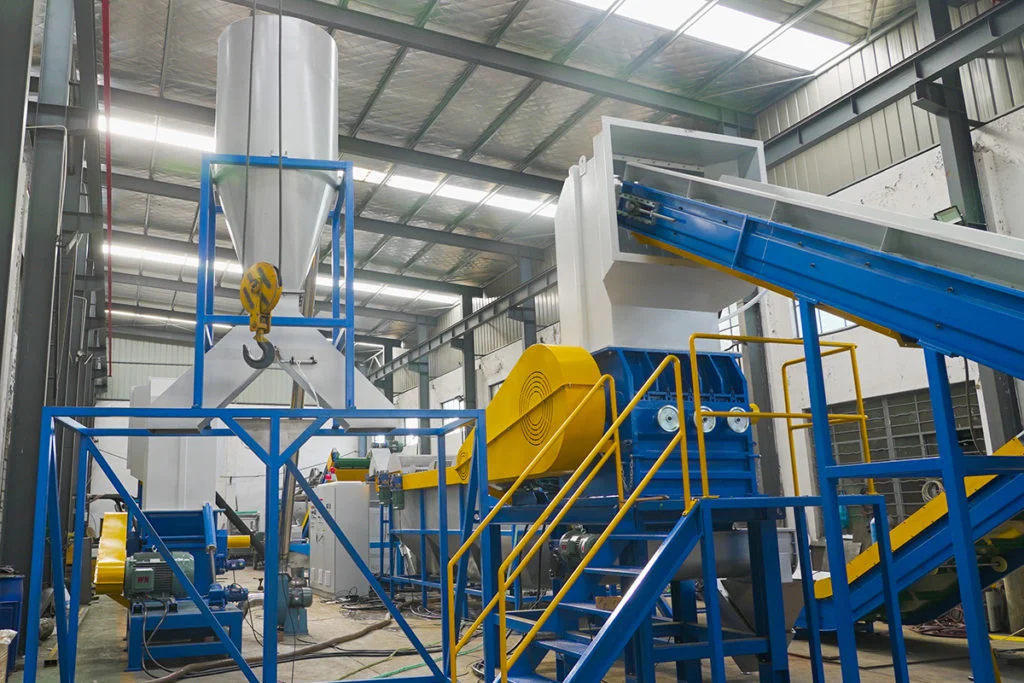
Using densified plastic film for chemical recycling has become the new trend in recycling PE and PP plastic films in the USA and around the world.
Our PP PE film shredding densifying line is your complete solution for turning dirty bales of PP/PE films into densified product ready for chemical application or processing into plastic granules via pelletizing. We offer standard capacities from 200kg/h up to 1000kg/h and can also manufacture as per your requirements.
WORKING PRINCIPLE
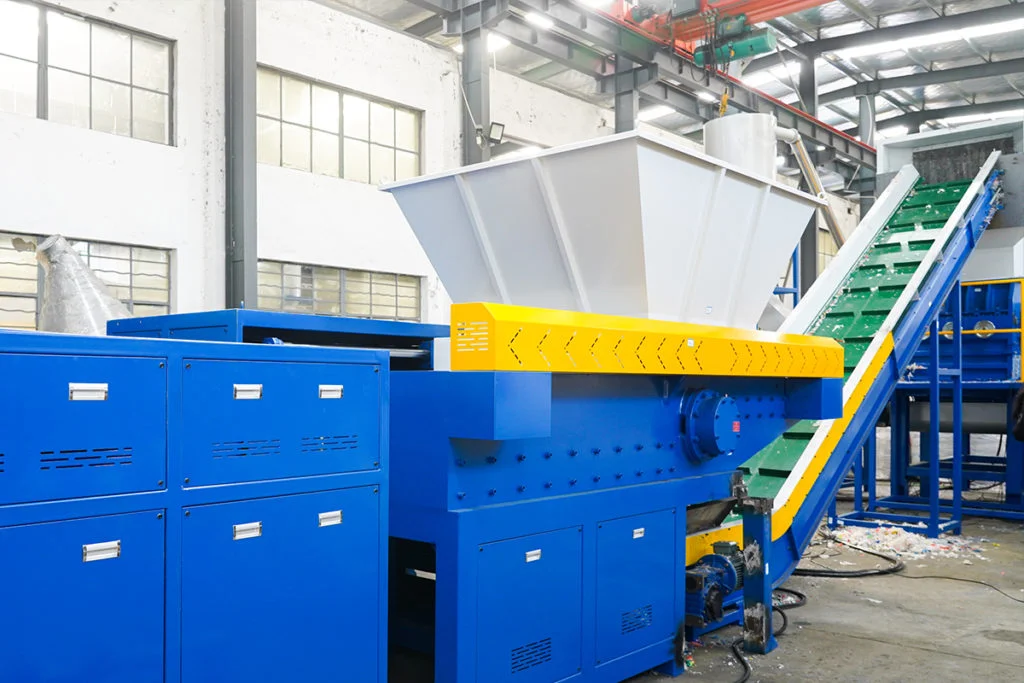
- Shredder– As plastic films often come in bales, compacted bundles tied together with wires, the first stage is to breaks the bales using a single shaft shredder with movable hopper. Once the bales are broken, the plastic PP / PE films are shredded and can now drop freely onto the belt conveyor that moves the material onto the next stage.
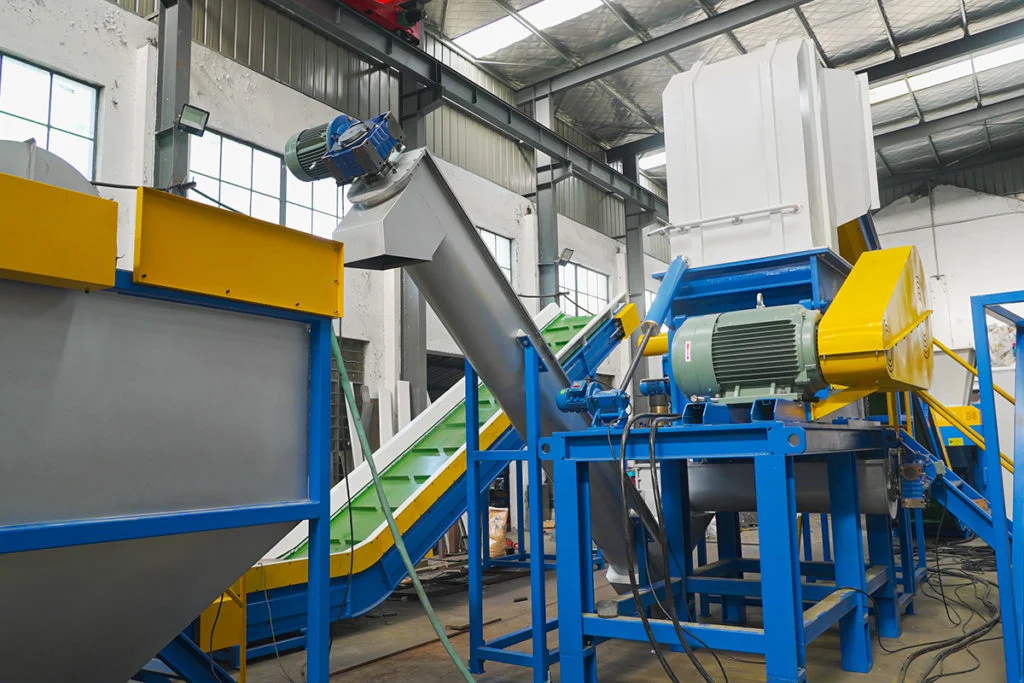
- Wet Granulator / Crusher – The shredded material is too big for the densifying process. Therefore, the next step is to cut these “shreds” into “flakes”, or small pieces, via our wet granulator. A granulator is made up of an open rotor mounted with heavy-duty knives that spin at high speeds. As the material enter the granulator’s cutting chamber, these rotating knives come into contact with stationary knives cutting the material into small pieces. A screen with small holes between 60-100 mm in diameter is used to control the size of the flakes; That is, the plastic film will continue to be cut within the chamber until it is small enough to fall through the holes on this screen. All the while, water is sprayed into the cutting chamber partially washing the material while acting as a lubricant to reduce friction of the knives and plastic.
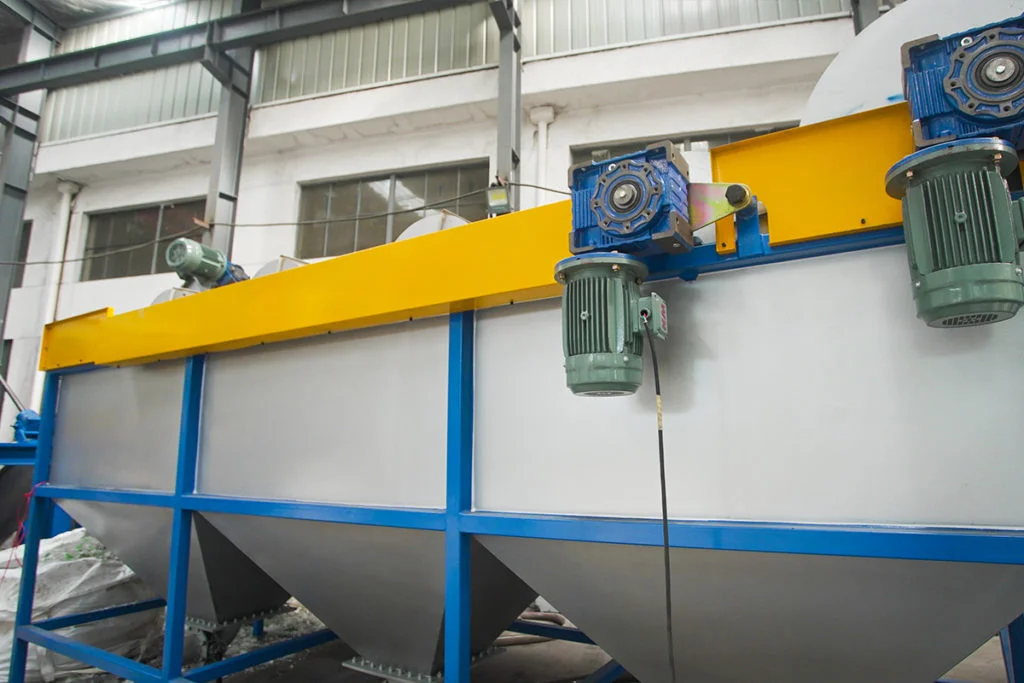
- Sink / Float Tank – This is a large tank of water used to clean, wet and remove contamination all at once. As the small pieces of film move along this water tank propelled by large rotating paddles, the plastic film continues to float on top while contamination such as mud/little stones sink to the bottom and are removed.
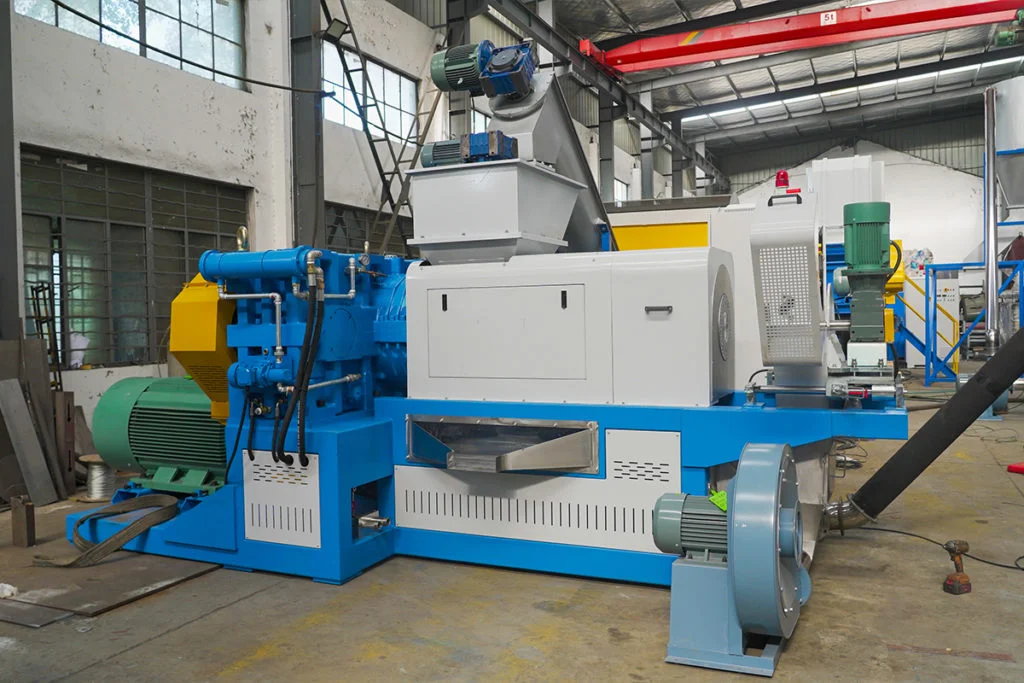
- Squeezer – This is the most important process in this line where the clean plastic film are densified into irregular pellets using a large screw and heaters. Depending on the material type, the density of finished product is increased dramatically to approximately 350-410 kg/m3.
The densified material after squeezer is around 50 mm long. If this is too large, you can add an additional granulator at the end of the process to reduce its size further.
TECHNICAL SPECIFICATIONS
| Capacity | 200 kg/hr | 500 kg/hr | 1000 kg/hr |
| Dimension | 25 x 5 x 5.5m | 28 x 6 x 5.5m | 35 x 8.5 x 5.5m |
| Operator | 2-3 | 2-3 | 2-3 |
| Installation Power | 196 KW | 215 KW | 401 KW |
ADDITIONAL VIDEOS & IMAGES
WARRANTY & INSTALLATION
All recycling machinery comes with a limited warranty
We offer installation packages where our engineers travel to your facility to guide your through the installation process the. Routine maintenance teams and operations consultants can also be arranged to ensure your PET recycling plant runs smoothly year and year.
INQUIRIES
To get the latest prices and lead times, send us a message using the form below.
Frequently Asked Questions
What is densified film, and why is it a growing trend?
Densified film is shredded, cleaned PP/PE film compacted by a heated screw into dense, irregular pellets of about 50 mm length with bulk density of 350–410 kg/m³. This compact, flowable format is ideal feedstock for chemical recycling processes and also feeds conventional pelletizing extruders efficiently. Using densified film for chemical recycling has become the new trend in the USA and worldwide because it solves film’s biggest handling problem: extremely low bulk density.
What materials and capacities does the line handle?
The line turns dirty bales of PP/PE films into densified product, with standard capacities of 200, 500, and 1,000 kg/h and custom builds available. Installed power ranges from 196 kW to 401 kW, footprints from 25 × 5 m up to 35 × 8.5 m, and each size needs only 2–3 operators. The single-shaft shredder with movable hopper opens compacted, wire-tied bales so even heavily baled post-consumer film feeds smoothly.
How does the shredding and densifying process work?
Bales are first broken by a single-shaft shredder, then cut into flakes by a wet granulator with a 60–100 mm screen. A sink/float tank cleans and wets the flakes while mud and stones sink away. Finally, the squeezer — the heart of the line — densifies clean film into irregular pellets using a large heated screw. If the ~50 mm densified output is too large, an additional granulator can be added at the end for further size reduction.
What moisture level does the densified product reach?
The squeezer combines mechanical screw pressing with heaters, which both compacts the film and drives off surface moisture during densification. Because the material enters the squeezer already washed in the sink/float tank, the heated process delivers a dry, dense product ready for chemical recycling or pelletizing. Keeping wash water and squeezer temperature properly balanced is key to consistent output quality.
Can the line be integrated with pelletizing?
Yes — the densified output is an excellent, free-flowing feed for a pelletizing extruder, and many plants run the densifying line directly ahead of pelletizing to produce finished recycled granules. See our pelletizing line selection guide to match the right extrusion and filtration setup to densified film. Alternatively, the densified product can be sold directly as chemical-recycling feedstock.
What about installation, warranty, and maintenance?
All recycling machinery comes with a limited warranty, and installation packages include engineers traveling to your facility to guide the installation. Routine maintenance teams and operations consultants can also be arranged to keep the line running smoothly year after year. Key maintenance points are shredder and granulator blades, the squeezer screw and heaters, and the sink/float tank’s paddle and discharge systems.