

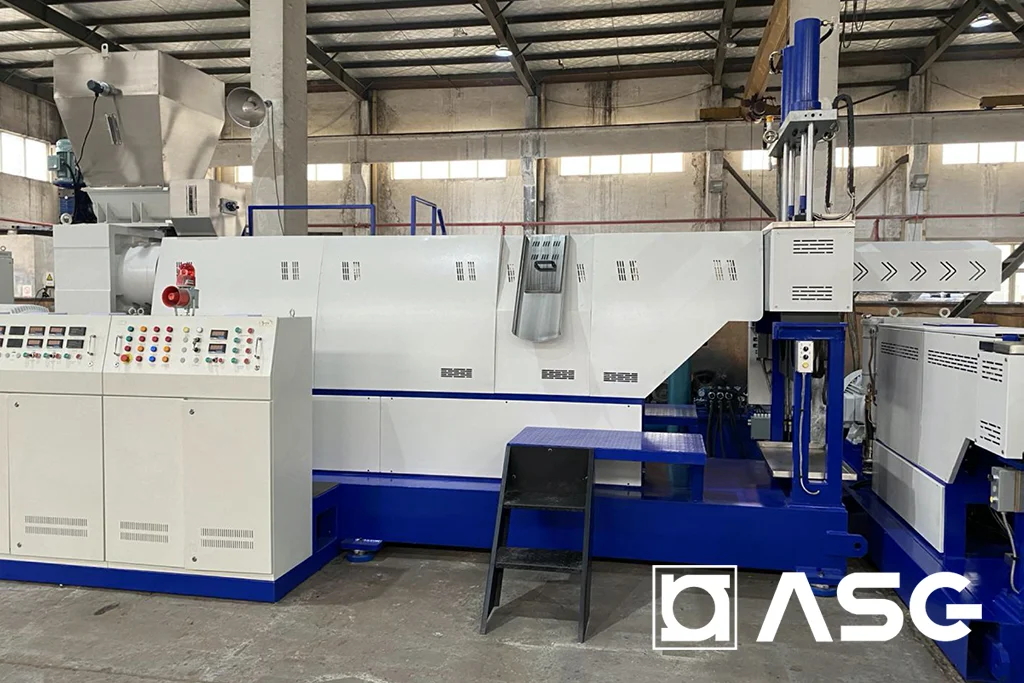
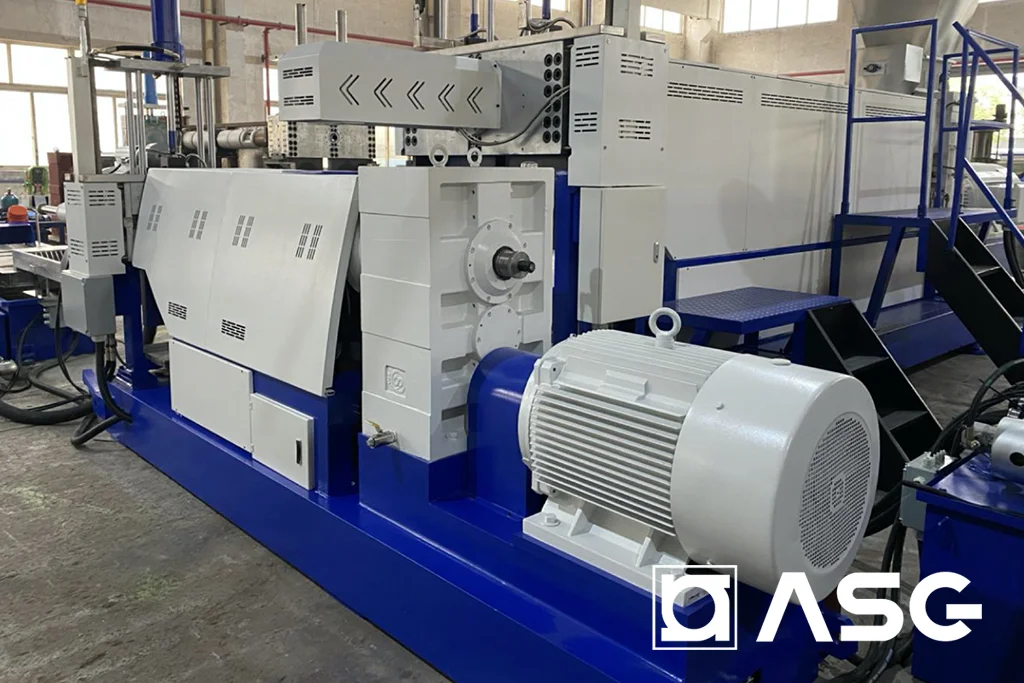
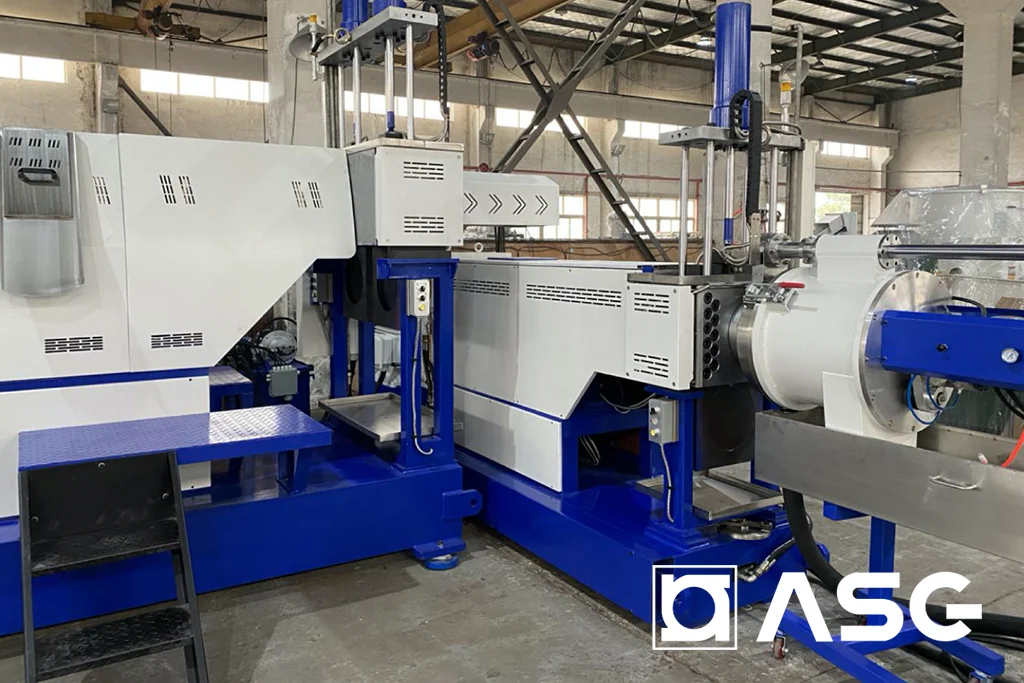
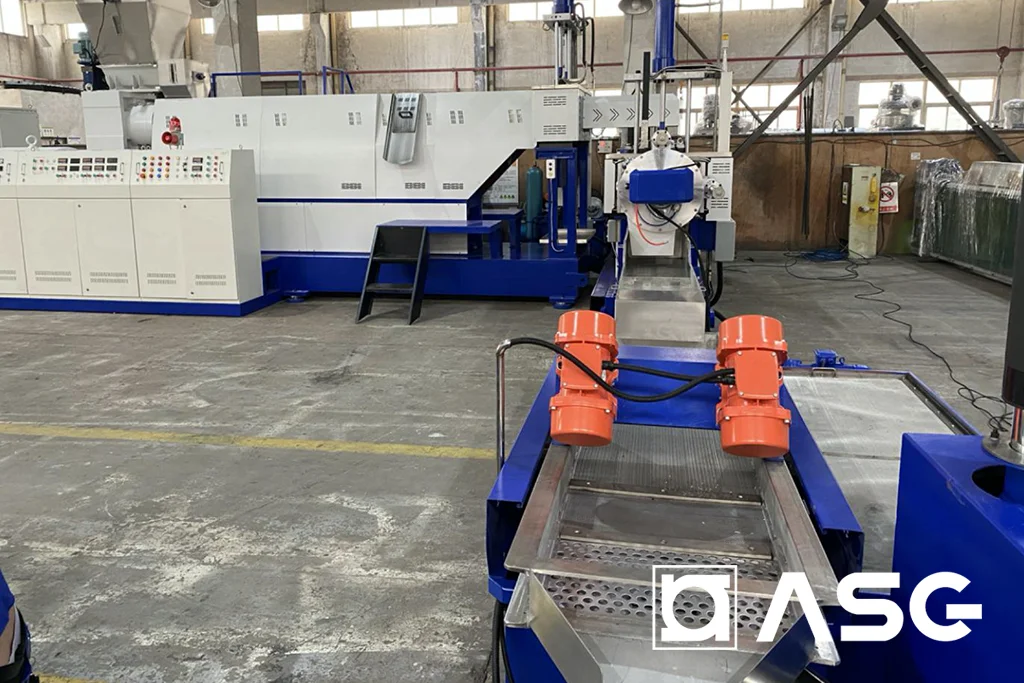
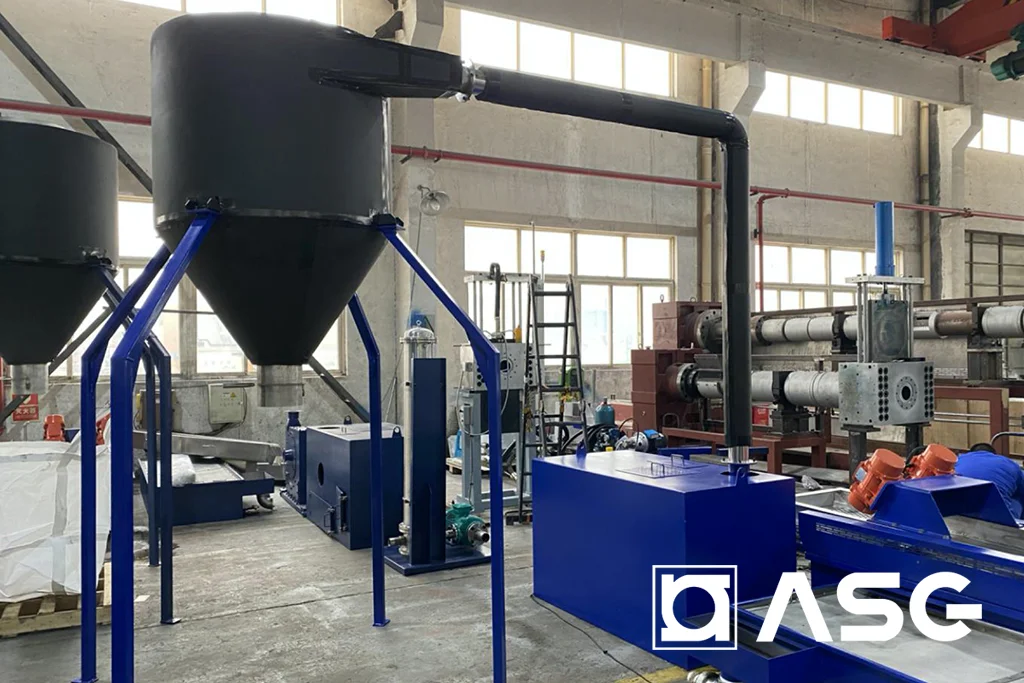
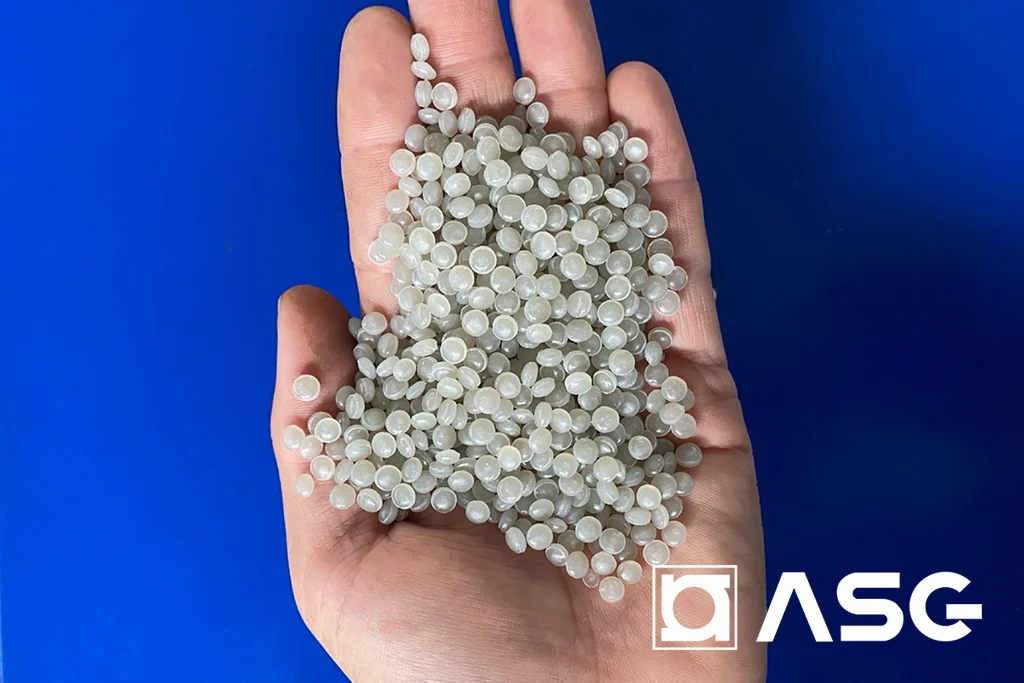
This two-stage HDPE flakes pelletizing system consists of two sets of single screw extruders and combines the function of feeding, plasticization and pelletizing into a single step. The final product produced by this pelletizing machine are high quality pellets / granules (see additional images below) that can be directly put into plastic injection machines or other applications
WORKING PRINCIPLE
- Feeding: The flakes are fed into the extruders by screw conveyors that are controlled by VFD. The VFD feeding system stops automatically when the electric current in the extruder is high and will only resume when the electrical current returns to normal parameters.
- Plasticization and degassing: A specialized single-screw extruder gently melts the pre-compacted material. The plastic scraps is melted and plasticized in the first stage extruder and then extruded by the second stage extruder. With this “dual-zone” vacuum degassing system, volatiles such as low molecular weight materials and moisture is efficiently removed. This results in more uniform final products.
- Melt filtration: This system makes use of segmented filtration. The first extruder is responsible for removing coarse contaminants via pre-filtration. A high mesh filter is then applied to the second extruder to remove fine particles. This reduces the frequency for changing filtration medias and sieves.
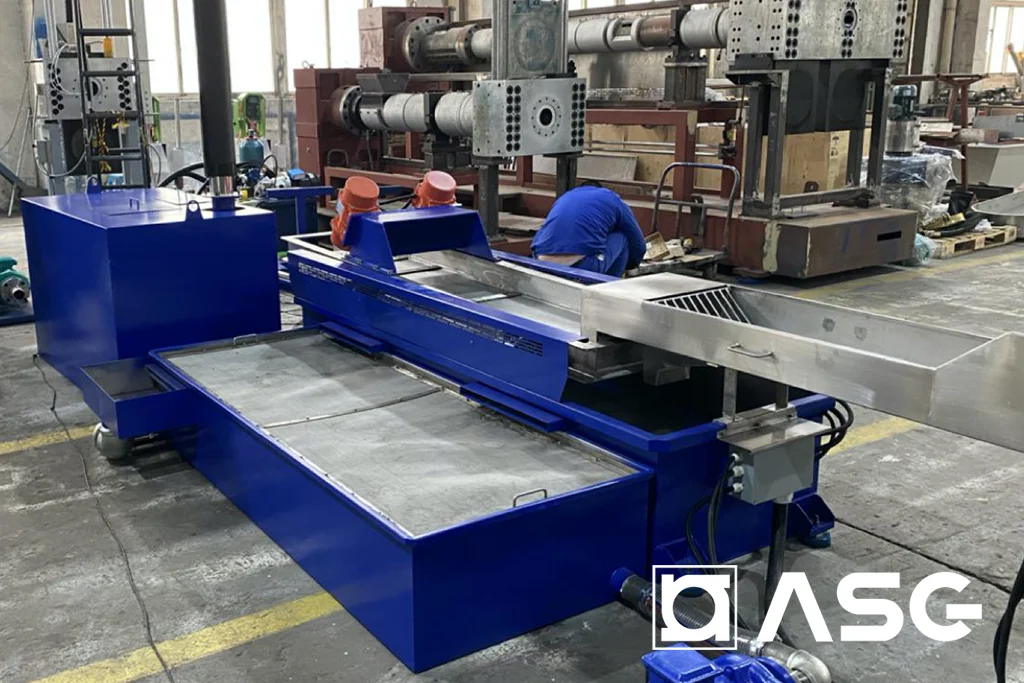
- Pelletizing: To turn the extruded plastic into granules, a standard die-face water ring pelletizing system is applied. Once the pellets are formed, an advanced dewatering vibration sieve is combined with a horizontal-type centrifugal dewatering machine to dry the pellets for storage.
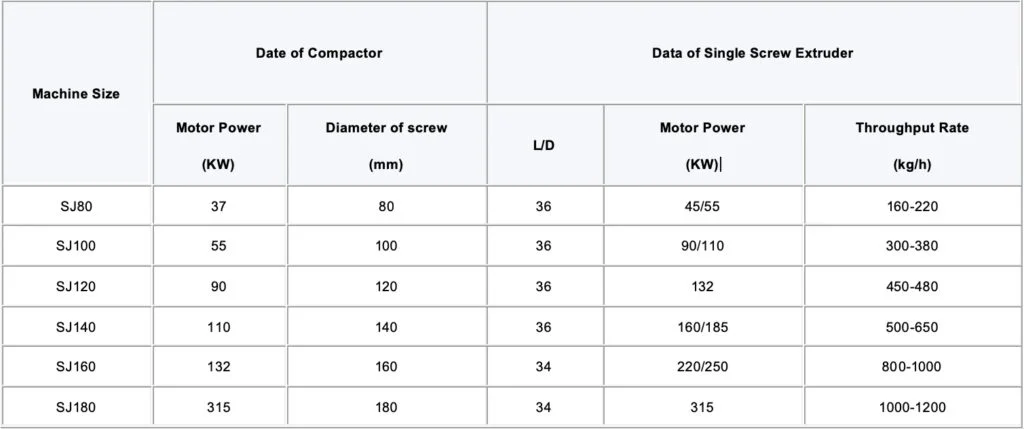
TECHNICAL SPECIFICATIONS
ADDITIONAL IMAGES
INQUIRIES
To get the latest prices and lead times, send us a message using the form below.
Frequently Asked Questions
What material is this pelletizing machine designed for?
The system is built for PP and HDPE rigid plastic flakes — washed flakes from bottle, container, or rigid packaging recycling. Unlike film regrind, rigid flakes feed and melt differently, so this line uses a feeding and plasticization setup tuned for pre-compacted rigid material, delivering high-quality pellets and granules ready for injection molding or other applications.
How does the feeding system protect the extruders?
Flakes are fed by screw conveyors controlled through VFD drives. When the extruder’s electric current rises above the set limit — a sign of overfeeding or a surge in material — the feeding system stops automatically and only resumes once current returns to normal parameters. This self-protection prevents motor overload and keeps plasticization stable.
How does the degassing system improve pellet quality?
A dual-zone vacuum degassing system removes volatiles such as low-molecular-weight materials and moisture from the melt between the two extruder stages. Stripping these gases out is what gives the finished pellets their uniform, void-free quality — without it, trapped moisture and volatiles would cause bubbles and weak spots in molded parts.
How is melt filtration handled?
Filtration is segmented across the two stages: the first extruder performs coarse pre-filtration to remove larger contaminants, and a high-mesh filter on the second extruder catches fine particles. Splitting filtration this way reduces how often filter media and sieves need changing and keeps melt pressure more stable during continuous operation.
How are the pellets cut and dried?
Extruded plastic is granulated with a standard die-face water-ring pelletizing system. Fresh pellets then pass through an advanced dewatering vibration sieve combined with a horizontal-type centrifugal dewatering machine, which removes surface water so the pellets can go directly into storage or into injection machines without further drying.
What can the finished pellets be used for?
The high-quality pellets and granules can go directly into plastic injection machines or other applications such as extrusion. Because the two-stage process with vacuum degassing and segmented filtration produces consistent, clean output, the pellets can replace virgin resin in many products — discuss your target application with our team to confirm the right specification.