

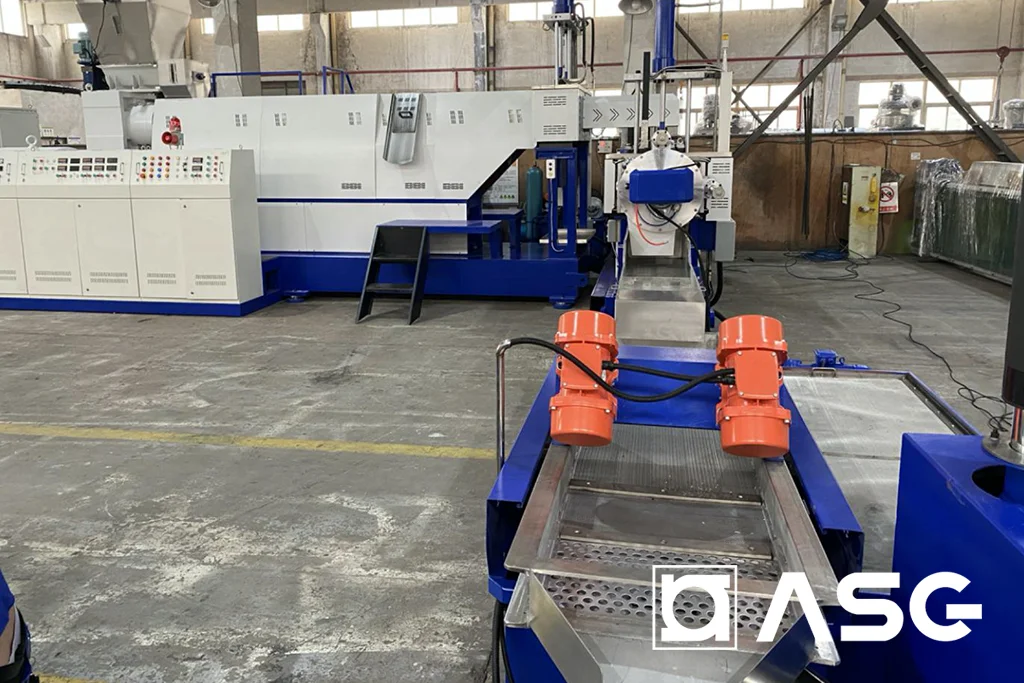
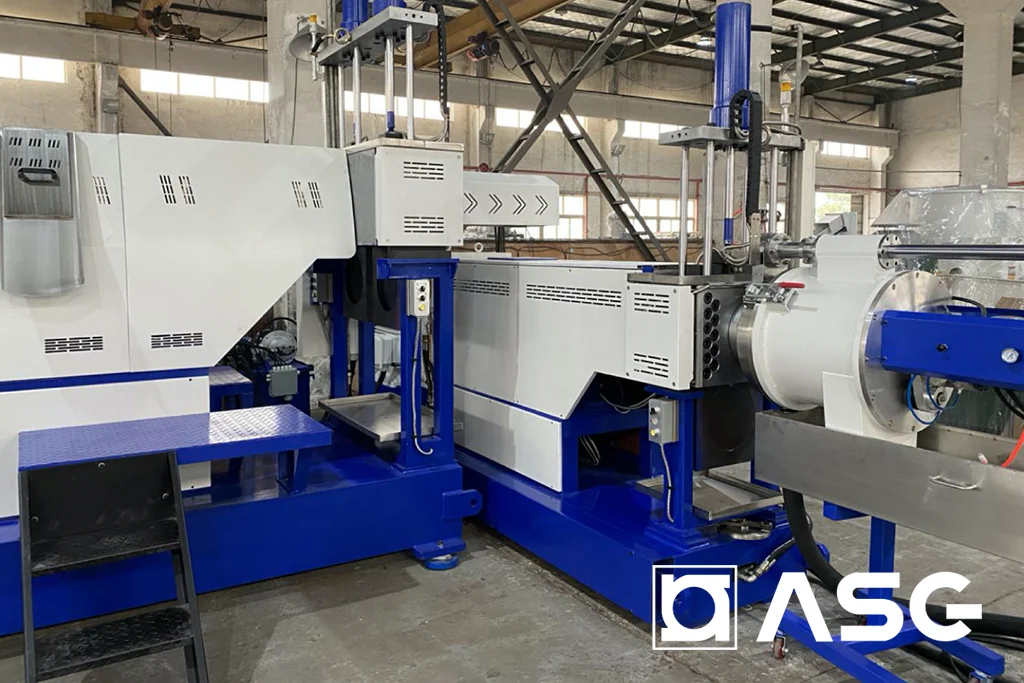
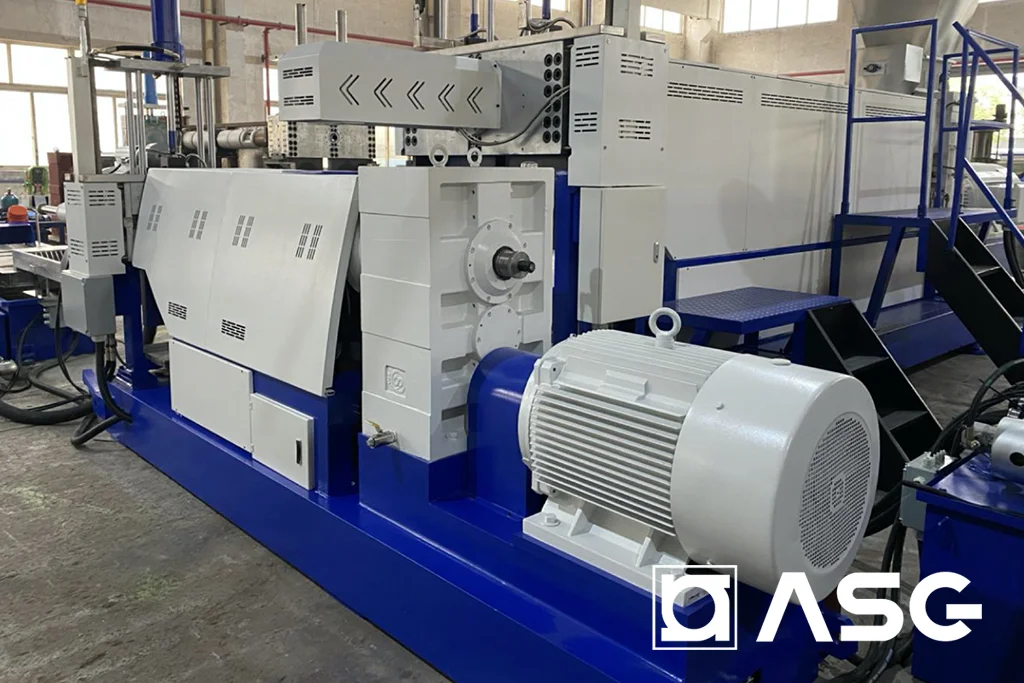
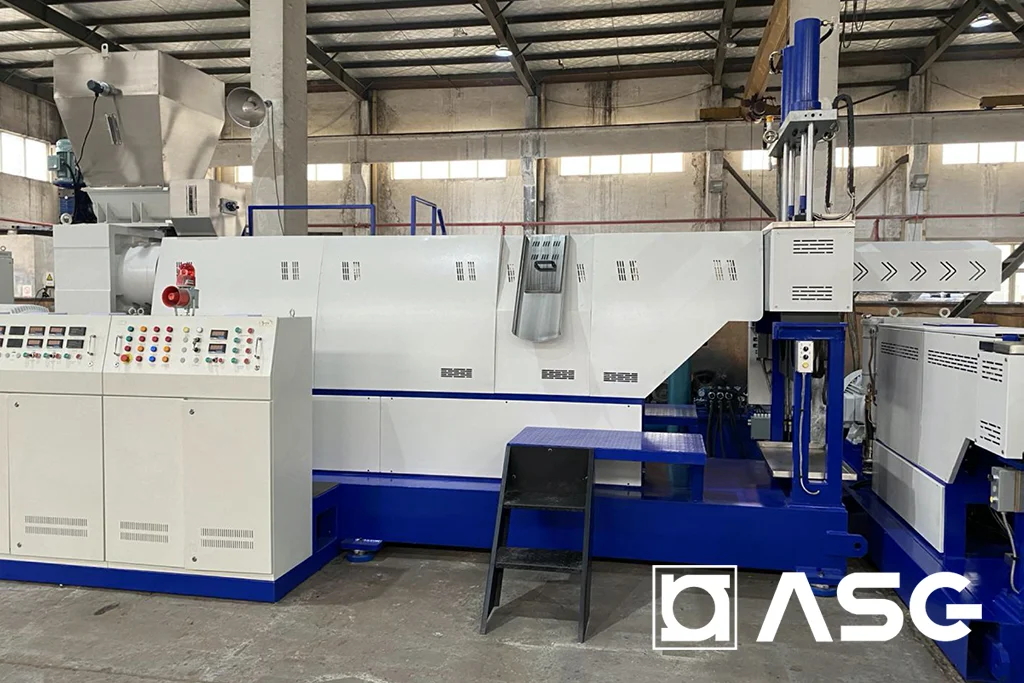
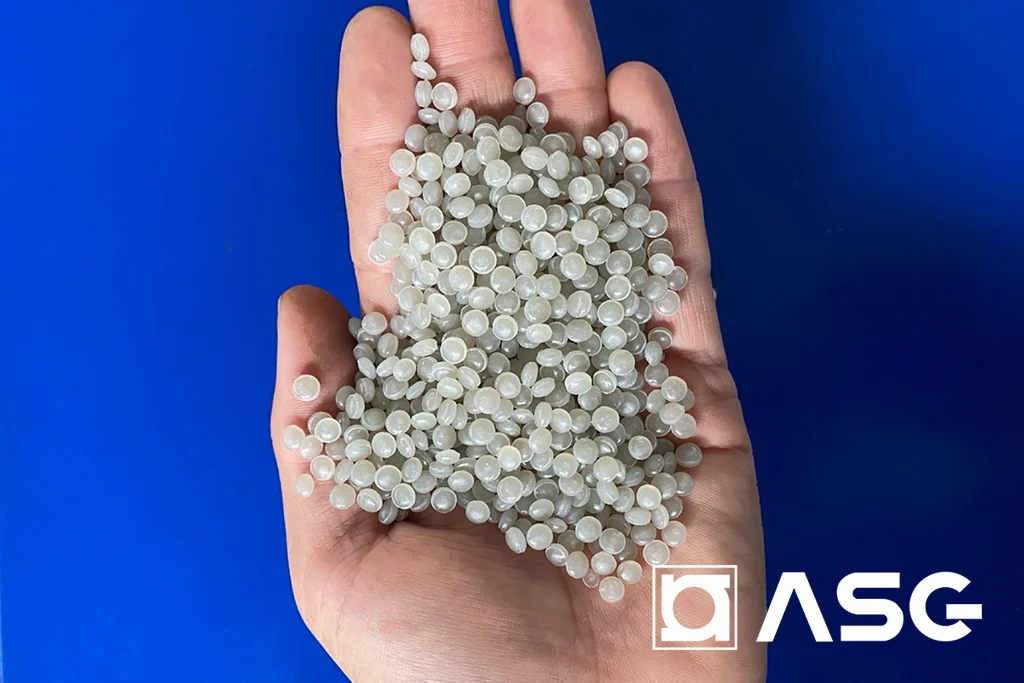
The two-stage PP PE pelletizing system is used to process film regrinds from a washing plant. It consists of two sets of single screw extruders to insure the finished product is of high quality. Final products manufactured by this pelletizing system are in the form of pellets / granules and can be directly used in the production line for film blowing, pipe extrusion, plastic injection, etc.
WORKING PRINCIPLE
1. Feeding. The film regrind is fed into the dosing feeder through a screw conveyor. When the electric current of extruder is higher than what we have set, the dosing feeder and feeding screw conveyor will stop automatically.
2. Plasticization and Degassing. A specialized single screw extruder is applied to gently melt the film regrind. The plastic scraps are well melted and plasticized in the first stage extruder. The plastic will then be extruded by the second stage extruder. With a double-zone vacuum degassing system, volatiles such as low molecular and moisture are removed efficiently. This system is especially suitable for heavy printed films and material with some water content.
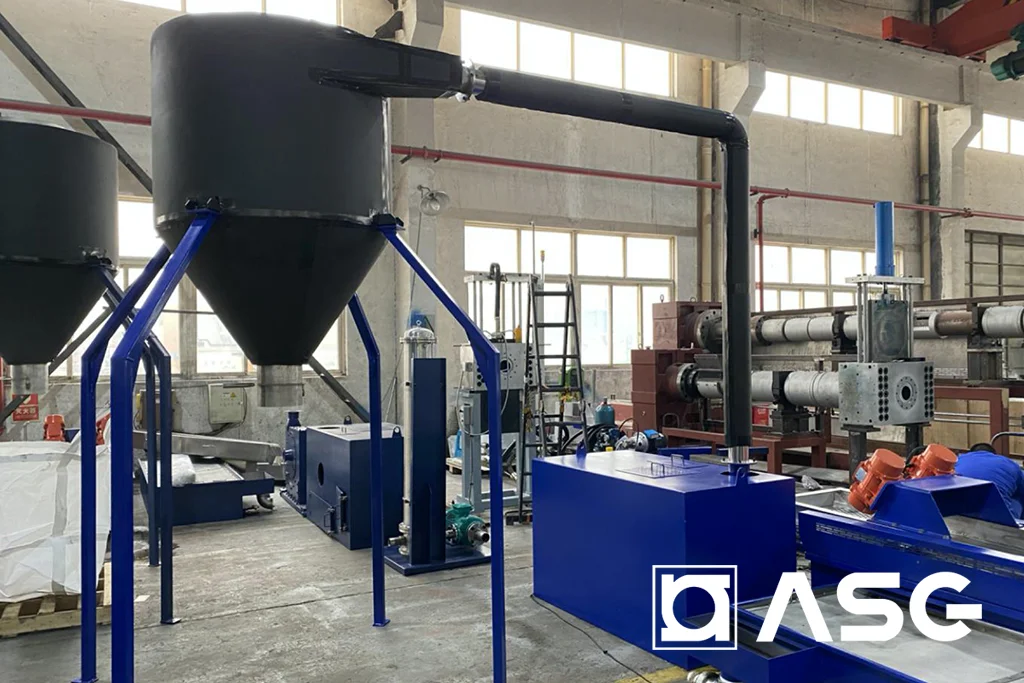
3. Melt Filtration. According to our segmented filtering principle, pre-filtering is completed in the first extruder whereas fine filtering in done in the second extruder. This helps to reduce the frequency of replacing filtering sieves.
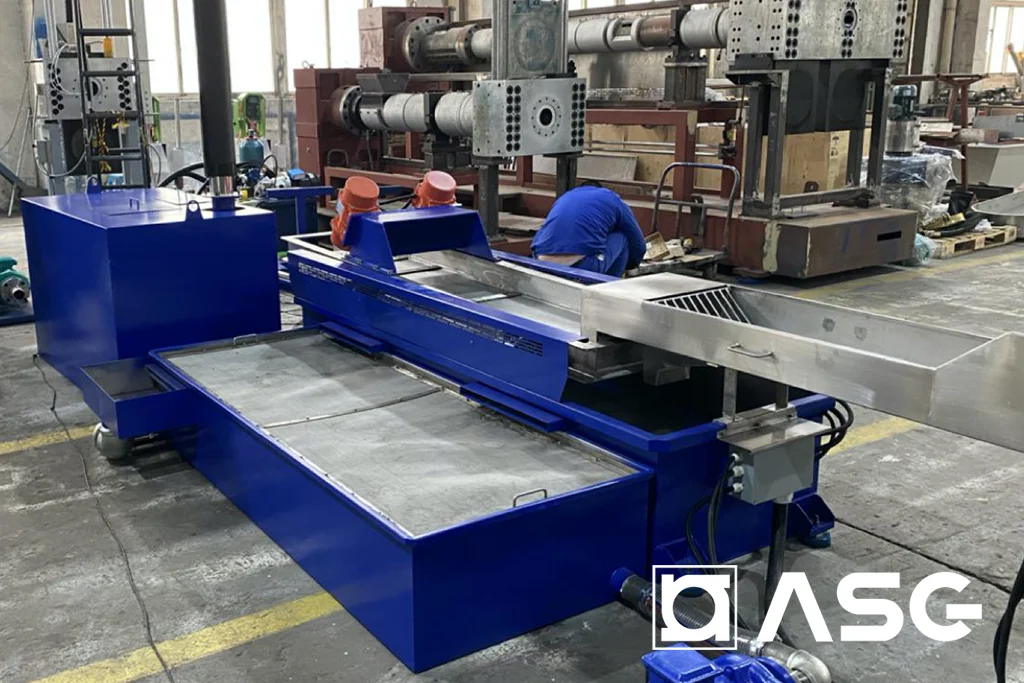
4. Pelletizing. To achieve high performance dried pellets, a die-face water ring pelletizing system is accompanied with an advanced dewatering vibration sieve and horizontal-type centrifugal dewatering.
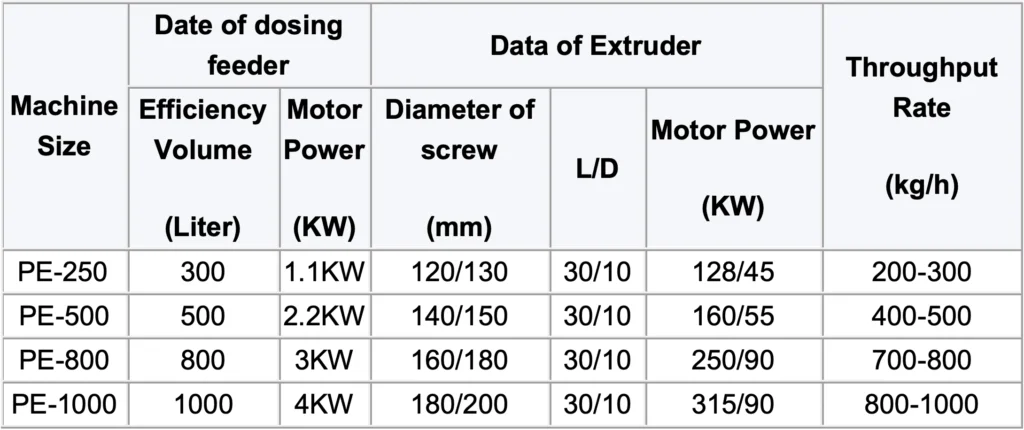
TECHNICAL SPECIFICATIONS
ADDITIONAL IMAGES
INQUIRIES
To get the latest prices and lead times, send us a message using the form below.
Frequently Asked Questions
What materials is this pelletizing line designed for?
This two-stage PP/PE pelletizing system is built to process film regrind coming from a washing plant. It handles PP and PE film flakes, including heavy printed films and material with some residual water content. The gentle-melting single-screw extruders and double-zone vacuum degassing keep pellet quality high even when the input stream is not perfectly clean or dry.
Why does the line use two extruder stages?
Two sets of single-screw extruders split the work: the first stage melts and plasticizes the film regrind while completing pre-filtering, and the second stage finishes fine filtration before pelletizing. This segmented filtering principle reduces how often filter sieves need replacing. The second stage also applies double-zone vacuum degassing to remove volatiles, low-molecular compounds, and moisture efficiently.
How does the feeding and degassing process work?
Film regrind is fed into a dosing feeder through a screw conveyor. If the extruder current rises above the set value, the dosing feeder and feeding screw conveyor stop automatically to prevent overload. In the extruders, a specialized single-screw design gently melts the film, and the double-zone vacuum degassing system removes volatiles such as low-molecular material and moisture — especially important for heavy printed films.
What pelletizing and dewatering system is used?
Pelletizing uses a die-face water ring pelletizing system to cut the melt into uniform pellets. To deliver high-performance dried pellets, it is paired with an advanced dewatering vibration sieve and horizontal-type centrifugal dewatering. This combination removes surface water right after cutting, so pellets arrive at downstream production dry and ready to use.
What end products can be made from the pellets?
The finished pellets and granules can be used directly in production lines for film blowing, pipe extrusion, and plastic injection. Because the two-stage process with vacuum degassing removes volatiles and moisture, the pellets are well suited to applications where consistency matters, such as new film or pipe made partly from recycled content.
What maintenance does the line require?
Key maintenance items are the pelletizer blades, the segmented filter sieves, and the dewatering sieve and centrifugal components. Keeping cutter blades sharp and correctly set is essential for uniform pellet size — see our guide on how to change blades on a plastic pelletizer machine. Regular checks of the vacuum degassing system and dosing feeder keep the line running at full quality.