

twin-shaft-shredder-01
Overview of Twin-Shaft Shredders in PET Recycling
Twin-shaft shredders represent a critical component in modern PET plastic recycling operations. These reliable machines are specifically engineered to handle the demanding task of pre-processing entire bales of PET bottles, preparing them for subsequent washing and purification stages. Unlike single-shaft alternatives, twin-shaft configurations provide superior cutting torque and material handling capabilities, making them indispensable for high-volume recycling facilities.
The integration of a twin-shaft shredder from ASG Machine into your PET washing line significantly enhances overall system efficiency by ensuring consistent feedstock size reduction, which directly impacts washing effectiveness and final product quality.
Engineering Excellence: How Twin-Shaft Shredders Work
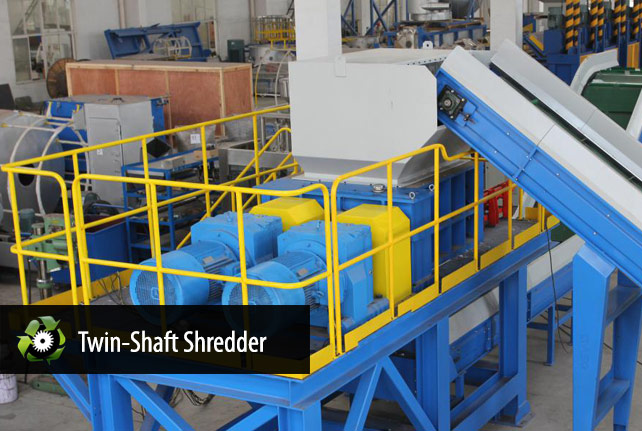
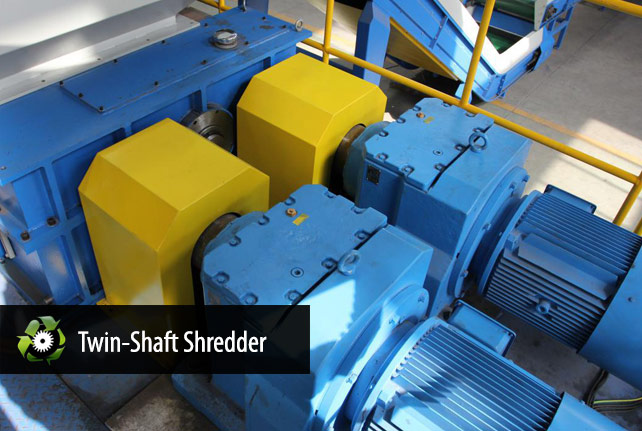
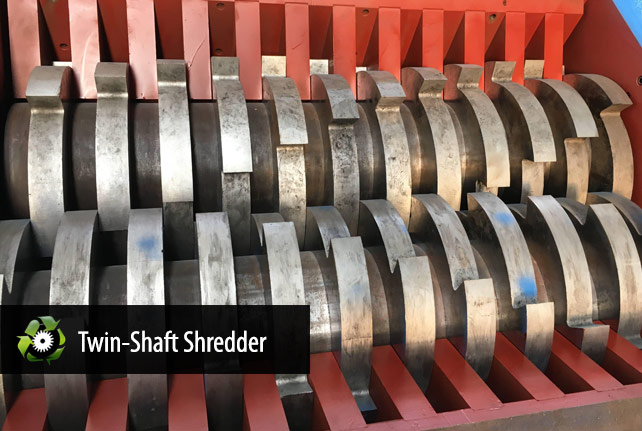
At the heart of our twin-shaft shredder technology lies a precisely engineered cutting system featuring shear blades mounted on dual hexagonal shafts. These counter-rotating shafts create a powerful cutting and tearing action that efficiently processes PET materials without generating excessive heat or noise.
The specifically designed hooked shear blades engage materials at optimal angles, effectively reducing entire PET bales to uniform fragments ranging between 1-5 inches. This size consistency is crucial for downstream processing efficiency. The low rotational speed (18-35 RPM) of our shredders ensures several key advantages:
- Minimal dust generation: Preserves material quality and reduces airborne particles
- Reduced energy consumption: Lower operating costs compared to high-speed alternatives
- Enhanced durability: Less wear on components and extended machine lifespan
- Consistent throughput: Maintains steady production rates without fluctuation
Structural Integrity and Build Quality
Our twin-shaft shredders are built to withstand the most challenging recycling environments. The frame construction utilizes high-thickness steel plates and reinforced tubular elements, providing exceptional structural stability during operation. This solid foundation ensures consistent performance even under continuous heavy-duty applications.
The cutting blades represent the pinnacle of materials engineering. Manufactured from premium SKD11 steel (equivalent to D2 tool steel), these components undergo specialized heat treatment processes to achieve optimal hardness (58-60 HRC) while maintaining necessary toughness. This combination ensures extended blade life and reduced maintenance requirements, even when processing contaminated PET materials.
Technical Specifications and Model Comparison
We offer a comprehensive range of twin-shaft shredder models to accommodate various production requirements. Each model is engineered with specific capabilities to match different operational scales.
| Model # | Motor Power | Number of Blades | Rotating Speed | Capacity (KG/H) |
|---|---|---|---|---|
| SSJ400-800 | 2 x 22KW | 16 / 26 | 25 / 35 RPM | 1,500 |
| SSJ400-1200 | 2 x 30KW | 24 / 40 | 25 / 35 RPM | 2,500 |
| SSJ450-800 | 2 x 30KW | 16 / 26 | 18 / 28 RPM | 3,000 |
| SSJ450-1200 | 2 x 45KW | 24 / 40 | 18 / 28 RPM | 4,000 |
Advanced Features and Operational Benefits
Our twin-shaft shredders incorporate several innovative features that distinguish them from conventional recycling equipment:
Intelligent Control Systems Modern PLC-based controls with touchscreen interfaces provide operators with real-time monitoring capabilities. These systems track operational parameters including motor load, throughput rates, and maintenance intervals, enabling proactive management of the shredding process.
Safety Mechanisms Comprehensive safety systems include emergency stop buttons, electrical overload protection, and mechanical safety interlocks. These features ensure operator protection and prevent equipment damage during abnormal operating conditions.
Customization Options We understand that every recycling operation has unique requirements. Our engineering team can customize shredder configurations to address specific material characteristics, space constraints, or integration needs with existing washing lines.
Industry Applications Beyond PET Processing
While particularly effective for PET bottle recycling, our twin-shaft shredders demonstrate exceptional versatility across multiple industrial applications:
- HDPE and PP container processing
- Mixed plastic waste reduction
- Electronic waste preprocessing
- Municipal solid waste size reduction
- Industrial scrap recycling
This adaptability makes the twin-shaft shredder a valuable investment for facilities handling diverse material streams.
Maintenance and Operational Considerations
Proper maintenance ensures optimal performance and extended equipment life. Our shredders are designed with serviceability in mind, featuring:
- Easy-access inspection panels for quick blade examination
- Hydraulic opening systems for simplified maintenance access
- Modular component design reducing downtime during repairs
- Comprehensive service documentation and technical support
Regular maintenance should include blade inspection and rotation, bearing lubrication, and drive system checks. Our technical team provides detailed maintenance schedules and operational guidelines with each installation.
Market Trends in Plastic Recycling Technology
The global push toward circular economy models has significantly increased demand for efficient recycling technologies. Current industry trends include:
- Increased automation in material handling and sorting
- Higher capacity processing requirements
- Stricter quality standards for recycled flakes
- Growing emphasis on energy-efficient operations
- Integration of IoT technologies for performance monitoring
Our twin-shaft shredders address these trends through their high-throughput capabilities, energy-efficient operation, and compatibility with automated feeding systems.
Selecting the Right Shredder for Your Operation
Choosing the appropriate shredder model requires careful consideration of several factors:
Production Volume Requirements Match the shredder capacity to your current and anticipated future production needs. Consider seasonal fluctuations and potential business growth when selecting model size.
Material Characteristics Evaluate the specific types of PET materials you process, including contamination levels, bottle sizes, and bale densities. These factors influence shredder selection and configuration.
Downstream Processing Ensure the shredded output size aligns with your washing line requirements. Consistent fragment size improves washing efficiency and final product quality.
Facility Constraints Consider available space, power supply capabilities, and material handling logistics when planning shredder installation.
Installation and Integration Services
Our team provides comprehensive support throughout the equipment integration process:
- Site evaluation and planning assistance
- Customized foundation design recommendations
- Material handling system integration
- Electrical and control system interfacing
- Operator training and operational documentation
This holistic approach ensures smooth implementation and rapid operational readiness.
Frequently Asked Questions
When should I choose a twin-shaft shredder over a single-shaft for PET?
Choose a twin-shaft when your feed is whole bales, heavily contaminated bottles, or mixed bulky scrap. The counter-rotating shafts deliver far higher torque at low speed (18–35 RPM), so they bite into dense bales without jamming. Single-shaft machines suit cleaner, pre-sized feed. For a PET washing line front end, the twin-shaft’s bale-breaking ability usually makes it the safer choice.
How do I size the right model for my washing line?
Match the shredder to your line’s peak throughput: the SSJ400 series covers roughly 1,500–2,500 kg/h, while the SSJ450 reaches 3,000–4,000 kg/h. Size for bale-fed surges rather than average rates, and confirm the downstream granulator can keep up. If you plan line expansion, stepping up one model now is cheaper than replacing the shredder later.
Can it handle whole bales and contaminated PET feedstock?
Yes — whole PET bales are the twin-shaft’s core application, and it tolerates typical contamination levels such as labels, caps, and dirt. Remove excessive metal, stones, or other non-processable material first; a metal detector ahead of the shredder protects the SKD11 blades. Consistent 1–5 inch fragments keep downstream washing efficient.
What power and installation requirements should I plan for?
Depending on the model, plan for dual motors from 2 x 22 kW up to 2 x 45 kW of three-phase power, with appropriately rated breakers and cabling. The heavy steel frame needs a level concrete foundation to absorb cutting forces. Allow space for bale infeed (conveyor or forklift), discharge to the granulator, and hydraulic-panel access for maintenance.
How often do the blades need attention?
Blade longevity depends on contamination and hours run. As a rule of thumb, inspect and rotate the blades every 400–600 operating hours and plan replacement after roughly 2,000–3,000 hours under normal PET conditions. Easy-access inspection panels and hydraulic opening systems keep the job fast. Keep a spare blade set on site to avoid extended downtime.
How does the shredder integrate with a complete PET bottle washing line?
It sits at the very front: bales are torn into uniform fragments that feed the wet granulator, then washing, rinsing, and centrifugal drying stages. Fragment size consistency is the payoff — even-sized pieces wash and dry more uniformly, raising flake quality. Specify the shredder together with the line so capacities and interfaces match from day one.
Conclusion
Investing in a high-quality twin-shaft shredder represents a strategic decision for any serious PET recycling operation. The technology offered by ASG Machine combines robust construction, advanced engineering, and operational efficiency to deliver exceptional value throughout the equipment lifecycle.
By ensuring consistent feedstock preparation, reducing downstream processing challenges, and maintaining operational reliability, our twin-shaft shredders provide the foundation for successful PET recycling operations. The comprehensive model range ensures we can meet specific capacity requirements while maintaining the quality and performance standards that define industrial excellence.
twin-shaft-shredder-03
twin-shaft-shredder-02
Ordering Information and Lead Times
Standard equipment orders typically ship within 30 days of order confirmation. Custom configurations or complete washing line installations require 60-90 days for manufacturing and testing. Actual lead times may vary based on project complexity and current production schedule.
For detailed specifications and pricing, contact ASG Machine or explore our complete PET bottle washing line solutions. We provide comprehensive support from initial consultation through installation and beyond, ensuring your complete satisfaction with our equipment and services.