

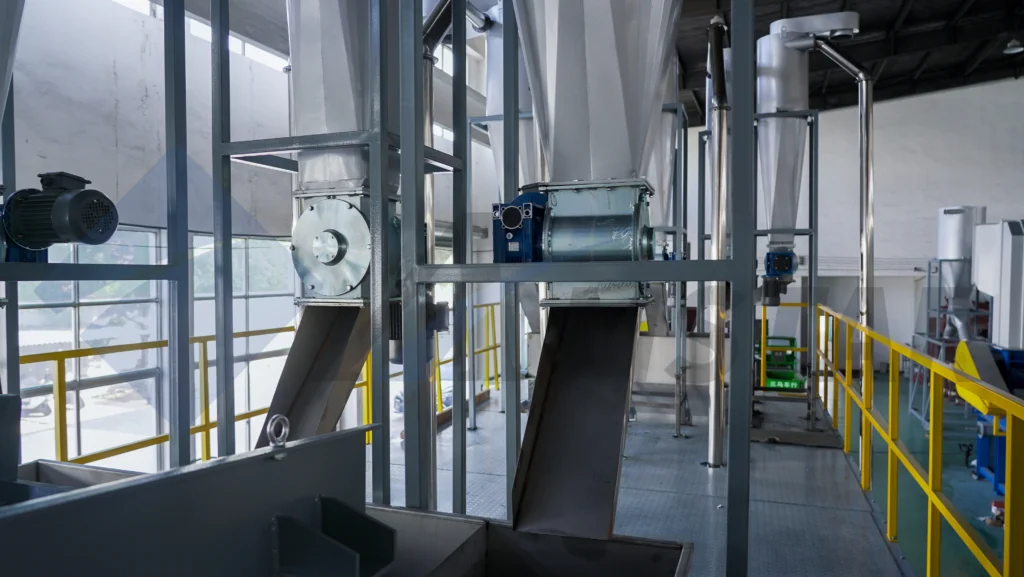
The plastic sorting line is an essential piece of equipment for processing a wide range of plastic materials, including various types of hard plastics such as PP, PE, PS, PVC, and ABS. It is specifically designed to handle plastics from diverse sources, including household appliances, industrial plastics, packaging materials, automotive parts, construction plastics, and consumer goods. This production line efficiently sorts and recycles plastics to produce clean and sorted flakes ready for further reprocessing.
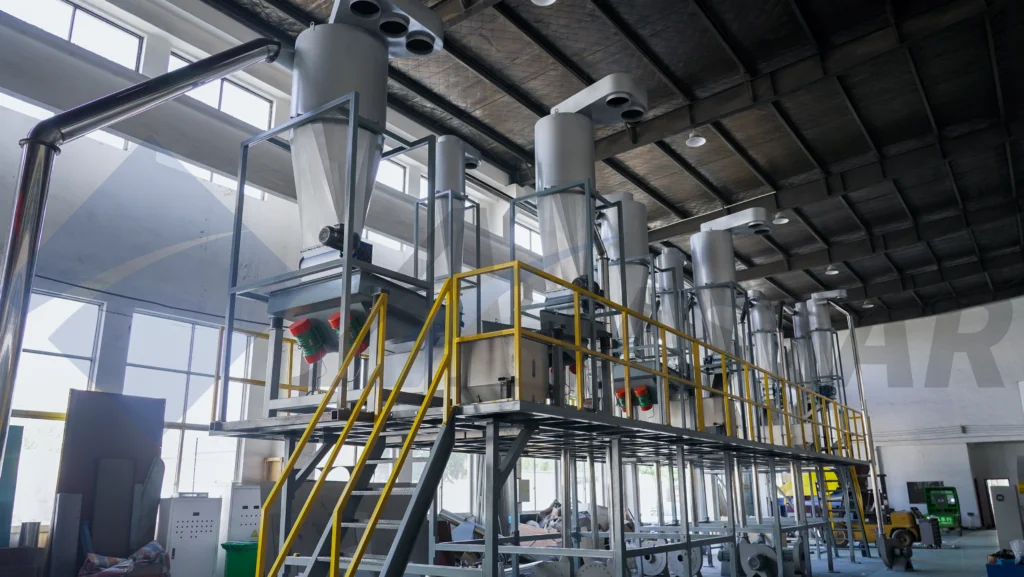
Key Stages in the Plastic Sorting Line:
- Shredding and Crushing
The first step involves breaking down large plastic components into smaller particles or flakes. This step is crucial for making the material easier to wash and sort in the subsequent stages. - Washing and Dewatering
After shredding, the plastic is washed to remove contaminants such as dirt, oil, and residues. A dewatering process follows to remove excess water, ensuring the material is clean and ready for drying. - Drying
The washed plastic flakes are then dried to reduce moisture content, which improves the quality of the recycled material and ensures effective further processing. - Rubber and Metal Separation
Following the drying process, a separation system removes rubber, foam, metal, and other impurities from the material. This ensures that only high-quality plastic remains for further sorting. - Electrostatic Separation
After impurity removal, the material enters an electrostatic separation system that categorizes plastics based on electrostatic properties. This system ensures the effective separation of plastics such as ABS, PS, and others.
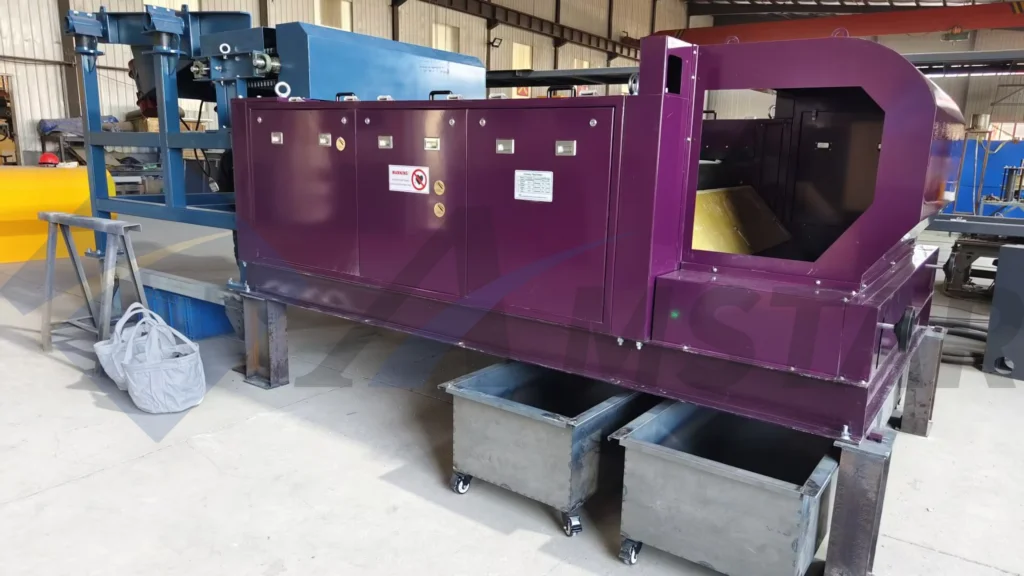
- Refinement and Re-sorting
Certain plastics, such as PP, may appear in smaller quantities in the raw materials and need further refinement. These materials are accumulated and passed through the sorting line again for additional separation. - Color Sorting (Recommended from Other Manufacturers)
After the main plastics are separated, the flakes go through a color sorting system, ensuring uniformity in color. This results in high-quality, consistently colored plastic flakes ready for manufacturing.
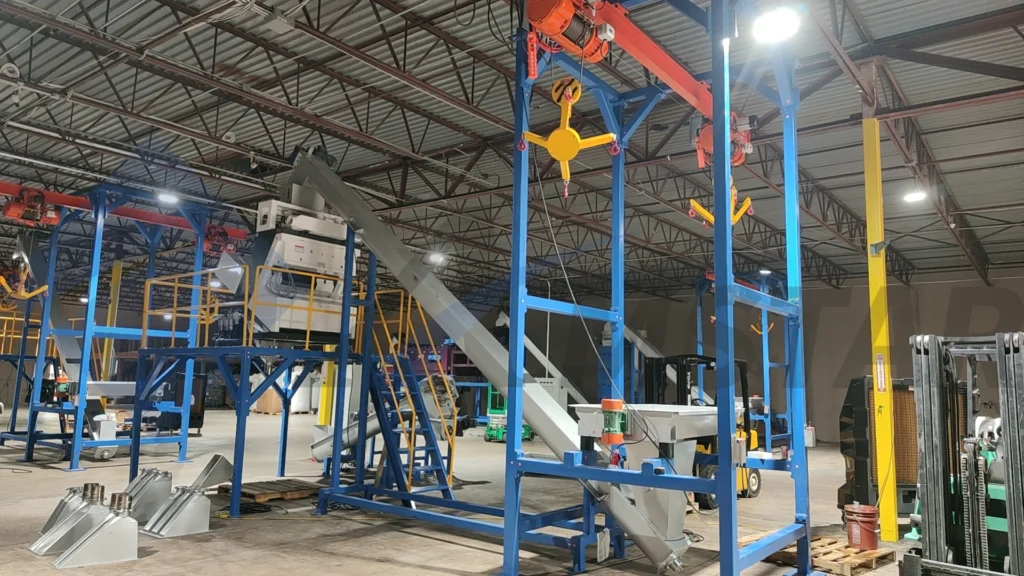
Targeted Output:
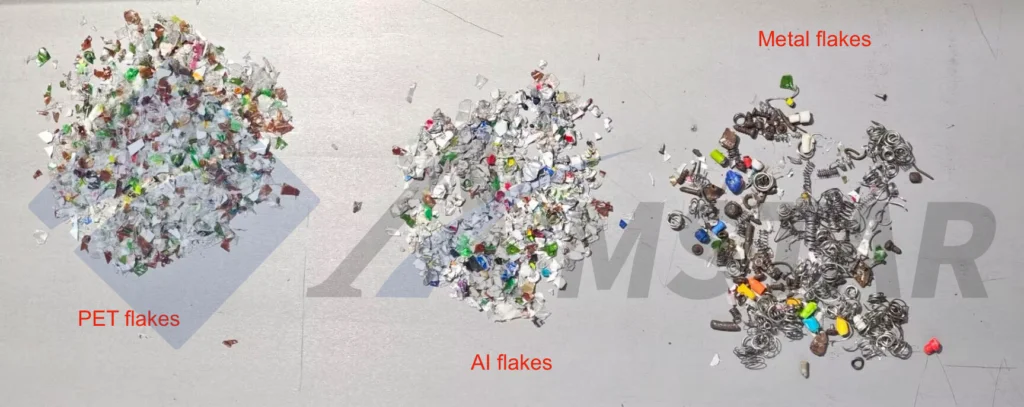
The plastic sorting line processes a variety of plastics, including PP, PE, PS, PVC, ABS, and more, producing two main categories of products:
- Main Target Products: High-quality plastics such as ABS and PS, suitable for manufacturing new products.
- Secondary Target Products: Plastics like PP, which may require additional refinement.
Production Capacity:
This line can process between 300 kg/h to 4000 kg/h, with customizable capacities to meet specific customer needs.
Advantages of Our Plastic Sorting Line:
- Efficient Impurity Removal: Advanced technologies ensure the removal of rubber, foam, metal, and other contaminants, resulting in high-purity plastic output.
- Highly Customizable: The line can be tailored for specific plastic types and customer requirements, providing solutions for both small- and large-scale operations.
- Improved Recycling Quality: By sorting plastics by type and color, we guarantee high-quality output that holds greater market value.
- Sustainable Solution: Our sorting line plays a vital role in the circular economy, promoting environmental sustainability by recycling plastics from various waste streams.
Applications
This versatile plastic sorting line is ideal for processing plastic waste from a broad range of sources. Some key application areas include:
- Household Appliances:
- Plastic components from items such as refrigerators, air conditioners, and electronic waste.
- Various plastics like housing parts, seals, and covers from electronic devices.
- Packaging Materials:
- PET bottles, containers, plastic films, and food-grade packaging like yogurt cups, trays, and bottles.
- Packaging materials from industries such as food and beverage, consumer goods, and pharmaceuticals.
- Industrial Plastics:
- Plastics from industrial applications, such as PVC pipes, plastic pallets, containers, and industrial machinery parts.
- Materials used in manufacturing or construction sectors, including pipes, fittings, and machinery components.
- Automotive Plastics:
- Automotive components such as bumpers, dashboards, trims, and door panels.
- Plastics used in interior parts, seats, and car exteriors.
- Construction Plastics:
- Plastic materials used in construction, such as insulation, sheeting, pipes, and fittings.
- Plastic coatings, flooring, and other building materials that require recycling.
- Consumer Goods:
- Everyday plastic products like toys, storage containers, furniture, and cosmetic packaging.
- Items made from various plastic types, including ABS, PP, and PET, often found in household items, packaging, and personal care products.
This sorting line is perfect for recycling and processing a diverse array of plastics, transforming waste into valuable raw materials for manufacturing new products, thus contributing to reduced waste and supporting the circular economy.
Conclusion
Our high-efficiency plastic sorting line provides an ideal solution for the recycling industry, processing various plastics from numerous sources. It offers increased recovery rates, improved product quality, and contributes to sustainable recycling practices. For customized solutions or more information, feel free to contact us.
INQUIRIES
To get the latest prices and lead times, send us a message using the form below.
Frequently Asked Questions
What types of plastic can the sorting line process?
The line handles rigid plastics including PP, PE, PS, PVC, and ABS from diverse sources: household appliances, automotive parts, packaging materials, construction plastics, industrial plastics, and consumer goods. It sorts mixed shredded plastic into clean, single-type flakes ready for reprocessing. If you are unsure which plastics are in your stream, our plastic identification guide can help.
How does the electrostatic separation stage work?
After shredding, washing, drying, and rubber/metal removal, flakes enter an electrostatic separation system that sorts plastics by their electrostatic properties. This reliably separates plastics such as ABS and PS that are difficult to distinguish by density or appearance. Materials present in smaller quantities, such as PP, are accumulated and run through the line again for further refinement.
What capacity can the sorting line handle?
The line processes between 300 kg/h and 4,000 kg/h, with customizable capacities to meet specific customer needs. Whether you run a small operation focused on one plastic type or a large plant handling mixed streams, the line can be tailored — including optional color sorting — to your throughput and purity targets.
What output quality does the line produce?
The line produces two product categories: main target products such as high-quality ABS and PS flakes suitable for manufacturing new products, and secondary products like PP that may need additional refinement. Optional color sorting delivers uniformly colored flakes, which hold greater market value than mixed-color material.
How does the line deal with rubber, metal, and other contaminants?
A dedicated separation stage after drying removes rubber, foam, metal, and other impurities before electrostatic sorting begins. Upstream, the trommel-style washing and dewatering stages remove dirt, oil, and residues. This multi-stage cleaning protects the electrostatic separators and keeps final flake purity high.
What are the installation and power requirements?
Requirements depend on your chosen capacity and configuration — a 4,000 kg/h line needs substantially more floor space and power than a 300 kg/h unit. Contact us with your material types, throughput target, and facility layout, and our engineers will provide exact space, power, and utility requirements with your quotation.