

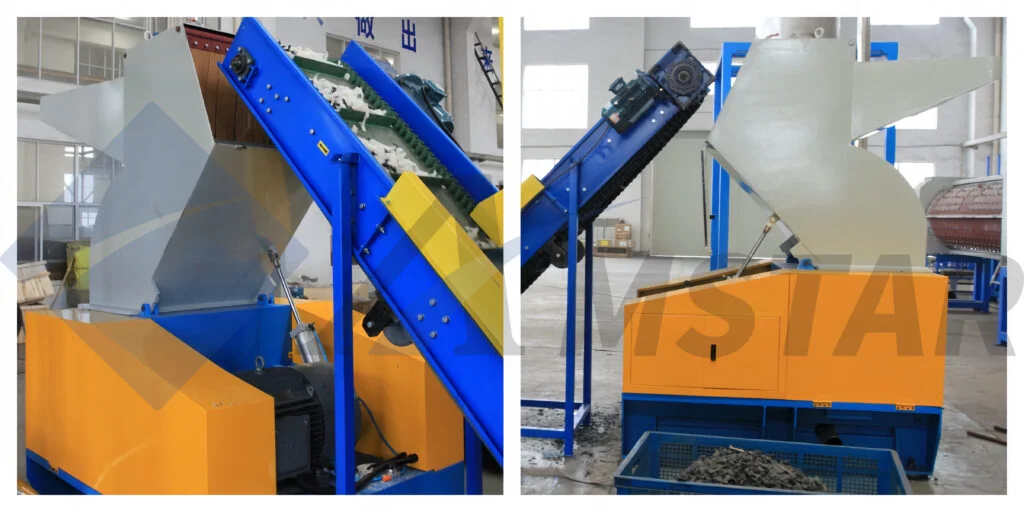
In the modern plastic recycling industry, handling tough, rigid plastic waste is a core challenge. From injection molded runners and reject parts to PET preforms, plastic blocks and other hard plastics, standard granulators simply aren’t built to withstand continuous industrial use. That’s where heavy-duty rigid plastic granulator machines come in — engineered for long life, high performance and reliable throughput.
What Is a Rigid Plastic Granulator?
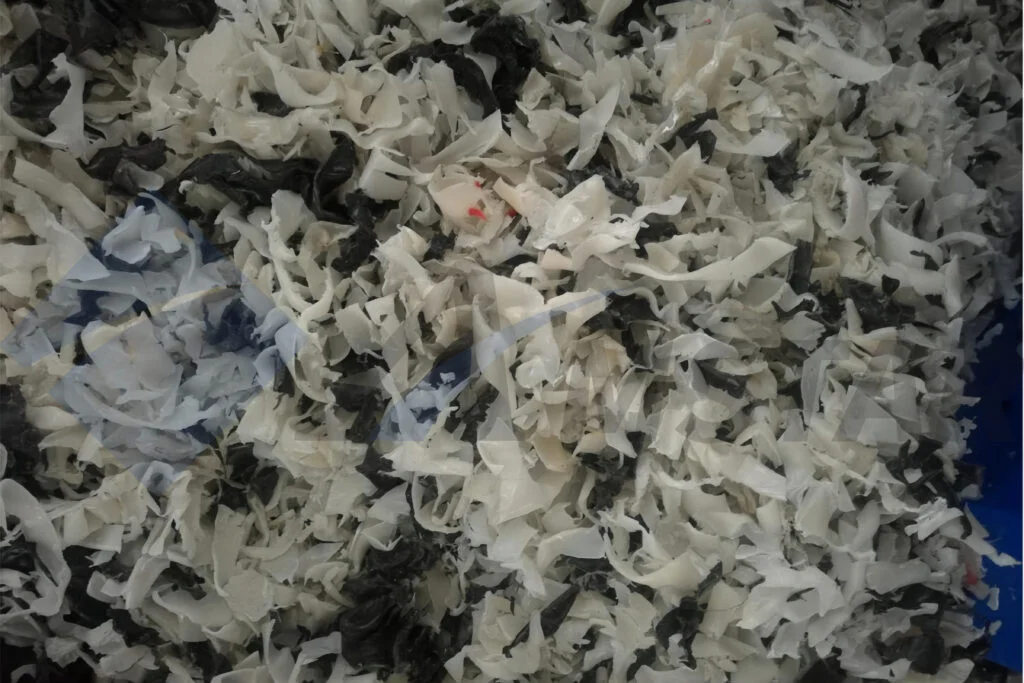
A rigid plastic granulator is a high-performance machine designed specifically to reduce rigid plastics (typically less than 20 mm thick) into uniform granules or flakes suitable for downstream recycling processes such as washing, pelletizing, or extrusion.
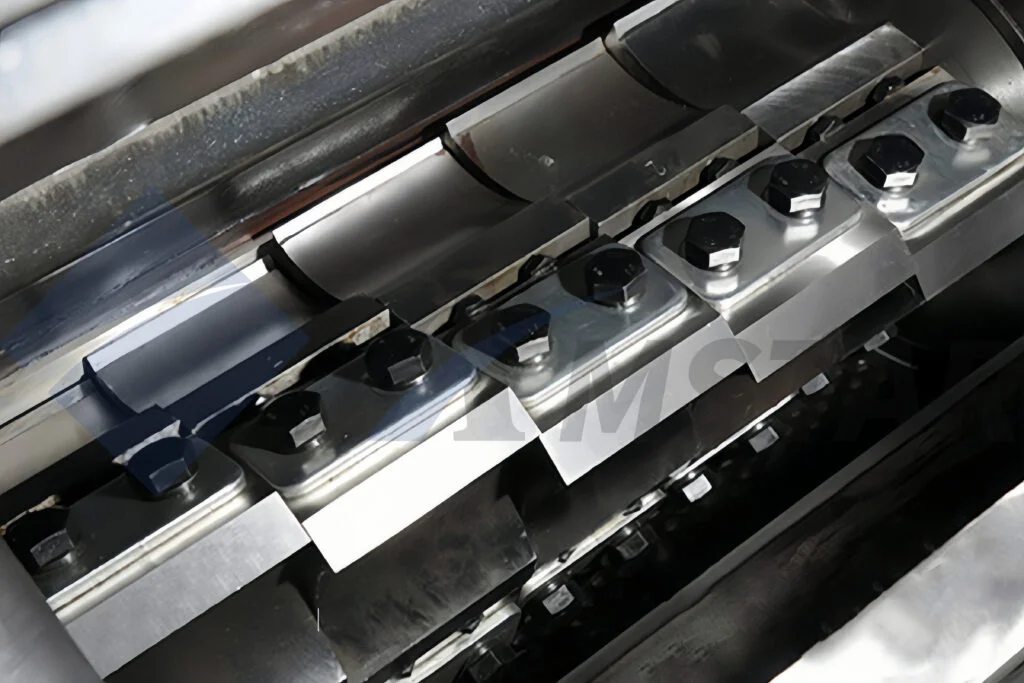
Unlike standard granulators, rigid plastic granulators use a wide open rotor fitted with numerous small, claw-shaped blades in a stepped arrangement, allowing them to disperse cutting pressure, improve cutting efficiency, and enhance component durability — key requirements for industrial operations.
Why Heavy-Duty Design Is Essential
Industrial recycling lines demand equipment capable of continuous use with minimal downtime. Heavy-duty rigid plastic granulators provide:
Durability & Reliability
- Robust rotor with many small, high-strength blades for tough plastics.
- Sound-proofed cutting chamber for reduced noise.
- Easy access to cutting chamber and screen for maintenance.
High Throughput & Performance
- Efficient design enables continuous cutting until granules reach the desired size (generally ~10–12 mm).
- Models available from ~50 kg/h up to 300 kg/h in standard configurations, and up to 1200 kg/h in larger XL variants.
Working Principle – Heavy-Duty Cutting Efficiency
Rigid granulator machines operate using the following core components:
- Wide Open Rotor with Multiple Blades: A high-density climbing blade arrangement chips away at rigid plastics continuously, reducing pressure peaks and extending blade life.
- Stepped Blade Layout: The stepped, claw-shape blade design disperses cutting forces more evenly compared to simple V-shaped patterns, ideal for hard plastics.
- Screen Filtration: Once particles reach a small enough size, they pass through a screen (typically 10 – 12 mm), ensuring uniform output for downstream processing.
Applications: Where Heavy-Duty Granulators Excel
| Industry Segment | Material Examples |
| Injection Molding | Runners, rejected parts, PET preforms |
| Plastic Product Manufacturing | Hard plastic blocks, components |
| Recycling Plants | HDPE, PP, ABS rigid scrap |
| Industrial Workshops | Water tanks, buckets, crates (for higher capacity models) |
Heavy-duty granulator machines are typically installed after shredders or debalers in complete recycling systems to produce consistent granules ready for washing and pelletizing.
They are often paired with pre-shredders, conveyors, washer systems, and pelletizers to form turnkey recycling solutions tailored to production demands.
Conclusion: Heavy-Duty, Reliable & Industrial-Ready
Rigid plastic granulator machines are more than granulators — they are industrial workhorses built for constant use, with heavy-duty build quality and dependable performance. Whether you operate a high-volume recycling facility or a precision molding production line, choosing the right granulator will improve throughput, reduce maintenance costs, and produce consistent regrind for downstream extrusion and pelletizing processes.
INQUIRIES
To get the latest prices and lead times, send us a message using the form below.
Frequently Asked Questions
What materials can a rigid plastic granulator process?
It is built for rigid plastics typically under 20 mm thick: injection molded runners, reject parts, PET preforms, plastic blocks, HDPE and PP containers, ABS scrap, plus bulkier items like water tanks, buckets, and crates on higher-capacity models. Standard granulators struggle with these tough materials in continuous duty — the heavy-duty rotor with many small claw-shaped blades is what makes the difference.
How do I size the right model for my throughput?
Standard configurations cover roughly 50–300 kg/h, while larger XL variants reach up to 1,200 kg/h. Size for your peak scrap generation or line feed rate, not the average, and confirm the motor power and footprint against your plant utilities. If volumes may grow, the XL range gives you a path to scale without replacing the machine.
What output size does the granulator produce?
The screen sets the output — typically 10–12 mm granules. Material is cut continuously until particles are small enough to pass through, which keeps the regrind uniform for downstream washing, extrusion, or pelletizing. Screen aperture can be changed to suit different end uses, and easy screen access makes swaps straightforward.
Why choose a heavy-duty design over a standard granulator?
Rigid scrap punishes light machines: thick sections create pressure peaks that snap blades and stall rotors. The heavy-duty design answers with a wide open rotor, numerous small blades in a stepped arrangement that disperses cutting forces, a sound-proofed cutting chamber, and a robust frame rated for continuous industrial use with minimal downtime.
What maintenance does a rigid granulator need?
Blade condition is the main watch item — inspect the claw blades regularly and rotate or replace them before dull edges raise power draw and overheat the cut. The easy-access cutting chamber and screen simplify the job. Also check screen integrity, bearing lubrication, and belt tension on schedule. Keeping a spare blade set on site avoids extended stops.
How does the granulator fit into a complete recycling line?
It typically sits after a shredder or debaler that does the coarse size reduction, producing consistent granules that feed washing systems and then pelletizers. Plants often pair it with conveyors, washers, and a pelletizer as a turnkey solution. Specify the granulator together with the line so screen size, capacity, and interfaces match from the start.