

What Are Eddy Current Separators?
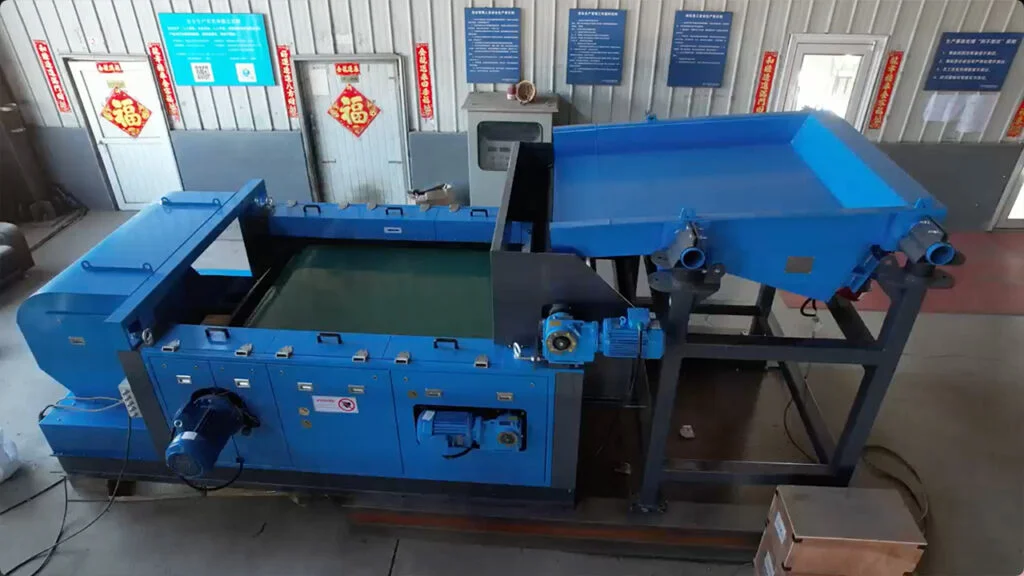
Eddy Current Separators (ECS) are advanced magnetic separation machines designed to remove non-ferrous metals such as aluminum and copper from PET recycling streams. Using electromagnetic induction, ECS efficiently separates metals based on their conductivity, enabling recyclers to recover valuable materials and achieve exceptional levels of material purity. These machines play a critical role in the PET recycling industry, enhancing the value of recycled PET flakes.
The Importance of Eddy Current Separators in PET Recycling
Eddy Current Separators are indispensable in addressing metal contamination, a key challenge in PET recycling. Their precision and efficiency ensure clean, high-value recycled PET materials. Here’s how they contribute to PET recycling processes:
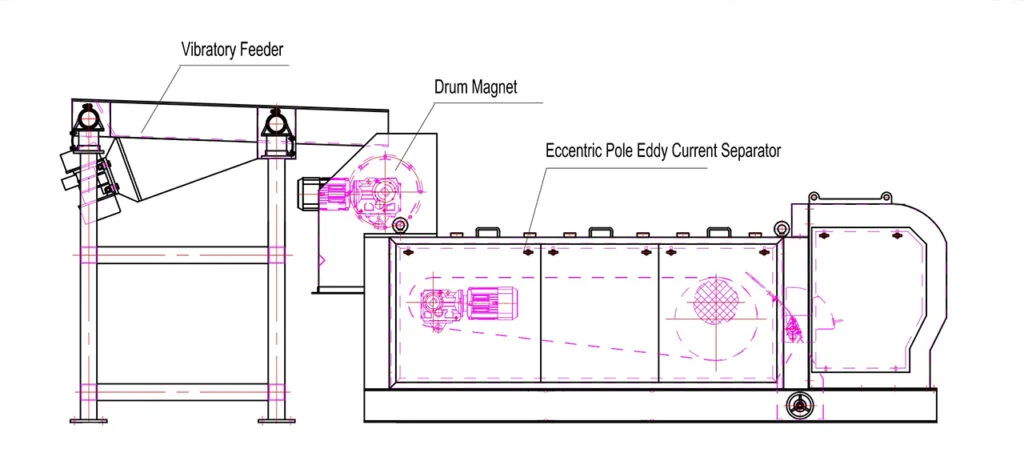
- PET Bottle Recycling: Magnetic separators and eddy current systems work together to remove contaminants. First, de-ironing equipment eliminates ferrous materials such as iron caps and debris. Then, high-frequency eccentric Eddy Current Separators effectively remove non-ferrous metals like aluminum caps and tabs, ensuring a cleaner output.
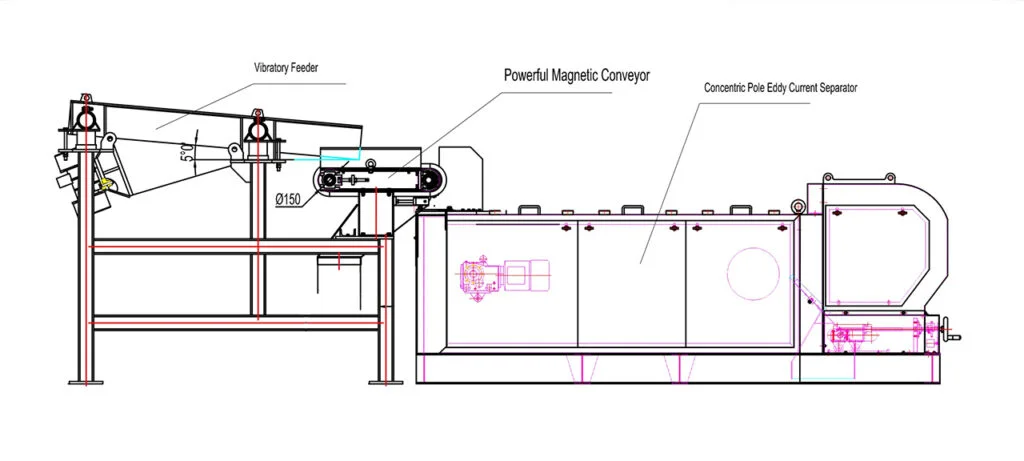
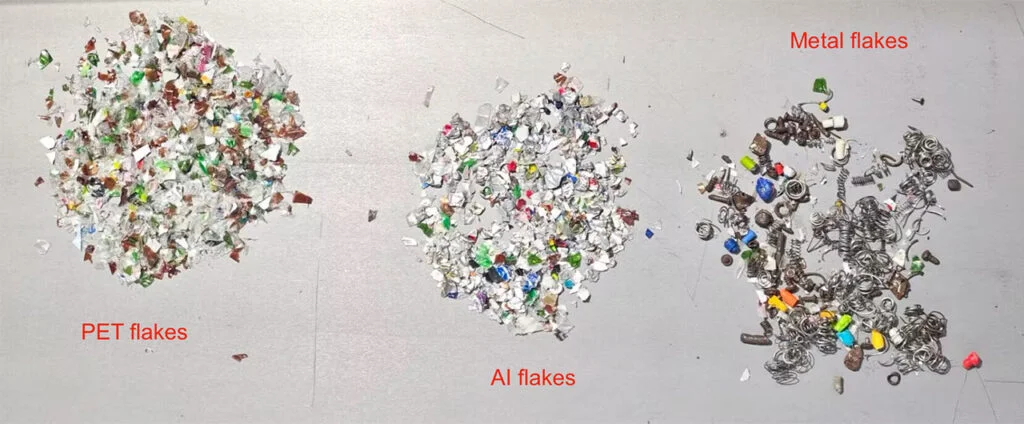
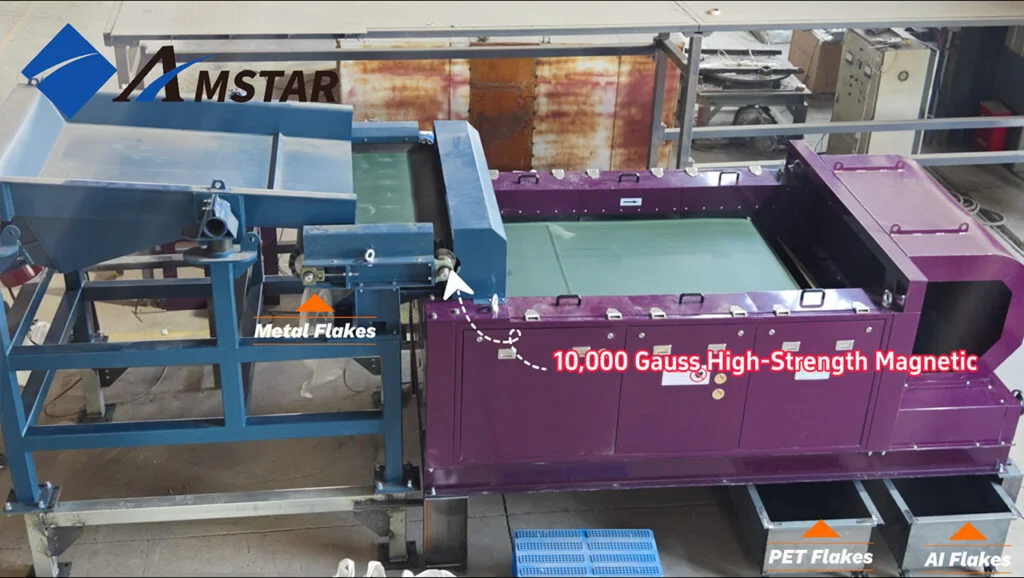
- PET Flake Processing: PET flakes often contain weakly magnetic stainless steel and non-ferrous metals. High-strength magnetic belts (10,000 Gauss) target weakly magnetic contaminants like stainless steel springs, while concentric Eddy Current Separators isolate aluminum and copper particles, delivering superior-quality recycled PET flakes.
How Do Eddy Current Separators Work?
Eddy Current Separators operate based on electromagnetic induction principles. The process involves:
- Feeding: Mixed material is placed onto a conveyor belt.
- Magnetic Rotor Action: A high-speed magnetic rotor generates eddy currents in conductive non-ferrous metals.
- Separation: The eddy currents repel metals, directing them into a separate bin, while non-metallic materials are collected in another bin.
- Enhanced Precision: The eccentric design ensures accurate separation of aluminum flakes as small as 2mm, achieving a metal removal rate of over 99%.
Key Equipment for PET Recycling
ASG provides a range of tailored solutions for PET recycling to meet diverse material and purity requirements:
- Magnetic Separators: Efficiently remove ferrous contaminants like iron caps and fine debris.
- High-Strength Magnetic Belts (10,000 Gauss): Effectively target weakly magnetic contaminants such as stainless steel springs.
- Eccentric Eddy Current Separators: Precisely separate non-ferrous metals, including aluminum and copper, ensuring high-purity PET materials.
- Metal Detectors: Add an extra layer of quality control by identifying and removing residual metal contaminants.
Why Choose ASG?
ASG’s quality-assured equipment has been exported to over 50 countries and is trusted by recyclers worldwide. Known for its expertise in the PET recycling industry, ASG provides customized equipment and innovative solutions that help clients maximize efficiency and achieve outstanding results. Collaborating with clients across Europe, Canada, the United States, and other regions, ASG has established itself as a global leader in magnetic separation technology for PET recycling.
Conclusion
Eddy Current Separators are essential tools in modern PET recycling, ensuring the effective removal of non-ferrous metals and enhancing the quality of recycled materials. With ASG’s proven expertise and tailored solutions, recyclers can transform PET waste into valuable resources, driving sustainability and innovation in the recycling industry.
For expert advice or more information about ASG’s PET recycling solutions, contact our team today. Together, we can create a cleaner, more sustainable future.
INQUIRIES
Frequently Asked Questions
What metals does an eddy current separator remove?
An ECS targets non-ferrous metals — aluminum caps and tabs, copper particles, and similar conductive metals — using electromagnetic induction. Ferrous contaminants like iron caps are removed first by magnetic separators or de-ironing equipment, and high-strength magnetic belts (around 10,000 Gauss) catch weakly magnetic stainless steel. Together, the combination covers virtually the entire metal contamination spectrum in PET streams.
Where does the ECS sit in a PET bottle recycling line?
It works on the flake stream after granulation: flakes ride a belt conveyor over the high-speed magnetic rotor, non-ferrous metals are ejected into a separate bin, and clean PET continues to washing and drying. Placing metal separation after size reduction exposes metals locked inside bottle fragments, and catching them early protects washers, dryers, and extruders downstream.
How fine a metal particle can it separate?
The eccentric rotor design separates aluminum flakes as small as 2 mm with a metal removal rate above 99%. Finer particles respond less strongly to the induced eddy currents, so consistent feeding — a thin, even, single-layer bed on the belt — matters more than raw rotor power for fine-fraction recovery. Splitter position is tuned to the material mix.
What is the difference between eccentric and concentric ECS designs?
In an eccentric design, the magnetic rotor sits off-center inside the head pulley, concentrating the repelling force in a short, intense zone — ideal for fine non-ferrous particles like small aluminum flakes. Concentric designs spread the field more evenly. For PET flake streams with fine aluminum, the eccentric configuration typically delivers the sharper separation.
What are the power and installation requirements?
The unit needs three-phase power for the belt drive and the high-speed magnetic rotor, plus a feed conveyor delivering an even material bed and collection bins or conveyors for the separated metal and clean flake streams. Allow access around the rotor housing for splitter adjustment and belt maintenance, and a stable foundation since the rotor spins at high speed.
What maintenance does an eddy current separator need?
The belt and head pulley see the most wear — inspect the belt for damage and track it properly so the material bed stays centered over the rotor. Check rotor bearings for noise or heat, keep the splitter plate adjusted to the current feed mix, and clean any ferrous buildup off magnetic components. With those basics, ECS units run reliably for years.