

What Is a DAF System?
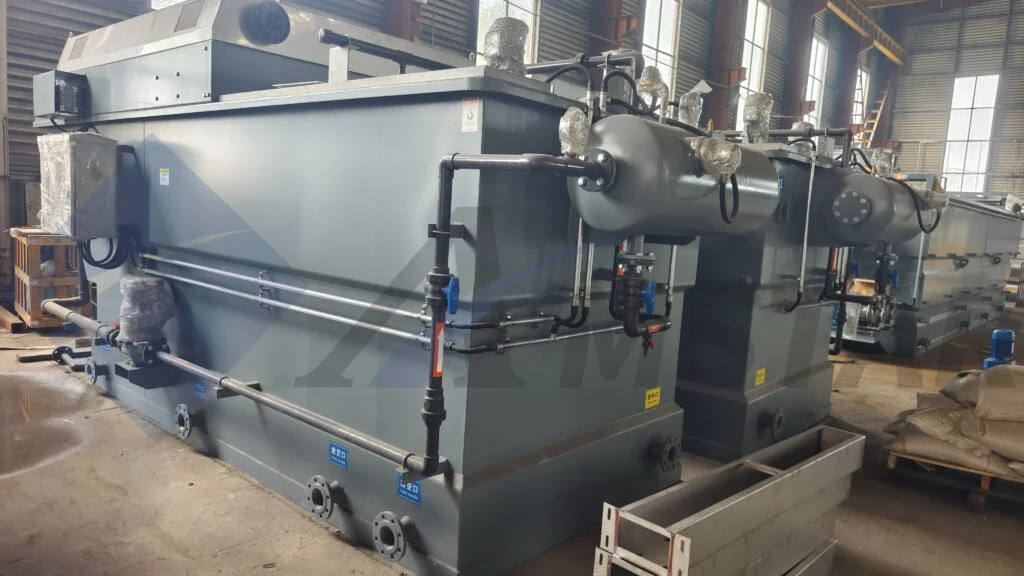
The Dissolved Air Flotation (DAF) system is a highly efficient solid-liquid separation technology widely used in industrial wastewater treatment.
It works by generating a large number of microbubbles (10–30 μm) that attach to suspended solids, oil, and grease. These particles become lighter than water and float to the surface, where they are removed by a skimming system.
DAF is especially suitable for:
- Removing SS (Suspended Solids)
- Reducing COD / BOD
- Separating oil & grease
- Improving downstream filtration efficiency
How the DAF System Works
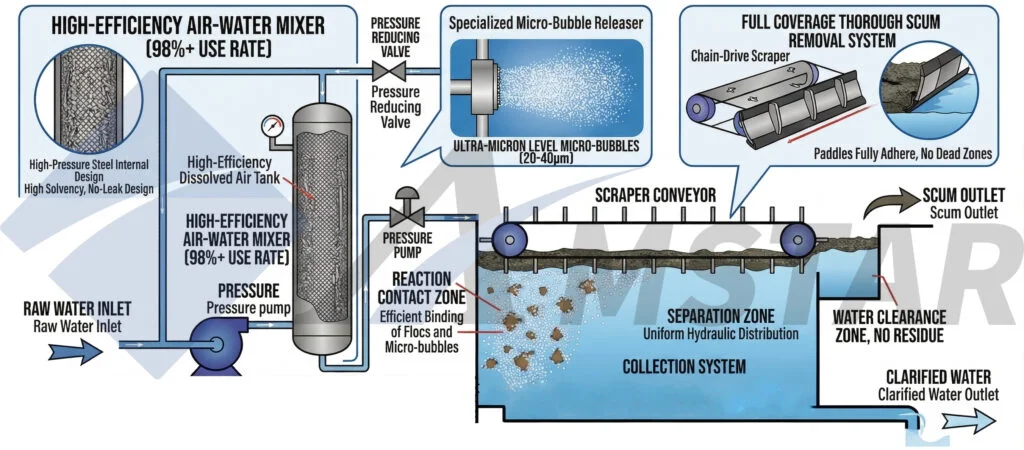
Working Process Overview
| Step | Process Description |
| 1 | Wastewater enters the DAF tank after pre-treatment |
| 2 | Part of treated water is recycled and pressurized with air |
| 3 | Air dissolves into water in a pressure tank (air saturation) |
| 4 | Sudden pressure release generates microbubbles |
| 5 | Microbubbles attach to suspended particles |
| 6 | Floated sludge rises to surface and is scraped off |
| 7 | Clean water flows out from the bottom |
Performance Benefits
- Microbubble size: 10–30 μm → strong adhesion capability
- High removal efficiency: up to 95%+ for SS and oil
- Compact design: saves installation space
- Stable operation: continuous and reliable performance
- Low maintenance: simple mechanical structure
- Flexible adjustment: sludge level and skimming speed adjustable
Typical Application Fields
DAF systems are widely used across multiple industries:
- Plastic recycling washing lines (removal of oil, labels, fines)
- Petrochemical wastewater
- Food processing & slaughterhouse wastewater
- Textile & dyeing industry
- Paper mills
- Pharmaceutical wastewater
- Landfill leachate treatment
- Water reuse & polishing treatment
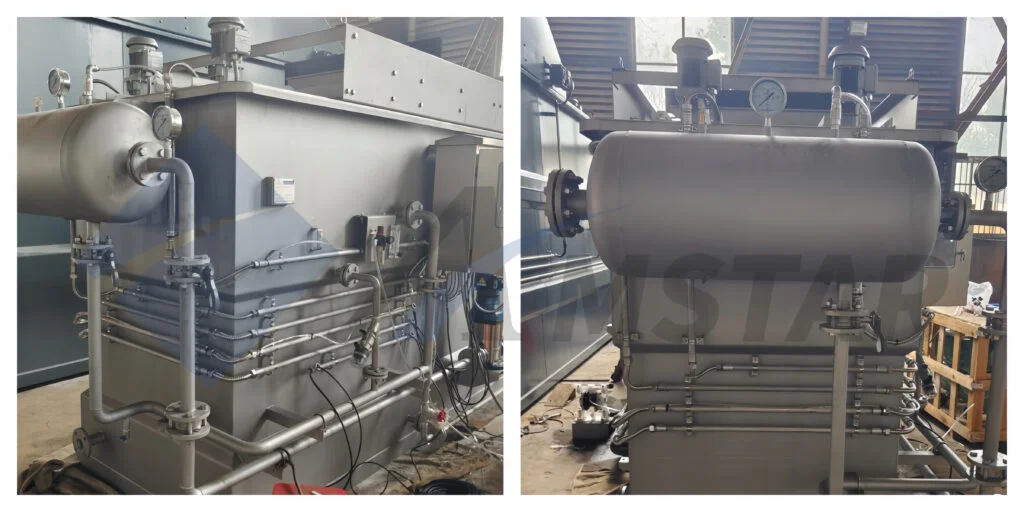
Why DAF Is Important in Plastic Recycling
In plastic recycling plants (PET, PP, PE washing lines), wastewater often contains:
- Fine plastic particles
- Labels & paper fibers
- Oil and organic residues
The DAF system effectively:
- Removes floating contaminants
- Reduces sludge load in later stages
- Improves water reuse efficiency
- Helps meet environmental discharge standards
Conclusion
The Dissolved Air Flotation (DAF) system is a key solution for modern wastewater treatment, especially in plastic recycling operations. With its high efficiency, compact structure, and reliable performance, it significantly improves water quality and reduces environmental impact.
INQUIRIES
To get the latest prices and lead times, send us a message using the form below.
Frequently Asked Questions
What does a DAF system remove from wastewater?
A DAF system removes suspended solids, oil, grease, fine plastic particles, labels, and paper fibers from industrial wastewater. It generates 10-30 μm microbubbles that attach to these particles, making them lighter than water so they float to the surface for skimming. Removal efficiency reaches 95%+ for suspended solids and oil, which protects downstream filtration and improves water reuse.
How does a DAF system work step by step?
Wastewater enters the DAF tank after pre-treatment. Part of the treated water is recycled, pressurized with air, and sent to a saturation tank where air dissolves into it. A sudden pressure release then generates microbubbles that attach to suspended particles; the floated sludge rises to the surface and is scraped off, while clean water flows out from the bottom.
Why is DAF important in plastic recycling plants?
Wash water from PET, PP, and PE washing lines carries fine plastic particles, label and paper fibers, plus oil and organic residues. DAF removes floating contaminants before they overload later treatment stages, reduces sludge load, improves water reuse efficiency, and helps the plant meet environmental discharge standards.
What industries use DAF systems?
Beyond plastic recycling, DAF is used for petrochemical wastewater, food processing and slaughterhouse effluent, textile and dyeing wastewater, paper mills, pharmaceutical wastewater, landfill leachate treatment, and water reuse or polishing applications. Its compact design and stable continuous operation suit a wide range of effluent types.
What are the installation and operating requirements?
DAF units have a compact footprint that saves installation space. They need a steady wastewater feed after pre-treatment, a compressed air supply for bubble generation, and power for the pressurization pump and skimming mechanism. Sludge level and skimming speed are adjustable, so operators can tune performance to varying influent loads.
What maintenance does a DAF system require?
The mechanical structure is simple: regularly check the air saturation system, skimmer blades, and sludge discharge path; keep the microbubble-generating nozzles clean; and monitor removal efficiency. Because operation is continuous, schedule brief inspection windows rather than long shutdowns. Contact ASG for pricing and lead times for your capacity.