

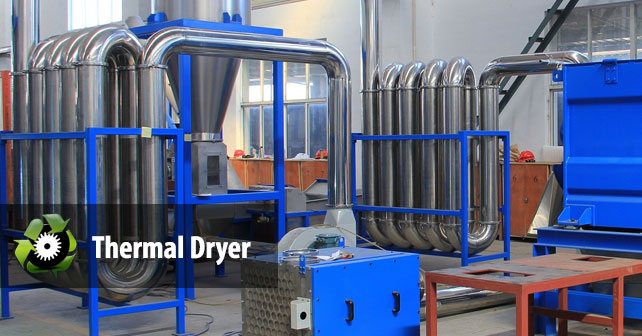
ASG Thermal Dryer for PET Recycling
Introduction to Thermal Drying in PET Recycling
In the world of PET bottle recycling, achieving optimal moisture levels is critical for producing high-quality, market-ready materials. ASG Machine offers advanced thermal dryer systems designed specifically for PET washing lines, providing the final drying stage that ensures your recycled flakes meet industry standards. These systems represent the culmination of the washing process, where precise moisture control determines the value and usability of the final product.
Thermal drying technology has evolved significantly to address the growing demands of the global recycling industry. As environmental regulations tighten and quality expectations rise, manufacturers and recyclers require equipment that can deliver consistent results while maintaining energy efficiency. ASG’s thermal dryers meet these challenges head-on, incorporating innovative design features that maximize performance while minimizing operational costs.
How Thermal Dryer Systems Work
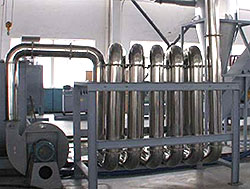
Thermal Dryer Operation Process
ASG’s thermal drying systems utilize electric heating elements to generate controlled hot air streams that efficiently remove residual moisture from PET flakes. The process begins after the dewatering stage, where initial moisture content is reduced to approximately 20-30%. The partially dried flakes are then conveyed through an extended stainless steel coil system where they are exposed to precisely regulated heated air.
The drying mechanism operates on principles similar to industrial-scale hair dryers but with significantly more sophisticated control systems. As PET flakes travel through the elongated stainless steel pathway, they undergo constant rotation and exposure to heated air currents. This mechanical action ensures uniform drying across all material surfaces, preventing clumping and ensuring consistent moisture reduction throughout the batch.
The system concludes with a cyclone separator that performs multiple critical functions. This component effectively removes remaining water vapor, dust particles, and fine powders from both the material and the air stream. The result is PET flakes with moisture content reduced to approximately 1% – the industry standard for high-quality recycled material suitable for manufacturing applications.
Depending on production requirements and desired moisture levels, PET washing lines may incorporate single or multiple thermal dryer units. For standard production volumes, a single dryer typically suffices. However, for operations demanding ultra-low moisture content or handling higher throughput, systems may incorporate two or three parallel dryers to ensure optimal results.
Technical Specifications and Performance Data
Model | Fan Power | Heating Power | Duct Diameter | Duct Material | |——-|———–|—————|—————|—————| | RSJ800 | 5.5 KW | 36 KW | ⌀159mm | Stainless Steel 304 |
The RSJ800 model represents ASG’s commitment to engineering excellence in thermal drying technology. With a robust 5.5 KW fan system and 36 KW heating capacity, this unit delivers exceptional drying performance for medium to large-scale recycling operations. The ⌀159mm ducting, constructed from corrosion-resistant stainless steel 304, ensures durability and consistent performance even in demanding industrial environments.
Energy efficiency remains a critical consideration in thermal dryer design. Modern systems incorporate advanced insulation materials and heat recovery mechanisms that minimize energy consumption while maintaining optimal drying temperatures. Variable frequency drives on fan motors allow operators to adjust air flow based on real-time production needs, further enhancing energy efficiency and reducing operational costs.
Industry Applications and Benefits
Thermal dryer systems serve numerous critical functions across the PET recycling industry. Beyond basic moisture reduction, these systems contribute to several valuable outcomes:
Quality Enhancement: By achieving consistent 1% moisture content, thermal dryers ensure that recycled PET flakes meet quality specifications for various manufacturing applications, including fiber production, sheet extrusion, and bottle-to-bottle recycling.
Process Efficiency: Integrated thermal systems reduce processing time compared to natural drying methods, enabling higher throughput and more predictable production schedules. This efficiency translates to better resource utilization and improved profitability.
Material Preservation: Controlled drying temperatures prevent thermal degradation of PET material, preserving intrinsic viscosity and other critical material properties that determine end-use suitability.
Operational Flexibility: Modular design allows for integration with existing washing lines or implementation in new facilities, with scalability options to accommodate growing production requirements.
Buyer’s Guide: Selecting the Right Thermal Dryer
When evaluating thermal dryer systems for your PET recycling operation, consider these critical factors:
Production Capacity: Match dryer specifications to your current and anticipated production volumes. Consider both maximum throughput requirements and flexibility for varying material conditions.
Energy Efficiency: Evaluate the total cost of ownership, including energy consumption, maintenance requirements, and expected service life. Look for systems with energy recovery features and advanced control systems.
Integration Capabilities: Ensure compatibility with existing dewatering equipment and material handling systems. Proper integration minimizes transition losses and optimizes overall line efficiency.
Control Systems: Modern dryers should feature programmable logic controllers (PLCs) with touchscreen interfaces for precise temperature, airflow, and processing time management.
Service and Support: Consider manufacturer reputation for after-sales support, spare parts availability, and technical assistance. Global operations should prioritize suppliers with international service networks.
Industry Trends and Future Developments
The thermal drying sector continues to evolve with several emerging trends:
Smart Technology Integration: IoT-enabled dryers now offer remote monitoring, predictive maintenance alerts, and data analytics for process optimization. These features enable proactive management and continuous improvement of drying operations.
Sustainability Focus: New systems emphasize reduced carbon footprints through improved energy efficiency, heat recovery systems, and compatibility with renewable energy sources.
Material Flexibility: Advanced dryers now handle diverse material types beyond PET, including other plastics and industrial materials, providing operational flexibility for recycling facilities.
Regulatory Compliance: Equipment designs increasingly incorporate features that ensure compliance with international environmental and safety standards, particularly important for operations serving global markets.
Ordering Information and Lead Times
Standard equipment delivery typically requires 30 days from order confirmation, while custom-configured systems or complete production lines may require 60-90 days for manufacturing and testing. Actual lead times depend on project complexity and current manufacturing capacity.
ASG Machine provides comprehensive support throughout the purchasing process, from initial consultation and system specification to installation and operational training. Our technical team works closely with clients to ensure equipment meets specific production requirements and integrates seamlessly with existing operations.
Contact our engineering consultants to discuss your specific needs, request detailed quotations, and initiate the ordering process. We provide detailed project timelines, technical specifications, and support documentation to facilitate informed decision-making.
Frequently Asked Questions
What moisture levels can I expect from ASG thermal dryers?
Our systems consistently bring PET flakes down to approximately 1% final moisture, meeting the industry standard for high-quality recycled flakes used in fiber production, sheet extrusion, and bottle-to-bottle recycling. The exact result depends on incoming moisture after dewatering (typically 20–30%) and throughput; for ultra-low moisture or high capacity, two or three dryers can be installed in series or parallel.
How does the thermal dryer integrate with existing dewatering equipment?
ASG dryers are designed for seamless integration with standard dewatering equipment such as centrifugal dryers. Our engineering team provides comprehensive integration support, including interface specifications, conveyor connections, and installation guidance, so the dryer fits into your existing PET washing line with minimal transition losses.
What maintenance requirements should I anticipate?
Regular maintenance includes filter replacement, heating element inspection, ductwork checks, and system calibration. Most systems need only minimal daily attention beyond basic cleaning and visual inspections, with deeper checks on a monthly schedule. Our dryer maintenance tips cover the full preventive routine that keeps drying performance stable and energy use low.
Can the dryer handle variations in incoming material moisture?
Yes. Our systems feature adjustable parameters — heating temperature, airflow, and residence time — that accommodate varying input conditions from the dewatering stage. Advanced models include automated adjustments based on real-time moisture sensing, so output stays consistent even when incoming flakes arrive wetter or drier than usual.
What energy efficiency features are incorporated?
Our dryers include heat recovery systems, improved insulation, and variable frequency drives on fan motors that adjust airflow to real-time production needs. Together these features significantly reduce energy consumption compared to conventional drying systems, lowering the 36 KW-class heating load’s impact on your total cost of ownership.
Are spare parts readily available?
Yes. ASG maintains comprehensive spare parts inventories — heating elements, filters, fan components, and PLC parts — and provides global logistics support to ensure minimal downtime for our clients worldwide. Wear items are designed for straightforward replacement by your own maintenance team.
Conclusion
ASG thermal dryer systems represent the culmination of advanced engineering and practical industry knowledge in PET recycling. By delivering consistent, efficient moisture reduction to 1%, these systems ensure that recycled materials meet the quality standards required for valuable manufacturing applications. With reliable construction, energy-efficient operation, and flexible configuration options, ASG dryers provide dependable performance that enhances overall recycling line efficiency and profitability.
As the recycling industry continues to evolve toward higher quality standards and greater efficiency, thermal drying technology remains a critical component in producing market-ready materials. ASG Machine remains committed to advancing this technology through continuous innovation and customer-focused engineering solutions. Contact us for detailed specifications or visit our PET washing line solutions.