

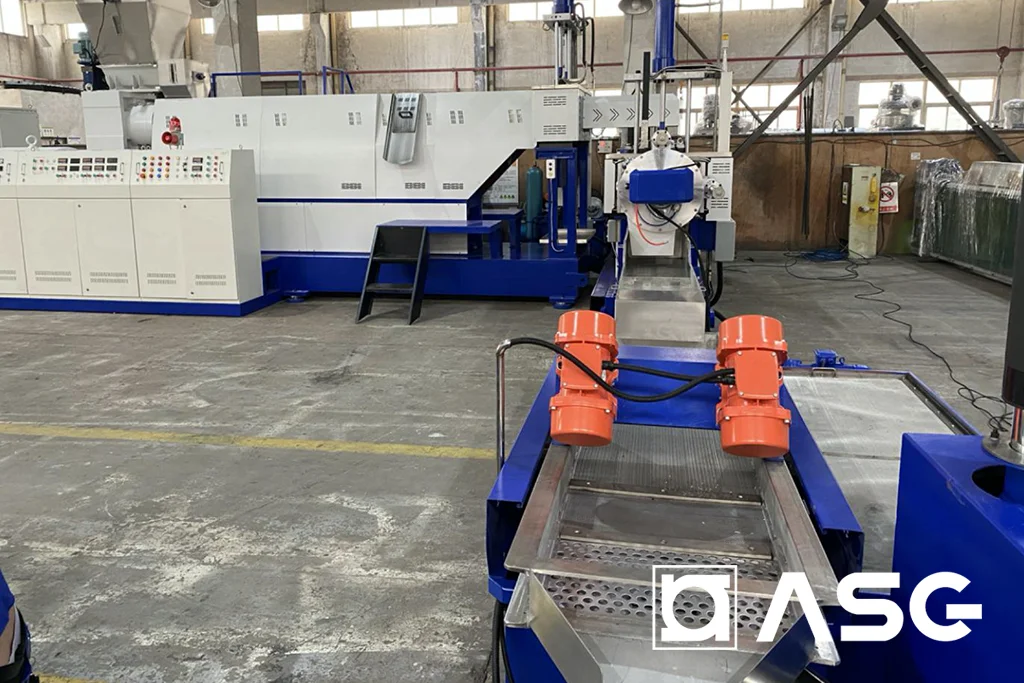
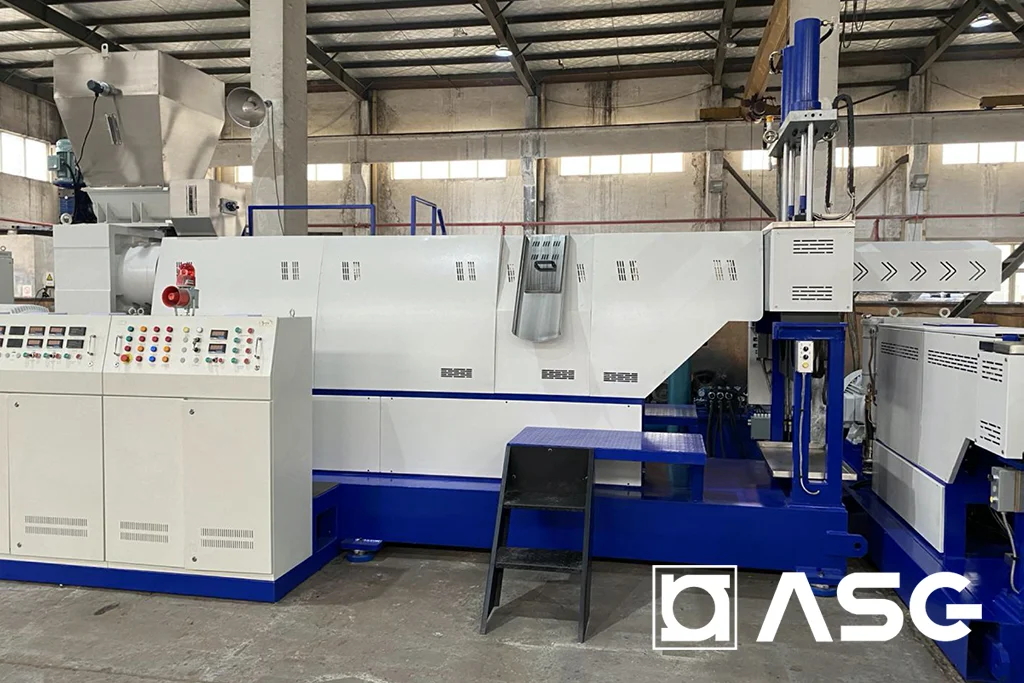
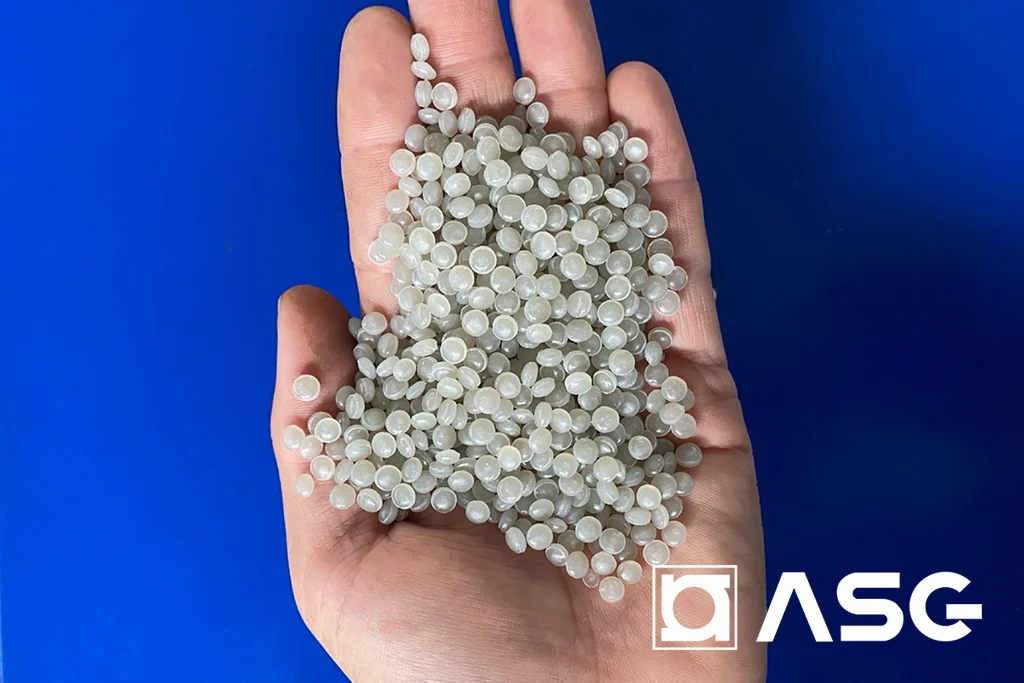
The two-stage PP PE pelletizing system is used to process film regrinds from a washing plant. It consists of two sets of single screw extruders to insure the finished product is of high quality. Final products manufactured by this pelletizing system are in the form of pellets / granules and can be directly used in the production line for film blowing, pipe extrusion, plastic injection, etc.
WORKING PRINCIPLE
1. Feeding. The film regrind is fed into the dosing feeder through a screw conveyor. When the electric current of extruder is higher than what we have set, the dosing feeder and feeding screw conveyor will stop automatically.
2. Plasticization and Degassing. A specialized single screw extruder is applied to gently melt the film regrind. The plastic scraps are well melted and plasticized in the first stage extruder. The plastic will then be extruded by the second stage extruder. With a double-zone vacuum degassing system, volatiles such as low molecular and moisture are removed efficiently. This system is especially suitable for heavy printed films and material with some water content.
3. Melt Filtration. According to our segmented filtering principle, pre-filtering is completed in the first extruder whereas fine filtering in done in the second extruder. This helps to reduce the frequency of replacing filtering sieves.
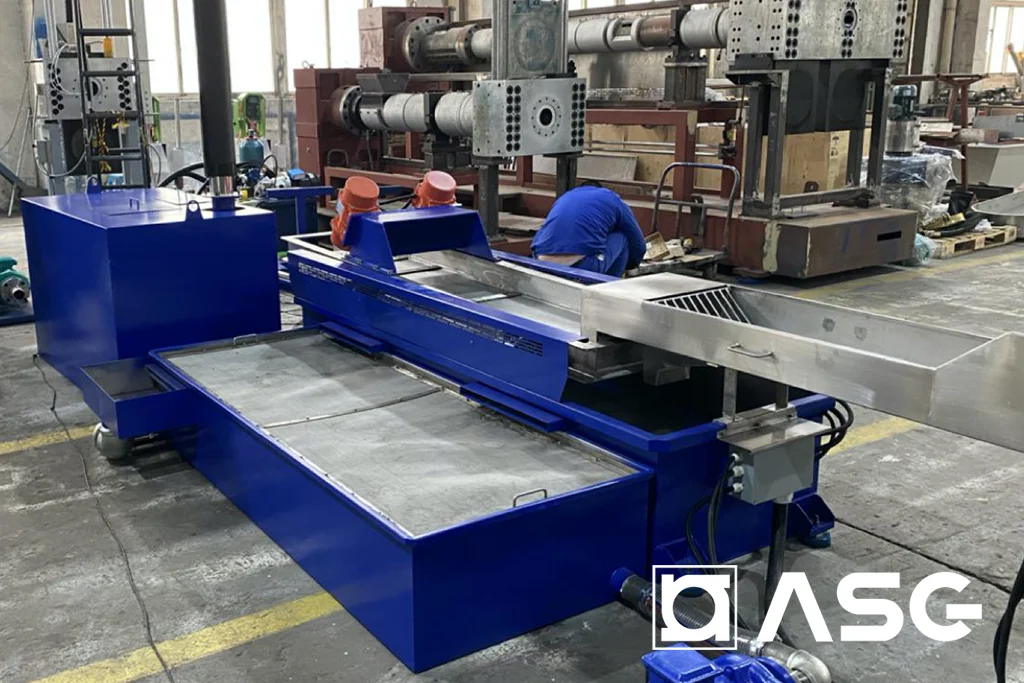
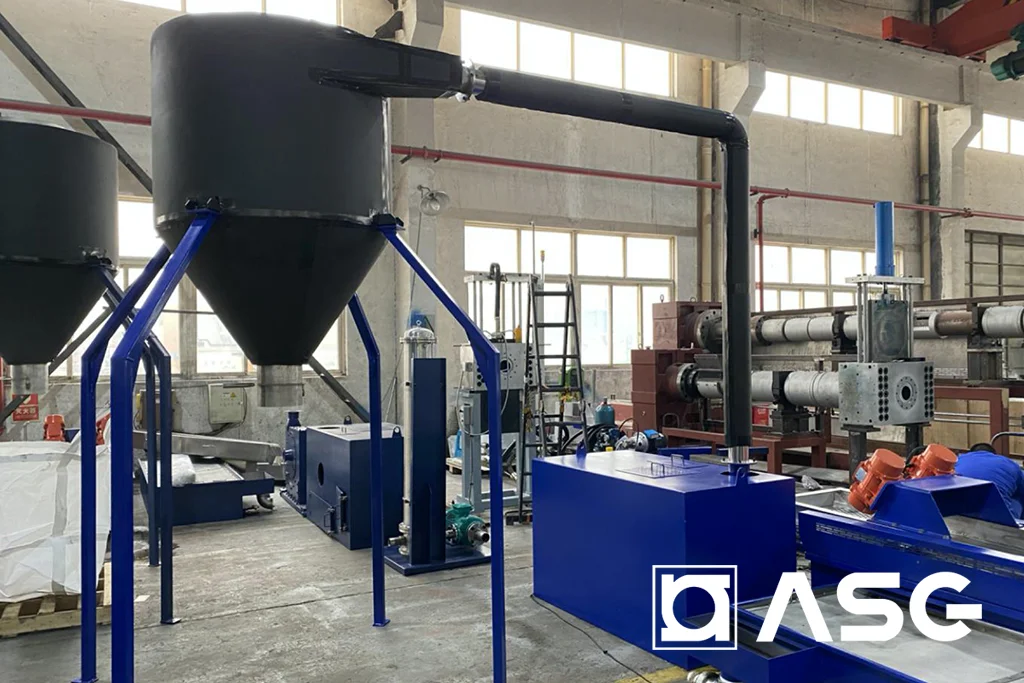
4. Pelletizing. To achieve high performance dried pellets, a die-face water ring pelletizing system is accompanied with an advanced dewatering vibration sieve and horizontal-type centrifugal dewatering.
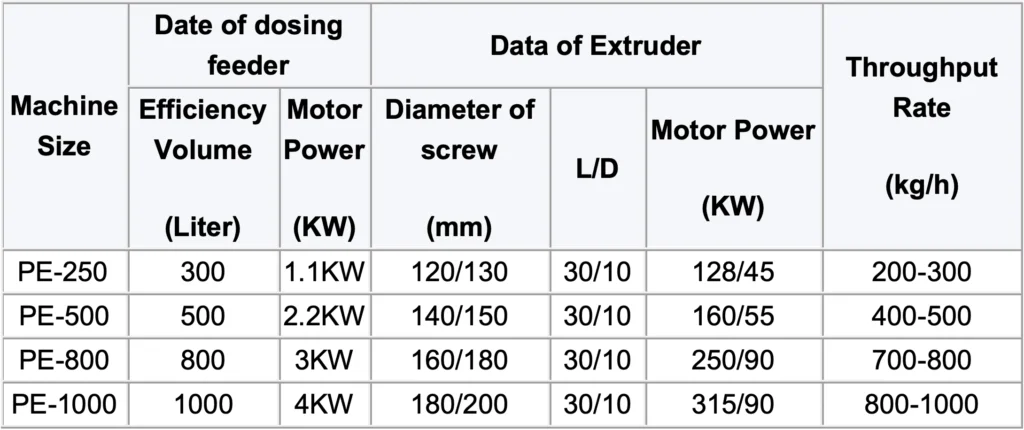
TECHNICAL SPECIFICATIONS
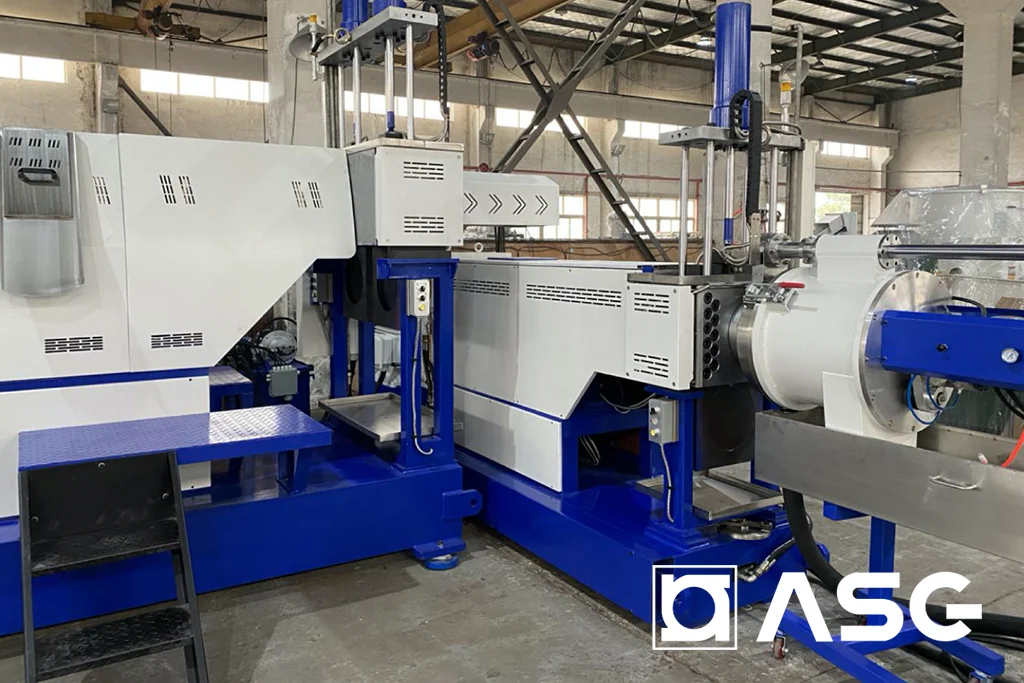
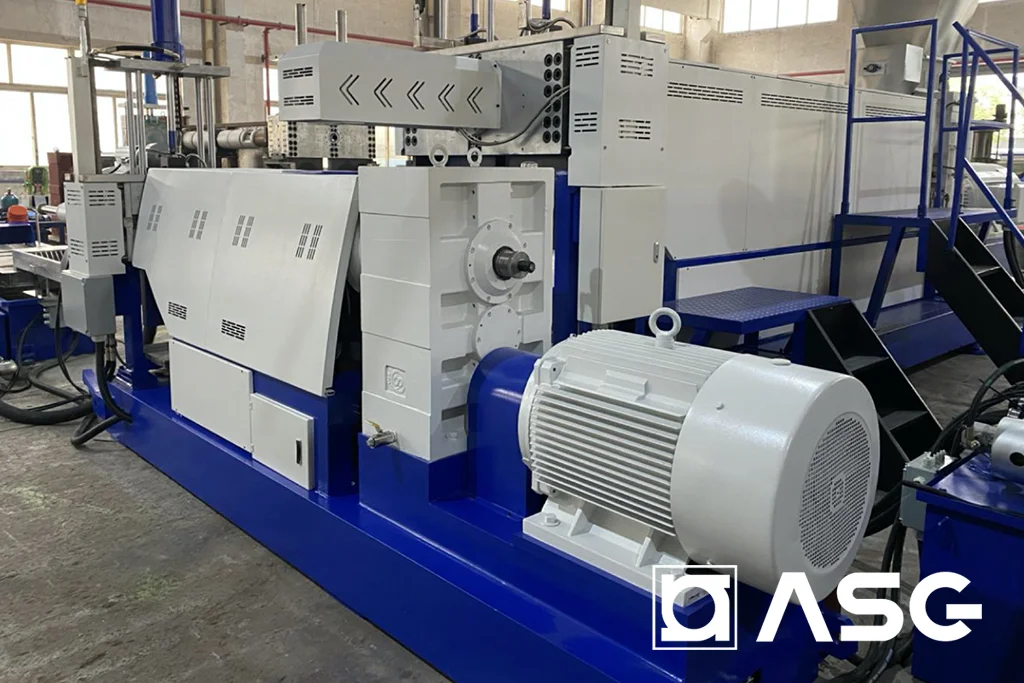
ADDITIONAL IMAGES
INQUIRIES
To get the latest prices and lead times, send us a message using the form below.
Frequently Asked Questions
What material is this pelletizing line designed for?
The line is built for PP and PE film regrind coming from a washing plant — washed flakes or regrind that still carry some moisture or print contamination. It is especially suitable for heavy printed films and material with residual water content, which single-stage systems often struggle to process into quality pellets.
Why does the line use two extruder stages?
Two single-screw extruders work in series: the first gently melts and plasticizes the film regrind, while the second extrudes the homogenized melt under stable conditions. Splitting the work this way gives more thorough plasticization and degassing, which is why the finished pellets reach the quality needed for film blowing, pipe extrusion, and injection molding.
How does the degassing system work?
A double-zone vacuum degassing system pulls volatiles — low-molecular compounds and moisture — out of the melt between the extruder stages. Removing these gases is essential for printed or slightly wet film regrind, since trapped volatiles would otherwise cause bubbles, odor, or weak spots in the finished pellets.
How is melt filtration handled?
Filtration follows a segmented principle: pre-filtering happens in the first extruder and fine filtering in the second. Spreading filtration across both stages reduces the frequency of sieve changes and keeps pressure more stable than a single filter doing all the work. This matters with film regrind, which typically carries more contamination than rigid flakes.
What pelletizing and drying setup does the line use?
Pellets are cut with a die-face water-ring pelletizing system, then dried through an advanced dewatering vibration sieve followed by horizontal-type centrifugal dewatering. This two-step drying combination delivers high-performance dried pellets with consistently low residual moisture, ready for direct use in production lines without further treatment.
What can the finished pellets be used for?
The pellets and granules produced are suitable for direct use in film blowing, pipe extrusion, and plastic injection molding. Because the two-stage process with vacuum degassing and segmented filtration yields consistent, high-quality output, the pellets can substitute virgin material in many non-food-contact applications — confirm your specific quality requirements with our team.