

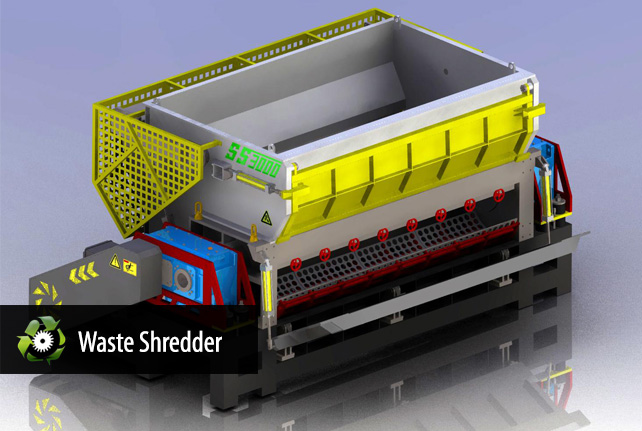
Application
This shredder can process a wide range of materials including organic waste, plastics, cardboard, textile, etc. It’s often used in incineration plants, sorting and recycling plants, refused derived fuel (RDF) plants, MSW treatment plants, hazardous waste treatment plants, and more.
How it works
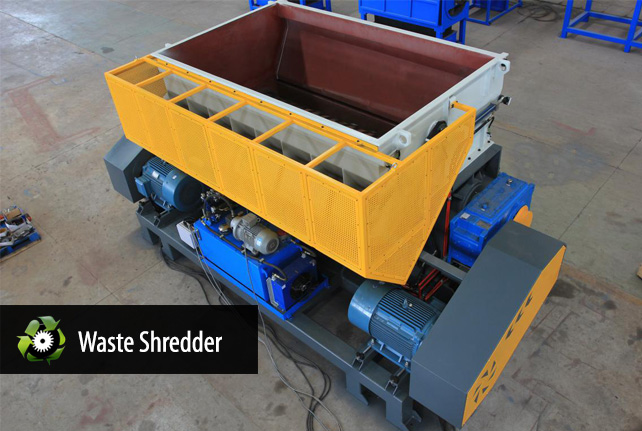
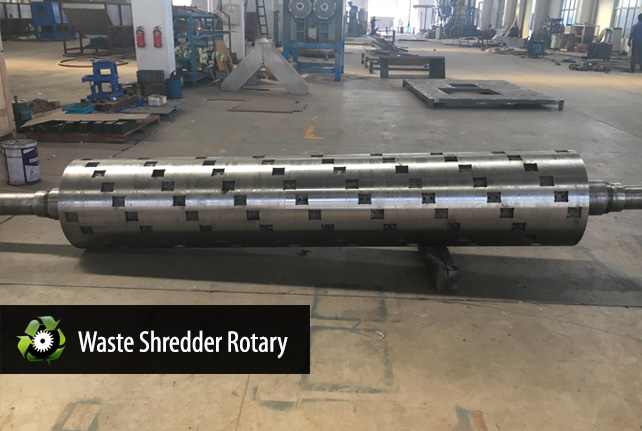
This shredder is a heavy-duty, low-speed, high-torque machine. Shear blades in various shapes and sizes are mounted on a solid rotor or shaft, or multiple hexagonal shafts and rotated to produce a cutting / shredding motion. With robust, hooked styled shear blades rotating at relatively slow speeds, this shredder has the unique ability to quietly shred large pieces and high volumes of feed stock into random, smaller pieces between 1-10 inches. The low speed of the rotors also ensures that little or no dust is generated.
Specifications
| Model # | Motor Power | Shaft diameter | Rotary Speed | Capacity |
| DS-1500 | 2×55 kw | ⌀500mm | 55 rpm | 5,000 kg/h |
| DS-2000 | 2×75 kw | ⌀600mm | 45 rpm | 10,000 kg/h |
| DS-3000 | 2×110 kw | ⌀600mm | 45 rpm | 15,000 kg/h |
Additional Images
Place an Order
The general lead time for all single-piece, standard equipment orders is 30 days. For custom orders or complete washing lines, the lead time is between 60 – 90 days. The actual lead time will depend heavily on the complexity of the project as well as the amount of machinery we have in queue at the time of your order.
Contact us to discuss pricing and ordering details. Here is a brief summary of our ordering procedures.
Frequently Asked Questions
What materials can the waste shredder process?
It handles a wide range of feedstocks including organic waste, plastics, cardboard, and textiles. It is commonly used in incineration plants, sorting and recycling plants, refuse-derived fuel (RDF) plants, MSW treatment plants, and hazardous waste treatment facilities — essentially anywhere large, bulky, or mixed waste streams need primary size reduction.
How does a low-speed, high-torque shredder differ from a high-speed granulator?
The waste shredder runs at only 45–55 rpm with high torque, so it quietly tears large pieces into random 1–10 inch chunks with little or no dust. A high-speed granulator, by contrast, spins at hundreds of rpm to cut fine, uniform flakes or regrinds. Shredders are the volume-reduction first step; granulators do the finer secondary sizing downstream.
How do I choose between the DS-1500, DS-2000, and DS-3000?
Match the model to your target throughput: DS-1500 handles up to 5,000 kg/h with 2×55 kW motors, DS-2000 reaches 10,000 kg/h at 2×75 kW, and DS-3000 tops 15,000 kg/h with 2×110 kW. Confirm your facility can supply the required three-phase power, and choose a size with headroom above your average load so surge volumes do not back up the line.
Is the waste shredder noisy, and does it create dust?
Noise and dust are both low compared with high-speed equipment. The slow rotor speeds keep operation quiet, and the tearing action generates little or no dust, which makes the machine suitable for indoor installations near sorting or processing equipment. Standard hearing protection and ventilation practices for industrial plants still apply.
What maintenance does a waste shredder require?
Inspect the shear blades regularly for wear or damage and sharpen or replace them as needed — our shredder blade replacement guide walks through the process. Check shaft condition, monitor motor temperature and load, and keep spare blades and wear parts on hand. Because the machine runs at low speed, mechanical wear is gradual, but scheduled preventive checks still prevent unplanned stops.
Can the waste shredder be integrated into a full recycling or waste treatment line?
Yes — it is typically installed as the primary size-reduction stage ahead of sorting, washing, or RDF processing equipment. Standard single-piece orders carry a 30-day lead time, while custom configurations or complete lines take 60–90 days depending on project complexity and production queue. Contact the sales team to discuss layout and integration details.