

Description
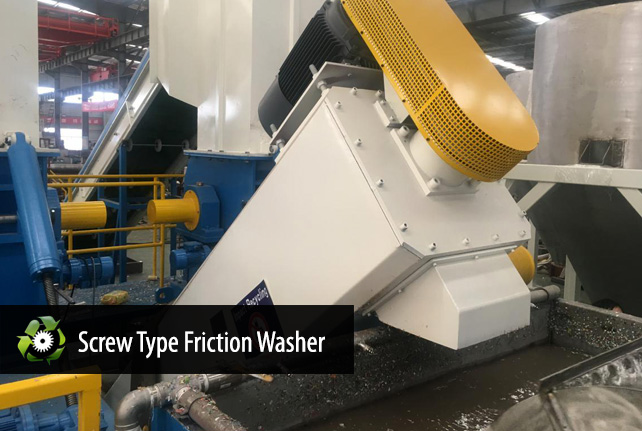
A brilliant cold washing machine after wet crusher, the Screw Type Friction Washer is a truly efficient piece of machinery for cleaning plastic flakes via the use of friction. In the case of our standard washing line, the friction washer used cold water to further scrub the dirt loose directly after wet crusher.
How it works
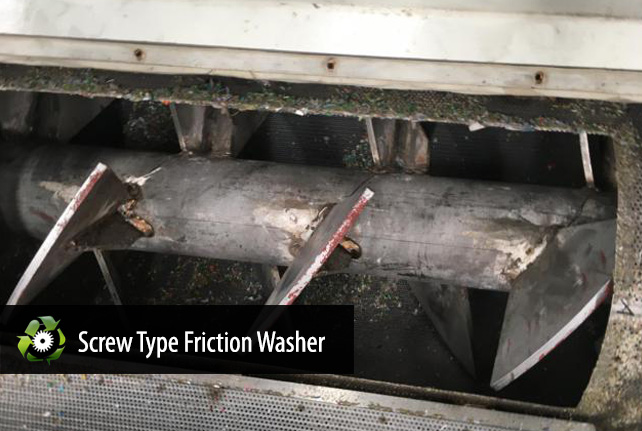
At the center of ASG’s high speed friction washer lies a long, fast-spinning shaft with many tilted panels / paddles mounted. Surrounding the rotating shaft is a mesh screen tunnel used for filtrating small contaminants such as dirt. A large inclined case surrounds the entire apparatus where water jets and nozzles are aimed at the mesh screen.
The rotating shaft within ASG’s Screw type friction washer spins at nearly 750 rotations per minute. As the Plastic flakes enter this machine, the material is mixed at high speeds within the washer where friction between each plastic flake helps scrub off dirt and debris. Water is continuously added via water jets that spray at the mesh screen preventing potential clogging that may occur.
Additional Images
Place an Order
The general lead time for all single-piece, standard equipment orders is 30 days. For custom orders or complete washing lines, the lead time is between 60 – 90 days. The actual lead time will depend heavily on the complexity of the project as well as the amount of machinery we have in queue at the time of your order.
Contact us to discuss pricing and ordering details. Here is a brief summary of our ordering procedures.
Frequently Asked Questions
Where does the friction washer sit in a PET washing line?
The friction washer is typically installed directly after the wet crusher as a cold-washing stage. It scrubs dirt loose from freshly crushed flakes before they move on to hot washing and float separation. This early cleaning step improves the effectiveness of every downstream stage and helps produce higher-purity PET flakes.
How does the friction washer clean plastic flakes?
At its center, a long shaft fitted with tilted paddles spins at nearly 750 rotations per minute inside a mesh screen tunnel. Flakes entering the machine are mixed at high speed, and friction between the flakes themselves scrubs off dirt and debris. Water jets aimed at the mesh screen continuously flush contaminants through while preventing clogging.
What capacity can the friction washer handle?
The washer is sized to match the crusher and the overall line capacity it serves, so throughput is typically specified per project rather than as a fixed figure. When enquiring, share your target capacity in kg/h and the flake type you process, and we will recommend the appropriate model and configuration.
Does the friction washer consume a lot of water?
Water is added continuously through jets during operation to carry away loosened dirt and keep the mesh screen clear. In a complete washing line, process water is typically collected, filtered, and recirculated to control consumption. Actual usage depends on throughput, contamination level, and how the water circuit is configured.
What maintenance does a friction washer need?
Routine maintenance focuses on wear parts: inspect the tilted paddles and the mesh screen for wear or damage, check shaft bearings and drive components, and confirm the water jets and nozzles are clear. Regular checks of the screen condition are especially important, since a damaged screen lets flakes escape or allows contaminants to build up.