

Description
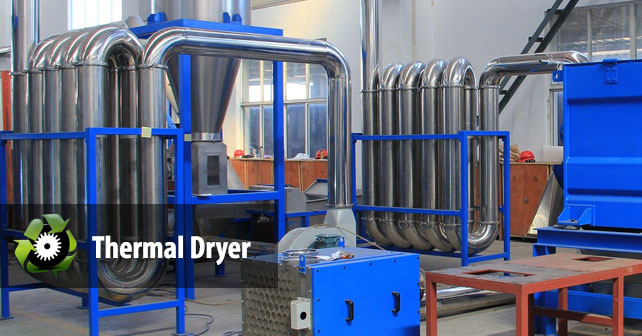
ASG’s thermal dryer is the final drying apparatus in our PET bottle washing line. Using high heat to dehydrate moisture from the PET flakes, this continuos drying apparatus is strategically placed after the dewatering machine where moisture levels are initially reduced to approximately 20-30%. The thermal dryer reduces moisture levels further to below 1%.
How It Works
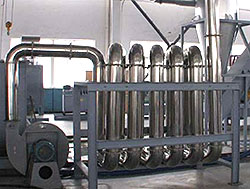 Thermal dryers use hot air to dry the PET flakes, much like a hair dryer. After dewatering, the PET flakes are vacuumed out by a transport blower and mixed with hot air traveling through a long set of stainless steel tubing that winds back and forth. As the PET flakes mix and spin around within this lengthy transport tunnel, moisture is effectively dehydrated. Ending with a cyclone separation apparatus where cool air is mixed in, residual moisture is further reduced. The cyclone separator is the last stand against any dust and fines within the material stream.
Depending on the capacity of the PET bottle washing line, the use of one thermal heater is usually enough. However, to ensure the lowest possible moisture levels, some PET washing plants may request the use of two or even three thermal spiral heaters that are positioned in a row.
Specifications
| Model # | Blower Power | Heating Power | Pipe Diameter | Pipe Material |
| RSJ800 | 5.5 KW | 36 KW | ⌀159mm | Type 304 Stainless Steel |
Place An Order
The general lead time for all single-piece, standard equipment orders is 30 days. For custom orders or complete washing lines, the lead time is between 60 – 90 days. The actual lead time will depend heavily on the complexity of the project as well as the amount of machinery we have in queue at the time of your order.
Contact us to discuss pricing and ordering details. Here is a brief summary of our ordering procedures.
Frequently Asked Questions
What final moisture level does the thermal dryer achieve?
The thermal dryer takes PET flakes from roughly 20–30% moisture (after centrifugal dewatering) down to below 1%. This low residual moisture is essential for downstream processes like extrusion and pelletizing, where excess water causes bubbles, hydrolysis, and degraded rPET quality. Plants targeting the lowest possible moisture — for example for food-grade or bottle-to-bottle applications — sometimes run two or three thermal heaters in series.
How does the hot-air drying process work?
After dewatering, flakes are vacuumed by a transport blower and mixed with hot air traveling through a long set of stainless steel tubes that wind back and forth. As flakes spin and tumble through this heated transport tunnel, moisture evaporates. The stream then enters a cyclone separator where cool air is mixed in, dropping out dust and fines while the dried flakes discharge — much like an industrial-scale hair dryer.
When would I need two or three thermal heaters instead of one?
One thermal heater is usually enough for standard line capacities. However, if your line runs at high throughput, processes flakes with higher incoming moisture, or must guarantee the lowest possible residual moisture for premium applications, adding a second or third spiral heater in a row extends drying time and ensures consistent results. This is a common upgrade for large PET washing plants.
What are the power and specification details of the RSJ800?
The RSJ800 model uses a 5.5 kW transport blower and 36 kW of heating power, with φ159 mm Type 304 stainless steel piping for the drying tunnel. Stainless construction resists corrosion from hot, moist air and keeps the system food-safe. Actual energy consumption depends on line capacity, ambient conditions, and target moisture — insulated ducting and heat recovery options can reduce operating costs.
Where does the thermal dryer sit in a PET washing line?
The thermal dryer is the final drying stage, positioned after the centrifugal dewatering machine and before the finished-flake silo or packaging. Flakes arrive at 20–30% moisture, get thermally dried below 1%, and pass through the cyclone separator for final dust removal. It integrates with the line’s conveying and control systems for fully automatic operation within a complete PET bottle recycling machine line.
What maintenance does a thermal dryer require?
Key maintenance tasks include inspecting heating elements for even output, checking the transport blower and fan belts, cleaning the cyclone separator and ducting of accumulated fines, and verifying temperature sensors and controls. The 304 stainless steel tubing should be checked periodically for wear at bends. A regular inspection schedule keeps drying efficiency high and prevents unplanned stops in the final — and most quality-critical — stage of the line.