

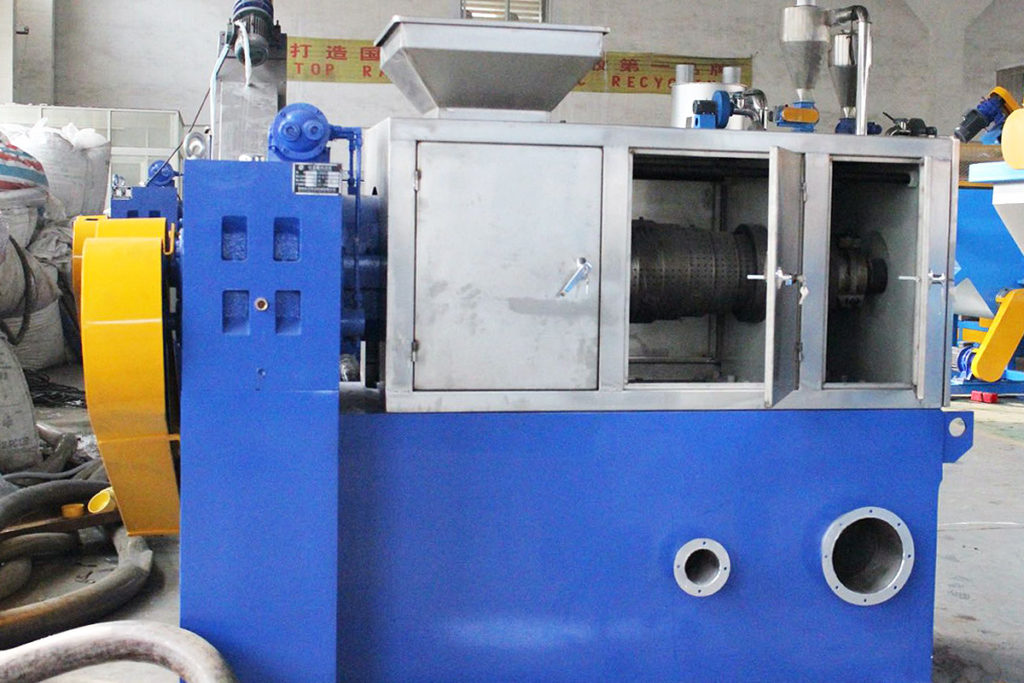
Our screw press dewatering machine, designed specifically for our PE film washing line, is an efficient way to remove moisture from a material stream. In fact, our screw presses are commonly used in food processing, paper & pulp industries, sewage disposal, and much more. This robust piece of machinery offers excellent moisture reduction without the high cost (electricity cost) of operating thermal heaters.
WORKING PRINCIPLE
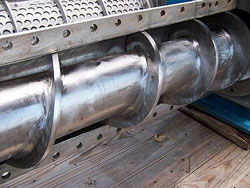
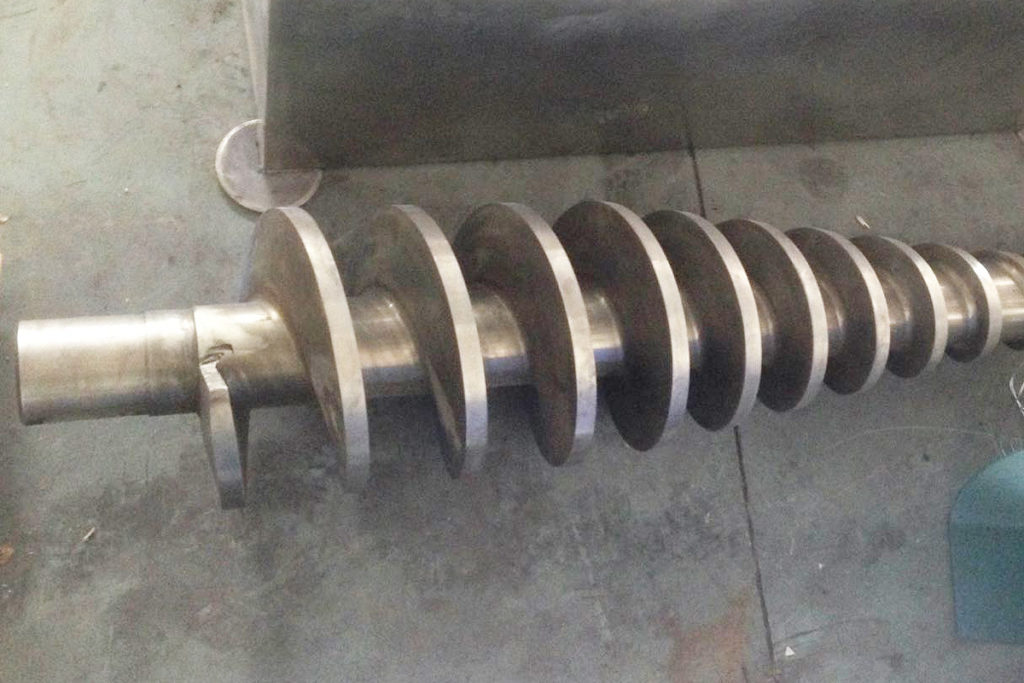
At the center of our screw press dewatering machine is a screw shaft of increasing diameter. The screw shaft is most narrow at the opening where the plastic material enters via the vertical feeder. Surrounding the screw shaft is a thick-walled, constant diameter outer tube lined with holes for water outlet. The common dewatering screw press for industrial recycling applications is 4-6 meters long, but can be increased or decreased based on your specifications. As the wet plastic feed stock is feed into the feeder, the screw shaft slowly rotates moving the plastic machine forward. The screw shaft will becomes thicker in diameter, the plastic becomes more and more compacted against the outer casing wall. The moisture from the plastic material is squeezed out and exits the tiny holes.
At the end of the horizontal screw press, the diameter of the screw shaft is only slightly smaller than the inside diameter of the outer casing. It’s through this narrow gap that the dried plastic material exits the screw press. A well manufactured screw press will bring moisture content to acceptable levels of below 15%.
ADDITIONAL IMAGES
INQUIRIES
To get the latest prices and lead times, send us a message using the form below.
Frequently Asked Questions
How does a screw press dewatering machine work?
At the center is a screw shaft of increasing diameter, narrow at the inlet where material enters via the vertical feeder. The shaft is surrounded by a thick-walled outer tube lined with water-outlet holes. As the screw slowly rotates, the thickening shaft compacts the plastic against the casing wall, squeezing moisture out through the tiny holes. Dried material exits through a narrow gap at the end of the press.
What moisture level can a screw press achieve?
A well manufactured screw press brings moisture content down to acceptable levels below 15%. Because dewatering is mechanical — compression, not heat — it achieves excellent moisture reduction without the high electricity cost of operating thermal heaters. That makes it an economical dewatering stage for high-throughput washing lines running around the clock.
Where does the screw press fit in a film washing line?
The screw press is designed specifically for PE film washing lines, sitting after the washing stages to remove surface water from washed film. Dewatered film then moves downstream to densifying and agglomeration. See our PP/PE film shredding and densifying recycling line for the typical next stage after dewatering.
Screw press vs centrifugal dryer — which should I use?
Both are mechanical dewatering stages, but they suit different materials. The screw press compresses soft, bulky materials like washed PE film down to below 15% moisture with low energy use. A centrifugal dryer spins material at up to 1,500 RPM and suits rigid flakes as well as films, reaching below 2%. Our engineers will recommend the right dewatering stage for your material and line layout.
Can the screw press be customized?
Yes. The common dewatering screw press for industrial recycling is 4–6 meters long, but length can be increased or decreased based on your specifications and target throughput. The vertical feeder, shaft diameter profile, and drive are all matched to your material stream so the press delivers the required moisture level for your downstream process.
What maintenance does the screw press require?
Key wear items are the screw shaft and the perforated outer tube: check for wear that could widen the exit gap or clog the water-outlet holes, and inspect the vertical feeder regularly. Because the process is mechanical with no heating elements, maintenance is straightforward. ASG supplies wear parts and technical support to keep the press running reliably.