

Product Description
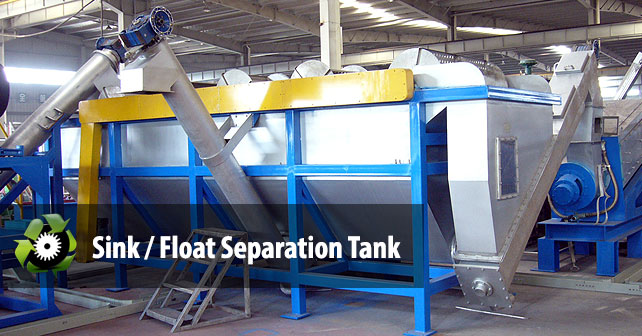
A float sink separation tank separates materials that sink from these that float. In PP / PE film recycling, this is an essential piece of equipment that removes a majority of contaminants such as sand, rocks, glass, metals, other plastics, and more.
 The theory behind the float sink separation tank is quite simple, the density of water, which is 1g/cm3, is used to separate materials. For all materials entering the separation tank, anything with greater density will sink, while materials with lower density will float. For the purpose of our PE film washing line, PP / PE film (for those that are wondering, PP and PE have densities around .93g/cm3) will float while contaminants will sink.
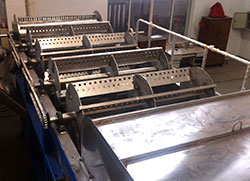
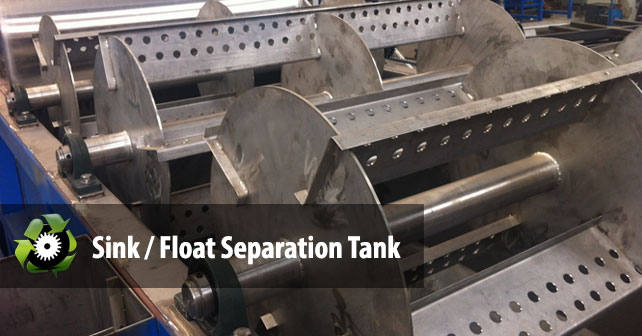
The contaminants that sink, a slurry mix of various materials, are removed from the float/sink separation tank via screw conveyors and collected for disposal. Large rotating paddles move the floating PP / PE film forward onto the next piece of equipment.
Ideally, we want the PP / PE film to soak in the water for longer periods of time. This not only allows for more cleaning of the material, it will also ensure enough time is given all sinking contaminants to make its way to the bottom of the tank. Hence, we offer a standard 4 meter separation tank with the option of extending it to 6 meters.
To ensure the durability of the water separation tank, the interior as well as rotating paddles on top are made with type 304 stainless steel that is strongly resistant to both oxidation (rust) and corrosion.
Specifications
| Interior Width: | 1500mm – 2000mm |
| Total Length: | 4 – 6 meters |
| Interior Material: | Type 304 Stainless Steel |
| Exterior Frame: | Carbon Steel |
| Screw Conveyor Motors: | 5.5KW + 3.7KW |
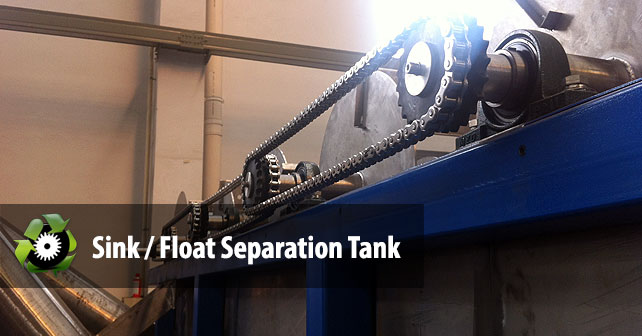
| Rotating Drum Motors: | .37KW + 2.2KW |
More Images
Ordering
Our lead time for single pieces of equipment is 30 days from the signing of purchase contract. For custom orders such as complete washing lines, the lead time is between 60 – 90 days. Actual lead times will depend on the project’s complexity as well as our factory’s availability.
Contact us to discuss pricing and ordering details. Here is a brief summary of our ordering procedures.
Frequently Asked Questions
How does a float sink separation tank work?
It uses water’s density (1 g/cm3) as the separating medium: anything denser than water sinks, anything less dense floats. PP and PE have densities around 0.93 g/cm3, so clean film floats while sand, rocks, glass, metals, and other plastics sink. Large rotating paddles then move the floating film forward to the next stage while sunk contaminants are removed separately.
What contaminants does it remove?
A majority of the heavy contaminants in a PP / PE film stream: sand and grit, rocks, glass shards, metals, and other denser plastics mixed into the feed. Because it works on density rather than size or shape, it catches contaminants that washing alone can miss. It is an essential pre-cleaning step before friction washing and drying.
Why is longer soaking time important?
Film needs time in the water for two reasons: soaking loosens surface dirt for better cleaning, and heavy contaminants need time to travel to the bottom of the tank. That is why the standard tank is 4 meters long with an option to extend to 6 meters. Longer residence time means cleaner film and more complete separation of sinking material.
What is the tank made of?
The interior and the rotating paddles are made from type 304 stainless steel, which strongly resists oxidation and corrosion in the wet, chemical environment of a washing line. The exterior frame is carbon steel for structural strength. This material combination balances durability where it matters with cost on the structural side.
How are the sunk contaminants removed?
The contaminants that sink form a slurry mix of various materials at the bottom of the tank, and screw conveyors remove them continuously for disposal. Because removal is automated, the tank can run steadily without shutdowns for manual cleanout — a key reason float-sink tanks suit continuous washing lines.
What is the lead time for ordering?
Single pieces of equipment ship about 30 days after the purchase contract is signed. Custom orders such as complete washing lines take 60–90 days, depending on project complexity and factory availability. Contact ASG to discuss pricing, the 4-meter versus 6-meter tank option, and ordering details for your line.