

Product Description
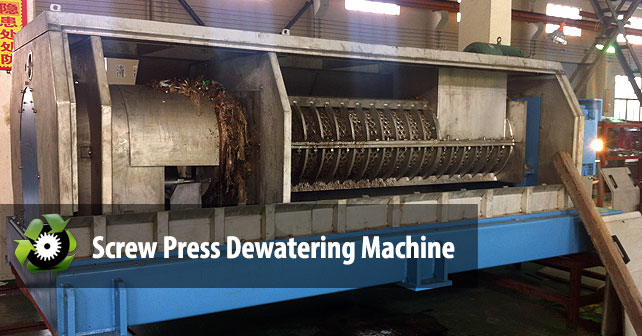
The dewatering screw press is designed especially for our PE film washing line and is a very efficient way to remove water content from PP/PE film taken directly from the washing process. This robust piece of machinery offers excellent option for moisture reduction without the high cost (electricity cost) of operating thermal dryers.
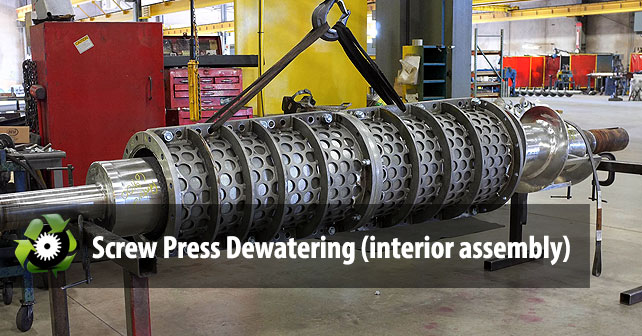
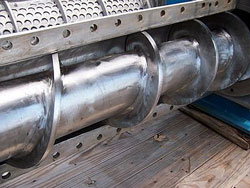 to explain briefly how the dewatering screw press works, it is actually very similar in structure compared to a plastic extruder, however, with a screw shaft of increasing diameter. Surrounding the screw shaft is a thick, constant diameter barrel lined with holes for water outlet. As the screw shaft slowly rotates moving the PP/PE film forward, the screw shaft will become thicker in diameter and the film becomes increasingly pressed against the outer barrel. During this process, the moisture from the plastic film is squeezed out and exits the tiny holes.
At the end of the dewatering screw press, the diameter of the screw shaft is only slightly smaller than the inside diameter of barrel. It’s through this narrow gap that the dried PP/PE film squeezes out of the screw press. A well manufactured screw press will bring moisture content to acceptable levels of below 15%.
The common dewatering screw press for industrial recycling applications is 4-6 meters long, but can be increased or decreased based on your specifications.
More Images
Ordering
Our lead time for single pieces of equipment is 30 days from the signing of purchase contract. For custom orders such as complete washing lines, the lead time is between 60 – 90 days. Actual lead times will depend on the project’s complexity as well as our factory’s availability.
Contact us to discuss pricing and ordering details. Here is a brief summary of our ordering procedures.
Frequently Asked Questions
How does the dewatering screw press work?
Structurally similar to a plastic extruder, the press uses a screw shaft of increasing diameter inside a constant-diameter barrel lined with water-outlet holes. As the slowly rotating screw moves PP/PE film forward, the thickening shaft presses the film ever tighter against the barrel, squeezing moisture out through the tiny holes. At the discharge, the screw nearly fills the barrel, and dried film squeezes through the narrow remaining gap.
What moisture level does the screw press achieve?
A well-manufactured screw press brings moisture content down to acceptable levels below 15% — dry enough for many downstream uses without thermal drying. This mechanical dewatering is far cheaper in electricity than running thermal dryers for the same moisture removal. For extrusion-grade dryness, the press can be followed by a thermal dryer or squeezer, but many plants find sub-15% sufficient for storage and further processing.
Why choose a screw press over a thermal dryer?
The screw press removes water mechanically rather than by evaporation, so operating costs — especially electricity — are dramatically lower than thermal drying. It is an excellent option for moisture reduction directly after washing, handling wet film straight from the washing process. Plants typically use the press as the primary dewatering stage and reserve thermal drying only where ultra-low moisture is required.
What materials can the screw press process?
It is designed especially for PP/PE film taken directly from the washing process — light, flexible material that holds a lot of surface water. The increasing-diameter screw handles the compressibility of film well, densifying it as it dewaters. Heavily contaminated or non-film materials should be cleaned and size-reduced appropriately before entering the press for best results.
What sizes are available, and can it be customized?
The common industrial dewatering screw press is 4–6 meters long, but length can be increased or decreased based on your specifications and throughput requirements. Longer barrels give more pressing stages and lower final moisture. Share your line capacity and target moisture so the screw geometry, barrel length, and drive power are matched to your washing line.
What maintenance does the screw press require?
Key wear points are the screw shaft and the perforated barrel, which see constant abrasive contact with film and grit — inspect for wear and keep the water-outlet holes clear of blockages. Check the drive, bearings, and seals regularly, and monitor discharge moisture as an early indicator of wear. A preventive maintenance schedule matched to operating hours keeps dewatering efficiency high and avoids unplanned stops.