

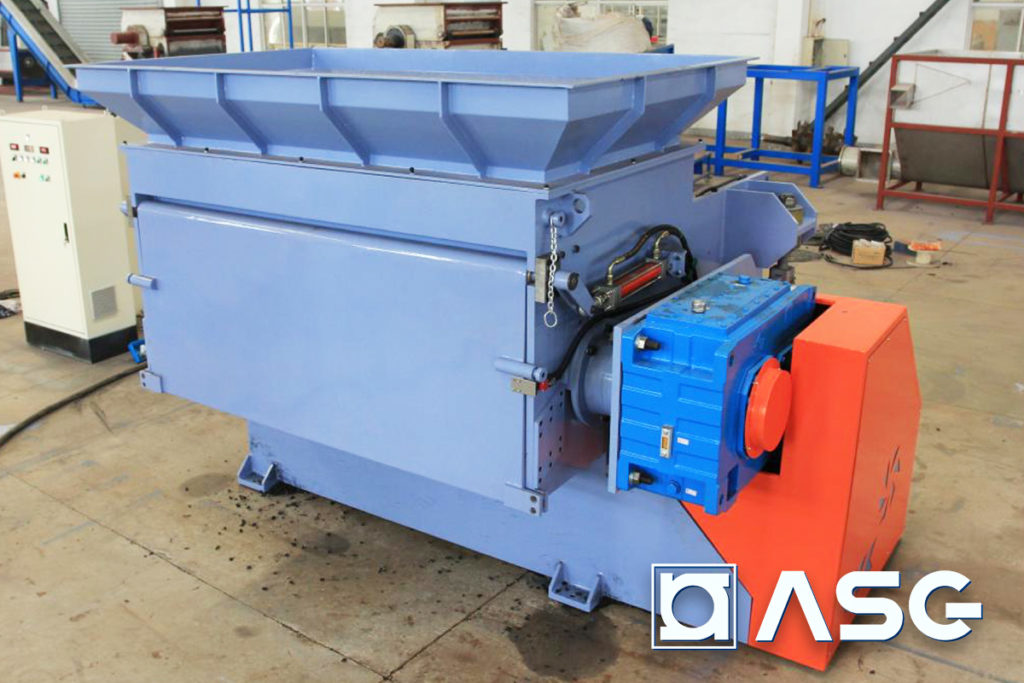
One of the more tricky materials to cut effectively is large pieces of elastic plastics and rubbers that are very resilient to fast rotary granulator machines. While double-shaft shredders are excellent for this purpose, they are more expensive and the maintenance required is more time consuming.
To simplify your operation in handling this type of material, we introduce our three-clawed single-shaft shredder machines designed specifically to cut materials like rubber tires, silicone, and large pieces of TPE, EVA, and other rubber like plastics. This particular model starts from a capacity of 1000 kg/h and ranges up to 5000 kg/hr.
WORKING PRINCIPLE
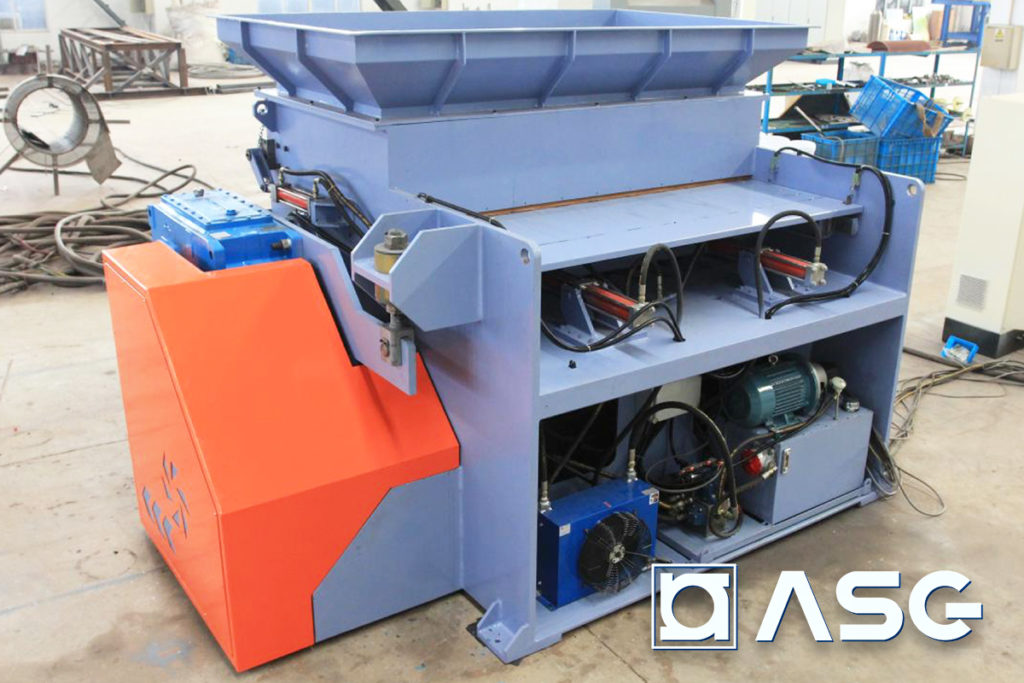
Based on our experience with working with multiple recycling plants, single-shaft plastic shredder machines offers the required robustness and the convenience of simple maintenance. As with most single-shaft shredders in the market today, this machine makes use of a hydraulic assisted drawer to push the rubber or elastic plastic material against a slow rotating rotor.
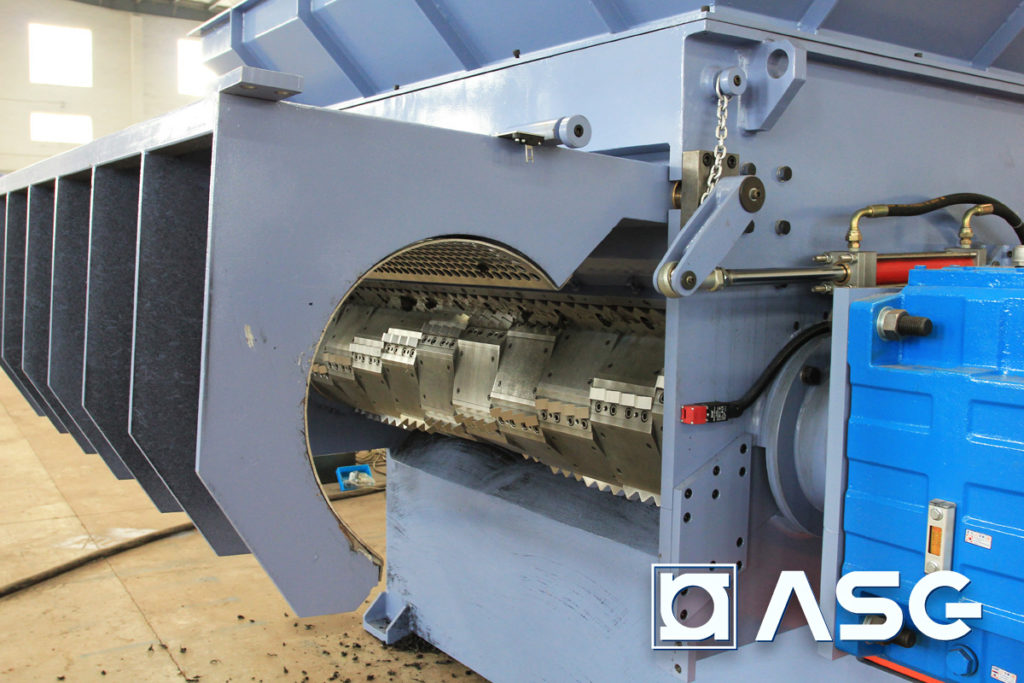
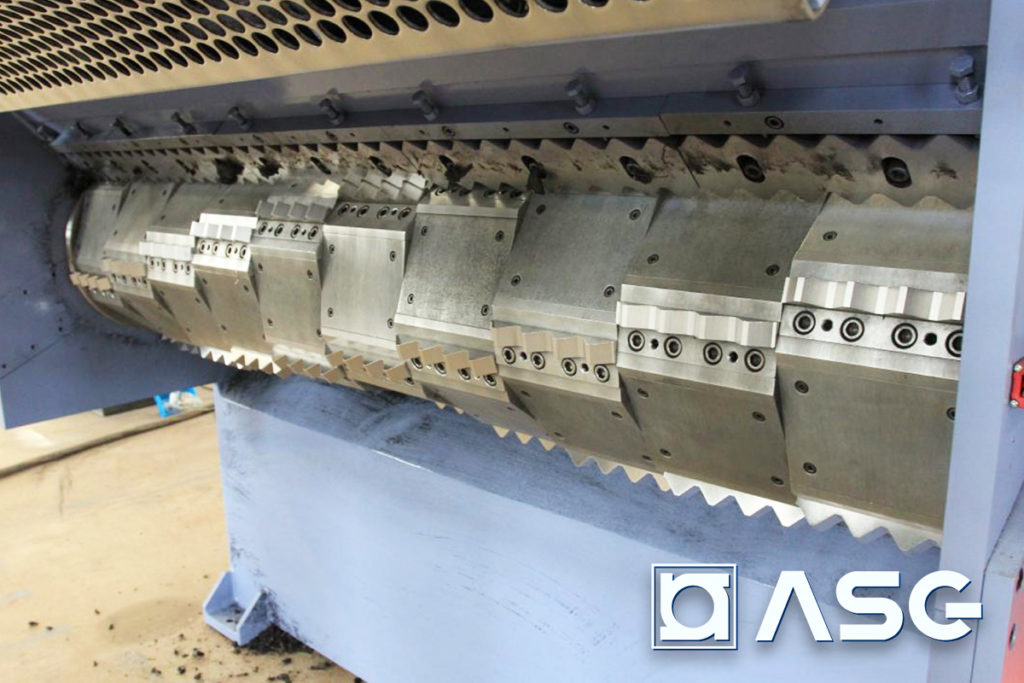
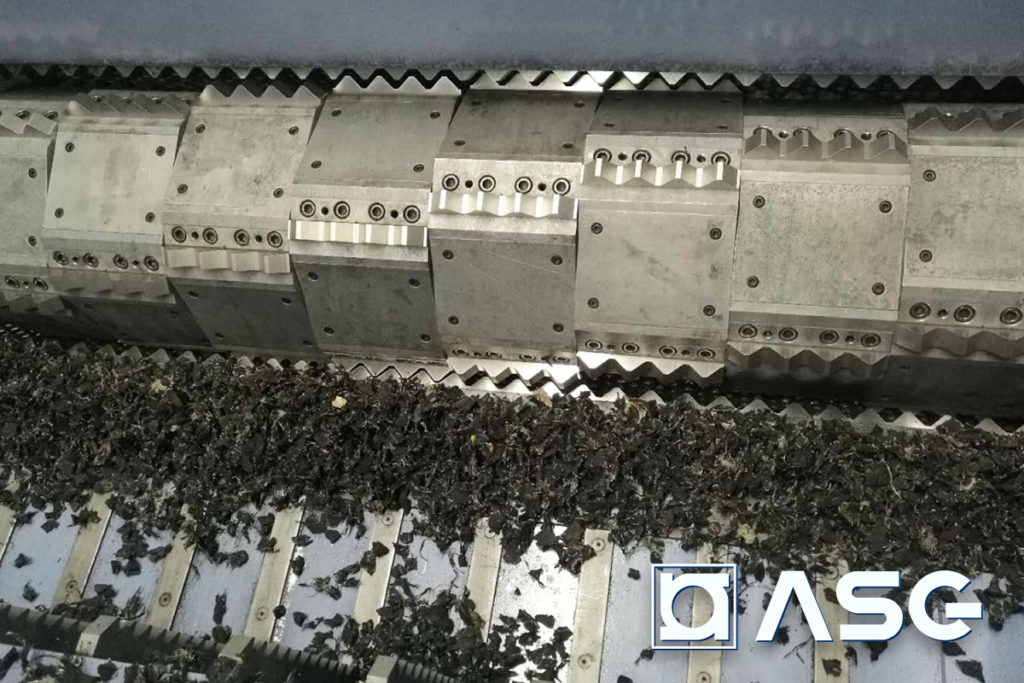
This rotor is designed specifically with 3-clawed blades attached in a staggered array to dig into large pieces of elastic materials. There are also stationary blades attached within the cutting chamber. When the rotor spins, the rotary blades come into contact with the stationary blades resulting in the material being cut.
A filter screen at the bottom of this shredder allows material that are small enough to pass through while holding larger pieces within the cutting chamber to be continuously cut. Once this material become small enough, they can pass through.
FEATURES
- Highly Resistant Hooks – the three-clawed blades are optimized for shredding geometry and are made with SKD11 or D2 equivalent steel that are highly resistant to wear.
- Two-Part Housing – Our two-part design allows the entire rotary shaft to be conveniently removed for maintenance.
- Superior Sealing – The bearings on this machine is quadruple sealed allowing it to prevent leakages even for liquids.
- Shock Absorbing – Our added shock absorption system efficiently protects the hydraulics from overloading.
- Hydraulic Drive – Our shredder makes use of a specially designed hydraulic drive offering optimal torque and performance and works amazingly in extreme conditions.
TECHNICAL SPECIFICATIONS
| Model # | Motor Power | Shaft Diameter | Rotary Speed | Capacity |
| BS-1000 | 45 kw | ⌀450 mm | 55 rpm | 1000 kg/h |
| BS-2000 | 110 kw | ⌀500 mm | 45 rpm | 3000 kg/h |
| BS-3000 | 2x 110 kw | ⌀550 mm | 40 rpm | 5000 kg/h |
*Larger, more powerful models available based on your request.
ADDITIONAL IMAGES
WARRANTY
All recycling machines come with a 1 year limited warranty.
INQUIRIES
To get the latest prices and lead times, send us a message using the form below.
Frequently Asked Questions
What materials can this shredder process?
The three-clawed single-shaft shredder is built for large pieces of elastic plastics and rubbers: rubber tires, silicone, TPE, EVA, and other rubber-like plastics that resist fast rotary granulators. Capacities range from 1,000 kg/h (BS-1000) up to 5,000 kg/h (BS-3000), with larger, more powerful models available on request. It is the simpler, more economical alternative to a double-shaft machine for this material class.
Why is elastic plastic and rubber so hard to shred?
Elastic materials deform and bounce back instead of fracturing, so high-speed granulator knives tend to smear or melt them rather than cut. This machine solves the problem with a slow-rotating rotor fitted with 3-clawed blades in a staggered array that dig into the material, plus stationary blades in the cutting chamber. The hydraulic-assisted drawer keeps constant feeding pressure so the claws always bite.
How does the cutting and sizing system work?
When the rotor spins, the rotary 3-clawed blades meet the stationary blades and cut the material; a filter screen at the bottom holds larger pieces in the chamber for continuous cutting until they are small enough to pass through. Changing the screen changes the output size. The slow rotor speed (40–55 rpm) and hydraulic drive deliver high torque for tough rubber while keeping noise and dust low.
Should I choose this single-shaft design or a double-shaft shredder?
Double-shaft shredders are excellent for elastic materials but cost more and need more time-consuming maintenance. This three-clawed single-shaft design offers the required robustness with simpler maintenance — including a two-part housing that lets the entire rotary shaft be removed conveniently. For a detailed comparison of rotor designs and costs, see our guide to choosing between single-shaft and double-shaft shredders.
Which model fits my throughput: BS-1000, BS-2000, or BS-3000?
The BS-1000 (45 kW, Ø450 mm shaft, 55 rpm) handles about 1,000 kg/h; the BS-2000 (110 kW, Ø500 mm, 45 rpm) reaches 3,000 kg/h; and the BS-3000 (2 × 110 kW, Ø550 mm, 40 rpm) tops 5,000 kg/h. Larger shafts and slower speeds deliver the torque dense rubber demands. CE certification is available, and bigger models can be built to order — match the machine to your peak hourly volume with room for growth.
What maintenance does the shredder require?
Key tasks include inspecting and resharpening the SKD11/D2 three-clawed blades, checking the filter screen, and servicing the hydraulic drive and drawer mechanism. The two-part housing allows quick shaft removal, quadruple-sealed bearings prevent leakage even with liquids, and the shock-absorption system protects the hydraulics from overload. A scheduled blade maintenance routine matched to your material keeps throughput steady.