

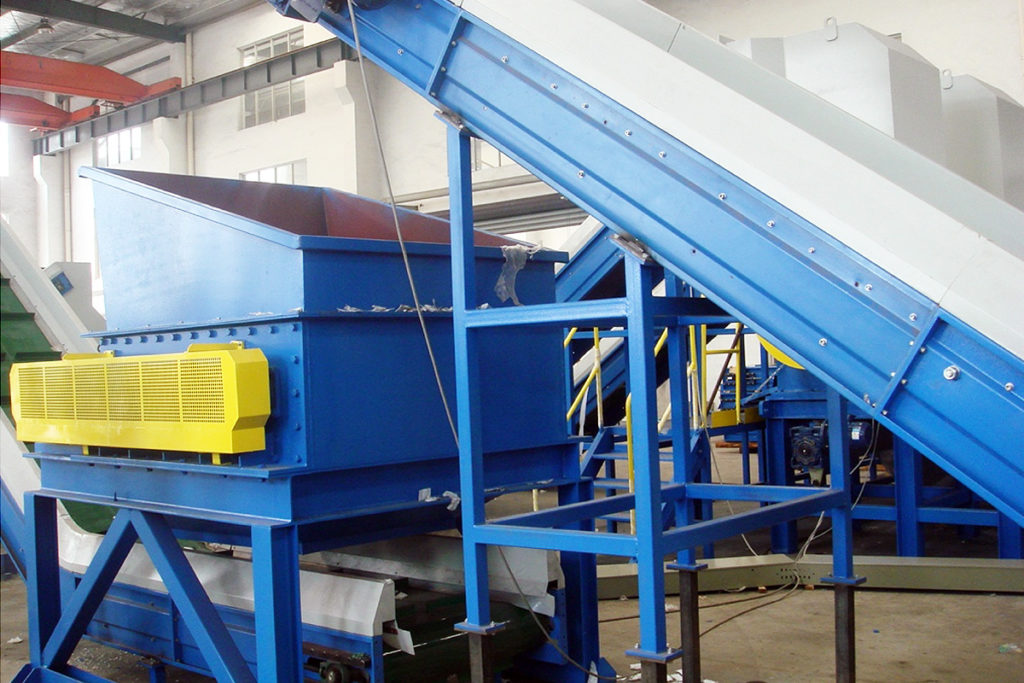
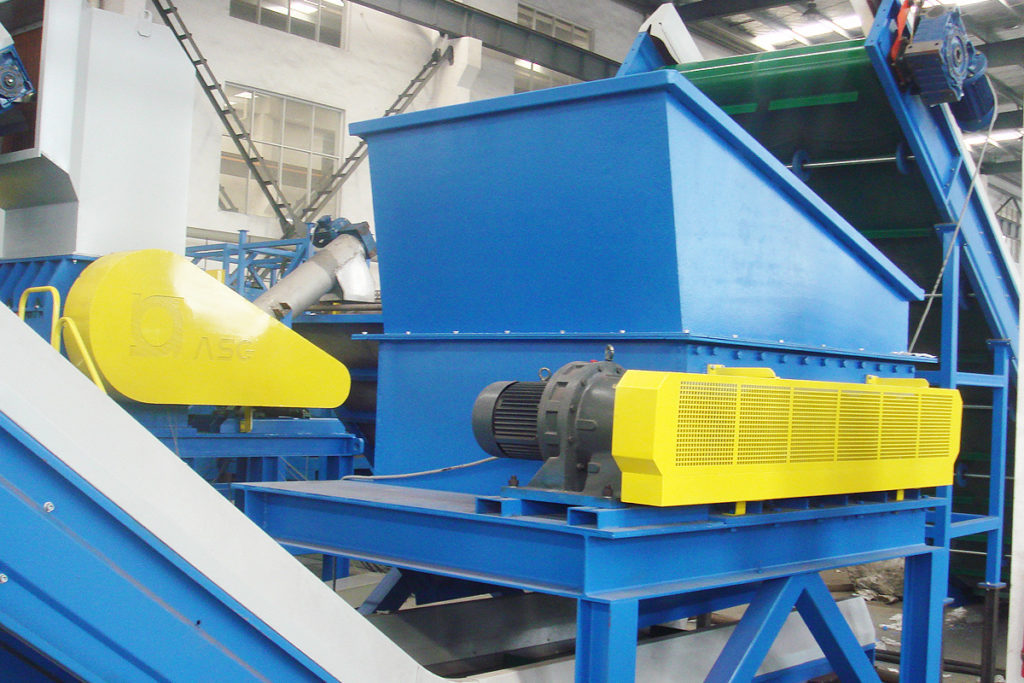
As the first piece of machinery in our standard HDPE & PET bottle washing line, this horizontal debaler machine breaks loosened bales of compacted rigid plastics into a free flowing stream.
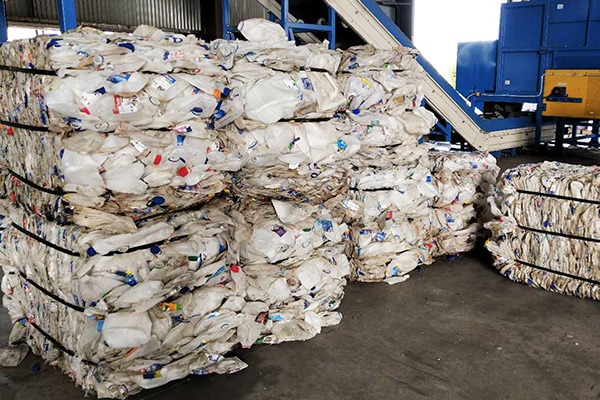
For many rigid plastic recycling operations, the feedstock usually arrives at the plant in bales where the material is compacted and bound by a metal wire. In order to process this plastic stream in recycling machinery, these bales must first be broken apart.
If you are currently manually opening these bales and placing the plastic pieces onto the conveyor one by one, our horizontal debaler machine will go a long way in automating and making your process more efficient. Taking into consideration the high cost of manual labor these days, using a debaler is also a great way to lower operations costs.
For additional efficiency especially for large volume recyclers, consider the vertical debaler machine.
WORKING PRINCIPLE
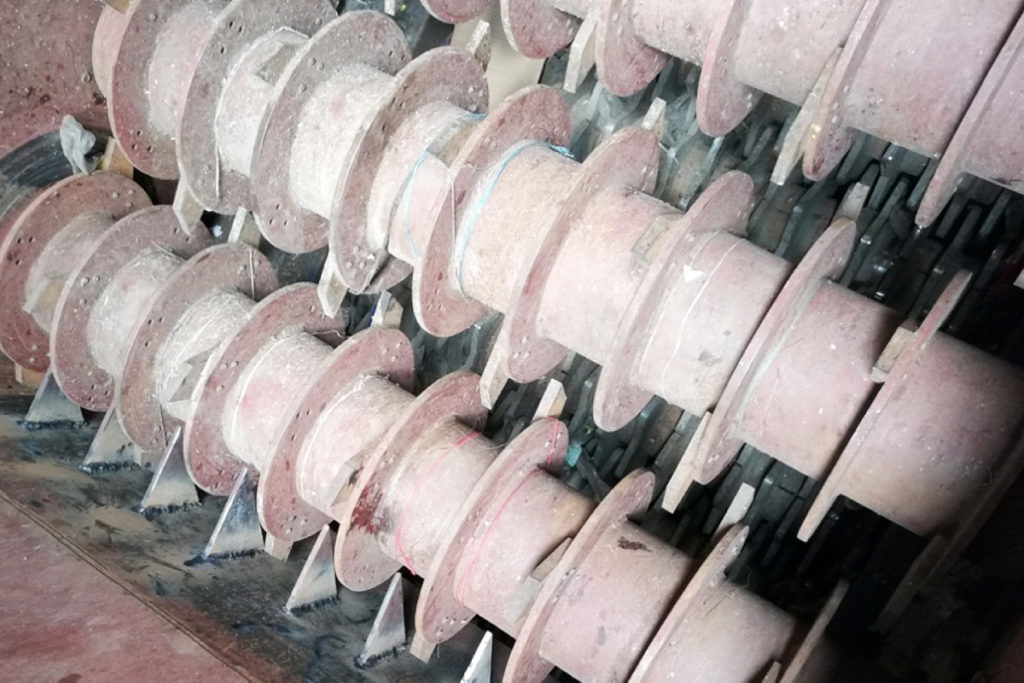
Our debaler machine is designed to effectively “bust” plastic bales of rigid plastics like HDPE and PET bottles apart so it can flow freely onto the conveyors and into our recycling machines.
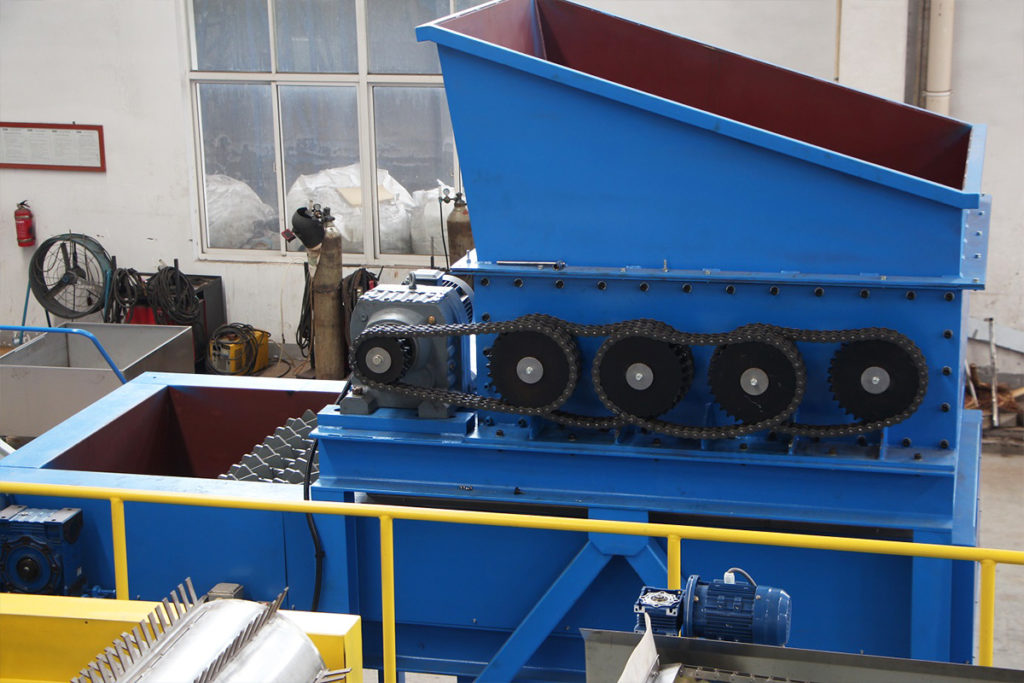
As seen in the video below, after the wires of the bales are cut, the plastic is still crushed together. Instead of manually pulling the plastics apart bit by bit, the debaler machine uses rotating hooks to grapple and loosen the compacted plastic so it can fall freely onto the conveyor below.
*Our debaler machines are not suitable for opening bales of plastic film as the loosened film will tangle and damage the machine. To break plastic film bales, we suggest using a single-shaft plastic shredder.
TECHNICAL SPECIFICATIONS
| Feeder Dimensions: | 1450mm x 1650mm |
| Main Motor Power: | 5.5 kw |
| Conveyor Motor Power | 7.5 kw |
*Larger, more powerful models available based on your request.
ADDITIONAL VIDEOS & IMAGES
INQUIRIES
To get the latest prices and lead times, send us a message using the form below.
Frequently Asked Questions
What does a horizontal debaler do?
As the first machine in a washing line, it breaks loosened bales of compacted rigid plastics, such as HDPE and PET bottles, into a free-flowing stream. After the bale wires are cut, rotating hooks grapple and loosen the crushed plastic so it falls freely onto the conveyor below, replacing slow manual bale opening.
What materials can it handle, and what should it not handle?
It is designed for rigid plastic bales: HDPE bottles, PET bottles, and similar compacted rigid plastics. It is not suitable for plastic film bales, because the loosened film tangles and damages the machine. For film bales, ASG recommends using a single-shaft plastic shredder instead.
How does the debaler improve plant operations?
If you are currently opening bales manually and placing plastic pieces onto the conveyor one by one, the debaler automates that step and makes the process far more efficient. Given the high cost of manual labor, it also lowers operating costs; large-volume recyclers can consider a vertical debaler for even more throughput.
What are the technical specifications?
The standard model has a 1450mm x 1650mm feeder, a 5.5 kW main motor, and a 7.5 kW conveyor motor. CE certification is available, and larger, more powerful models can be built on request. Share your bale sizes and target throughput with ASG to size the right machine.
Where does the debaler fit in a recycling line?
It sits at the very front of the line, ahead of the granulator and washing stages: bales are opened and loosened first, then the free-flowing plastic travels on conveyors into sorting, crushing, and washing. The machine connects directly to the line’s conveyor system.
What maintenance does the debaler require?
Regularly inspect the rotating hooks for wear or damage, check the drive motors and conveyor belt, and clear any wrapped wire or debris from the mechanism. Keep bale wire cutters in good condition and verify the feeder area stays clear. The robust design needs minimal upkeep beyond routine checks.