

In the plastic recycling industry, shredders play a pivotal role in processing waste materials. Among the most common options are single shaft and double shaft shredders, each with distinct advantages suited to different types of materials and operational requirements. This article compares the two types in detail — structure, working principle, performance, and applications — so you can choose the right shredder for your operation.
Structure and Working Principle
Single shaft shredder. A single shaft shredder uses one high-speed rotating main shaft fitted with multiple cutting blades. The blades shred material against a stationary counter knife, and output size is controlled by the blade-to-counter-knife gap plus the screen mesh beneath the rotor.
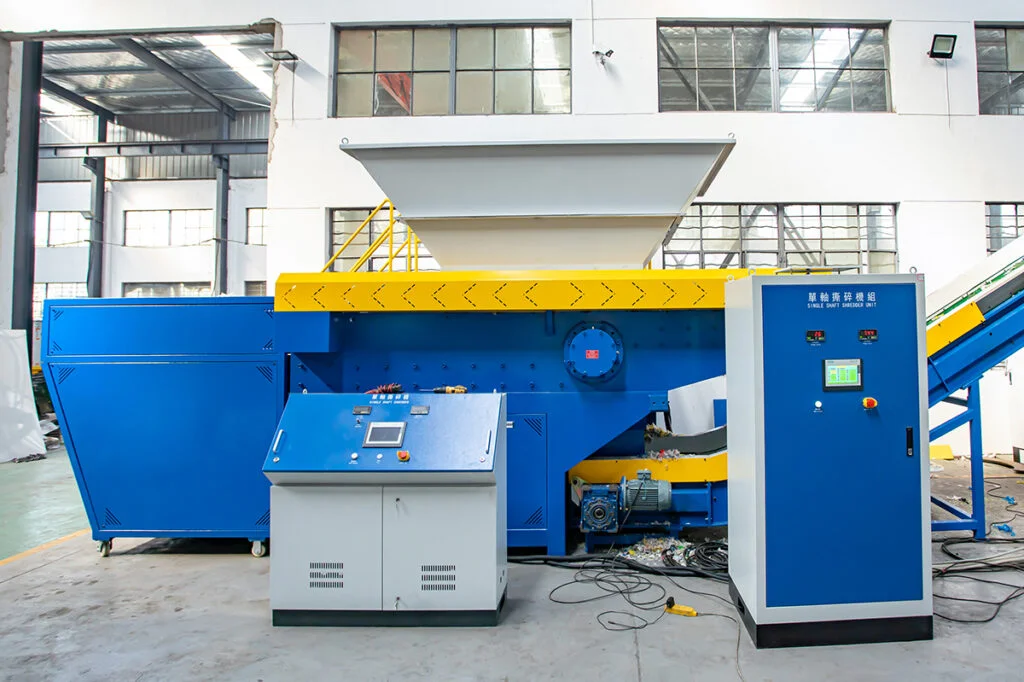
- Spiral-type rotating knife with saw-tooth fixed knife for efficient cutting.
- Movable hopper prevents material bridging and keeps feed flow steady.
- Coupling connection buffers mechanical force and extends gearbox life.
- Suits plastic film, fiber, purges, packed paper, wood, and general plastic waste.
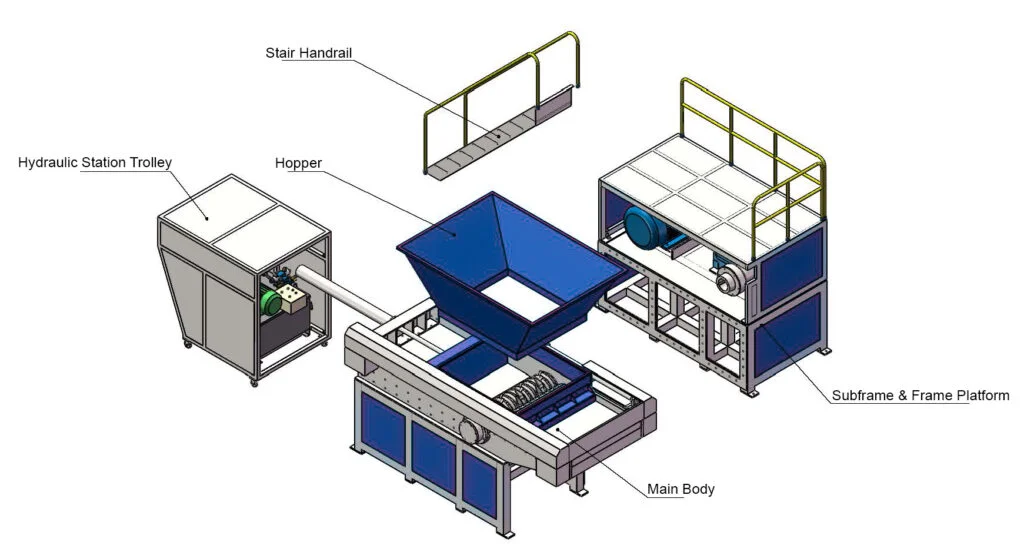
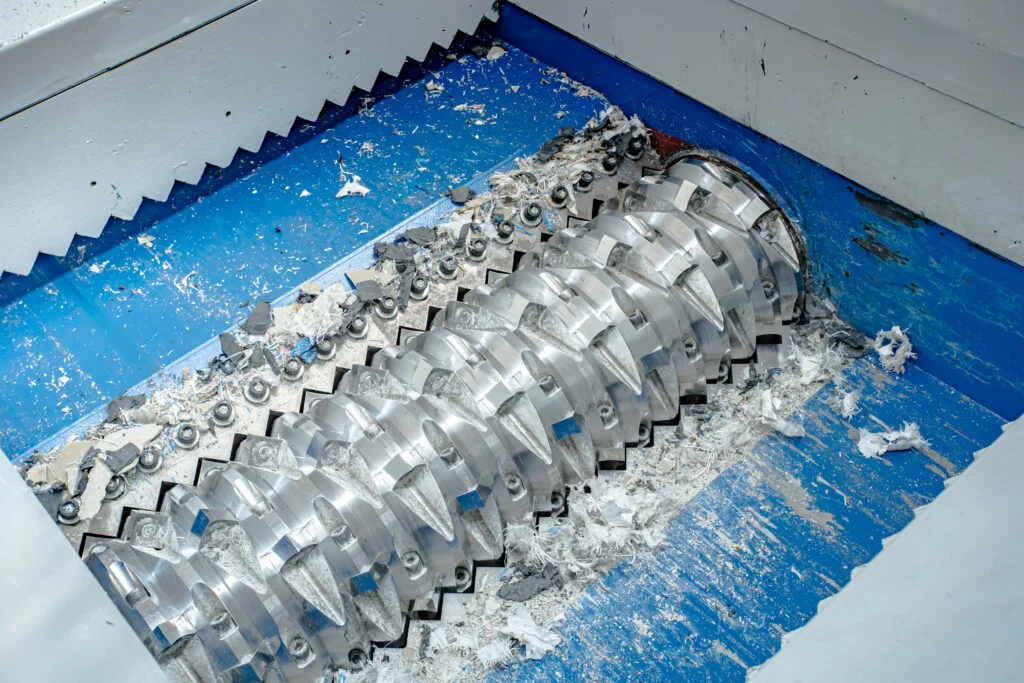
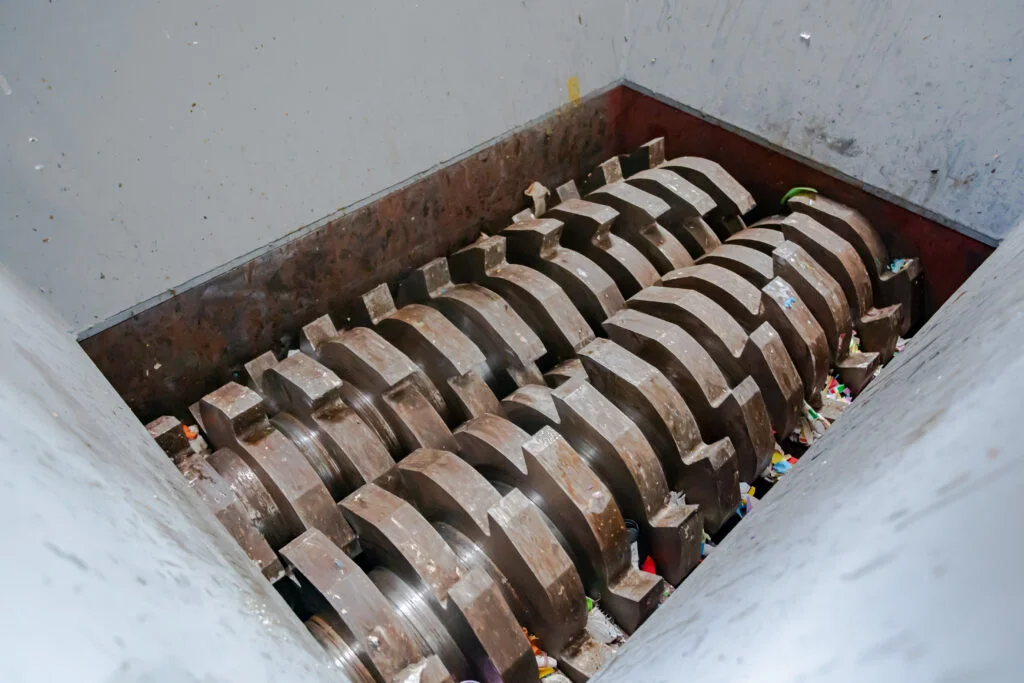
Double shaft shredder. Two counter-rotating shafts with interlocking blades grip and tear material through shear force and high torque — ideal for large, tough, and rigid materials. There is no screen mesh; shredded material discharges directly.
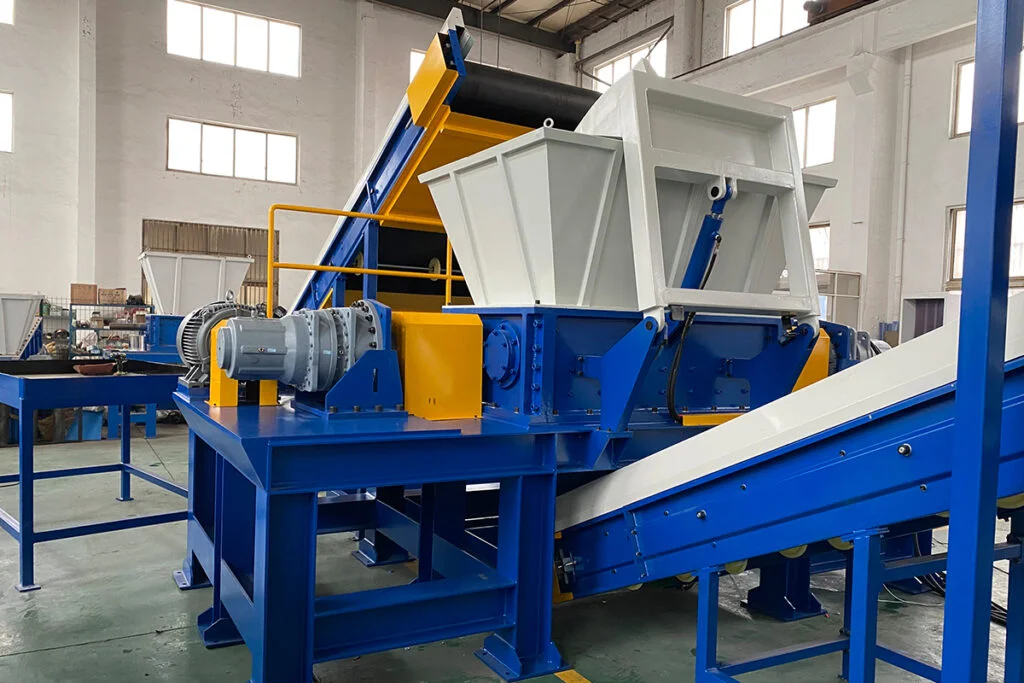
- Two interlocking shafts deliver a high-torque cutting motion.
- No screen mesh — direct discharge of shredded material.
- Built for industrial and bulky waste: plastic pipes, tires, drums, e-waste, and hard plastics.
- Handles mixed materials well — widely used in large-scale recycling.
Performance Comparison
| Feature | Single Shaft Shredder | Double Shaft Shredder |
| Shredding Capacity | Ideal for soft materials like films, bags, and bottles | Better for thick, tough materials like pipes, drums, and bulky waste |
| Output Size | Controlled, uniform size via screen mesh | Larger, less uniform output without screen |
| Processing Efficiency | High speed for lightweight materials | High torque for heavy, rigid materials |
| Energy Consumption | Lower energy consumption | Higher energy consumption |
| Maintenance Cost | Simpler structure, lower maintenance cost | More complex structure, higher maintenance cost |
The key trade-off: the single shaft gives you controlled particle size through its screen, which matters when the shredder feeds a washing line or granulator downstream. The double shaft gives you brute tearing power for materials a single shaft would stall on.
Shredder Main Shaft and Drive System
- Single shaft: Solid forged round shaft, heat treated for durability. Screw-locked blades keep axial force evenly distributed for stable long-term operation.
- Double shaft: Two high-strength steel shafts built for low-speed, high-torque operation, minimizing blade wear on rigid materials.
- Single shaft drive: Precision-engineered coupler with 12-pin torque transmission, extending gearbox life by buffering mechanical forces.
- Double shaft drive: Dual motor with planetary gear reducer for higher torque and reliable continuous operation.
Choosing the Right Shredder for Your Material
| Application | Single Shaft | Double Shaft |
| Plastic film & fibers | ✅ Yes | ❌ No |
| Soft plastics (PE, PP, PVC, PET) | ✅ Yes | ✅ Yes |
| Hard plastics (HDPE, PC, ABS) | ⚠️ Limited | ✅ Yes |
| Plastic pipes & drums | ✅ Yes | ✅ Yes |
| E-waste & electrical components | ⚠️ Limited | ✅ Yes |
| Tires & rubber waste | ❌ No | ✅ Yes |
| Wood & paper waste | ✅ Yes | ✅ Yes |
| General household waste | ⚠️ Limited | ✅ Yes |
| Bulky industrial waste | ❌ No | ✅ Yes |
| Silicone | ✅ Yes | ✅ Yes |
✅ Yes = highly recommended ⚠️ Limited = can process, but not optimal ❌ No = not suitable
Choose a single shaft shredder if you mainly process soft plastics, film, fiber, paper, and wood; you need fine, uniform output with controlled size (for example, feeding a film washing line); you want higher speed on lightweight materials; or you prefer lower maintenance cost and simpler operation.
Choose a double shaft shredder if you deal with large hard plastics, bulky waste, pipes, drums, or tires; you need high torque for industrial waste; you process mixed materials and want versatility; or you want longer blade life under heavy loads.
Operating and Maintenance Tips
- Feed steadily, not in surges. Both types last longer with consistent feeding. The movable hopper on the single shaft helps, but operator discipline matters more.
- Watch the screen on single shaft machines. A blinded or worn screen raises power draw and overheats material — inspect it on every blade check.
- Grease and gearbox oil on schedule. High-torque double shaft machines punish neglected drivetrains; follow the manual’s lubrication intervals.
- Keep tramp metal out. One steel part through the blades can cost more than a year of preventive maintenance. A metal detector upstream pays for itself.
ASG Plastic Shredders
ASG offers both single shaft and double shaft shredders for the recycling industry. Our single shaft shredder suits soft plastics, films, fiber, and small plastic objects with precise output-size control; our double shaft shredder is built for bulky waste and tougher materials with high torque and efficient shredding. If you’re unsure which fits your operation, our team can recommend a configuration for your material and capacity.
Project Cases
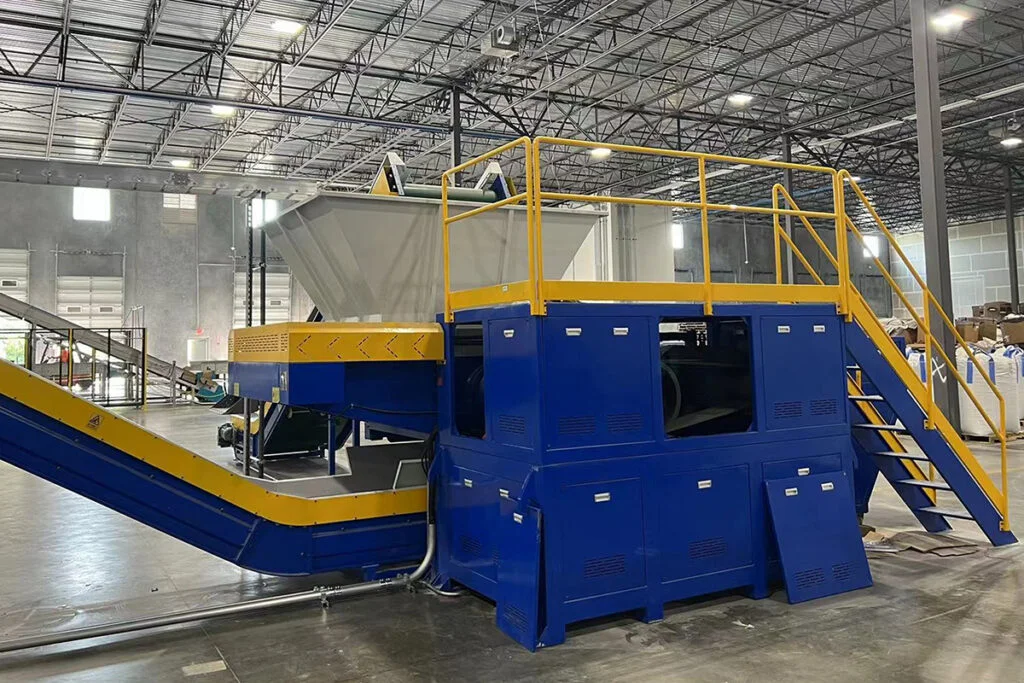
Single shaft plastic shredder processing PP/PE plastic films — watch the video demonstration.
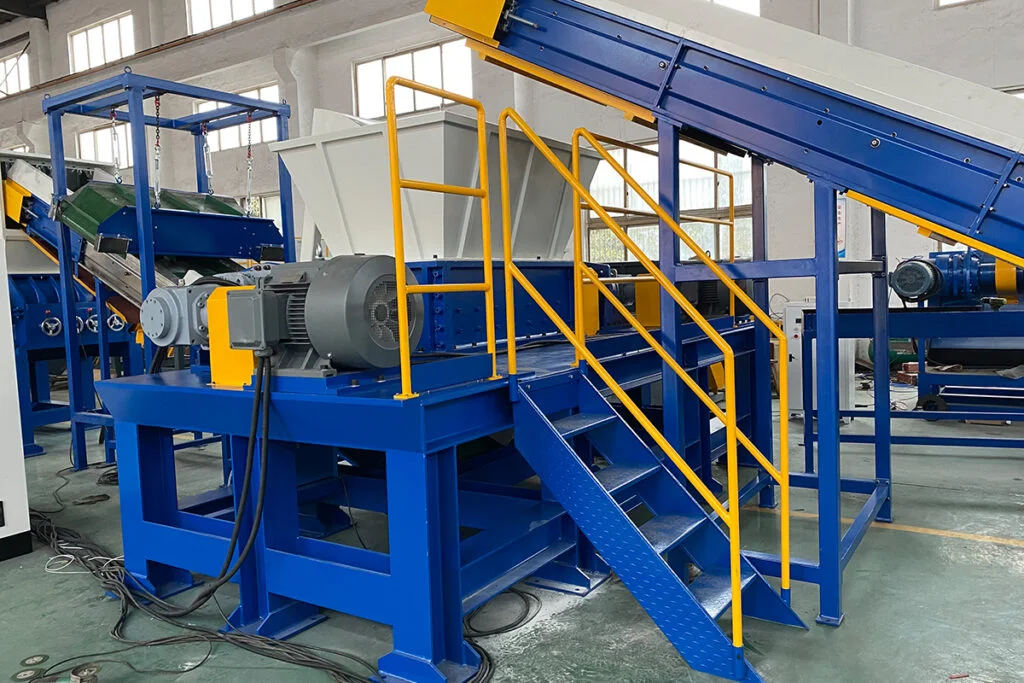
Double shaft shredder recycling children’s safety seats — watch the video demonstration.
Frequently Asked Questions
What is the main difference between single shaft and double shaft shredders?
A single shaft shredder cuts material between rotating blades and a fixed counter knife, with a screen controlling output size — best for films, fibers, and soft plastics. A double shaft shredder tears material between two counter-rotating shafts with high torque and no screen — best for bulky, rigid, and mixed waste.
Which shredder is better for plastic film?
Single shaft. Film needs the controlled cutting action and screen sizing of a single shaft machine; a double shaft’s tearing action wraps and tangles film instead of reducing it cleanly. Pair it with a film shredding and densifying line for a complete front end.
Can a single shaft shredder handle hard plastics like HDPE drums?
To a limited extent — thick-walled drums and pipes push a single shaft hard and wear blades fast. For regular drum, pipe, or bulky rigid waste, a double shaft shredder is the right tool. Many rigid plastic recycling lines use a double shaft shredder as the first size-reduction stage.
Which type has lower operating cost?
The single shaft: simpler structure, lower energy consumption, and cheaper blade maintenance. The double shaft costs more to run and maintain but handles materials the single shaft cannot — the comparison only makes sense for the same feedstock.
Does output size differ between the two?
Yes. The single shaft’s screen mesh gives controlled, uniform particle size, which matters when the shredder feeds washing or granulating downstream. The double shaft discharges directly with larger, less uniform pieces — fine for volume reduction, less ideal as a direct feed to a washer.
Can one shredder process both film and bulky waste?
Not well. Film wants high-speed cutting with a screen; bulky rigid waste wants low-speed, high-torque tearing. A machine compromised for both does neither job efficiently. Plants handling both streams normally run two machines.
How do I protect shredder blades from damage?
Keep tramp metal out with a metal detector upstream, feed at a steady rate, and inspect blade edges and (on single shaft machines) the screen on a fixed schedule. Dull blades raise power draw and produce more fines — the signal to rotate or replace them.
What capacity should I size for?
Size the shredder to your line’s bottleneck throughput plus margin — not to your peak bale deliveries. Tell your supplier the material mix, bulk density, and target kg/h, and size the drive so the machine runs at 70–80% load in normal operation rather than constantly at its limit.
How do I choose between the two for my plant?
List your materials by type and volume, note the hardest item you must process, and decide what feeds the shredder downstream. If the answer is film, fiber, or soft plastics with a washer or granulator next — single shaft. If it’s drums, pipes, tires, or mixed bulky waste — double shaft. Our team can confirm the choice from your material list via the form below.
INQUIRIES
Not sure which shredder fits your material? Send us your material list and target capacity using the form below: