

Description
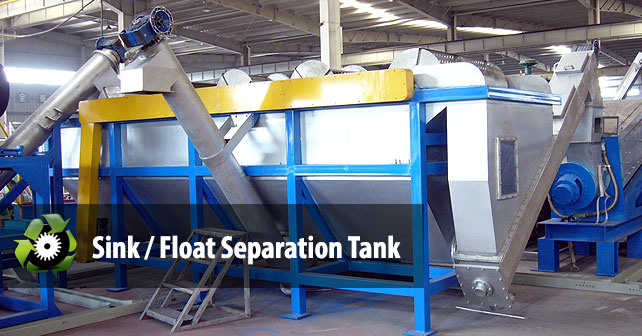
A sink / float separation tank separates materials that float from those that sink. In the case of PET recycling, as PET bottles are granulated whole, a large portion of contamination we need to remove are the plastic bottle caps, which are not made from PET plastic. Instead, they are made from either polypropylene (PP) or polyethylene (PE).
How It Works
 ASG’s sink float separation tank uses the density of water to accomplish separation. Water has the density of 1 g/cm3, any material that has a greater density will sink while material with lesser density will float. In the case of PET bottle recycling, when the stream of material enters the sink float separation tank filled with water, PET plastic will sink to the bottom while PP/PE bottle caps will float to the top.
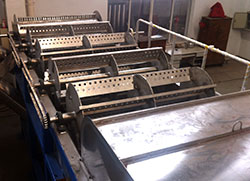
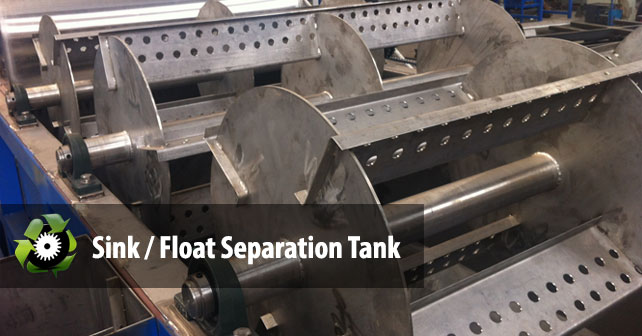
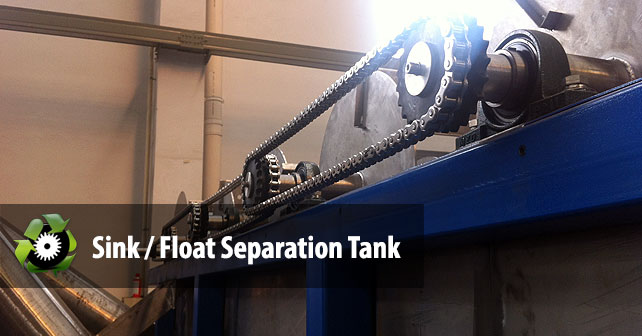
Specially designed rotating drums move the floating material (the contamination) forward into a storage silo for collection. Screw conveyors operate at the bottom of the separation tank collecting the PET flakes which moves forward onto the next piece of machinery.
Specifications
Ideally, we want the material to soak in the water for longer periods of time. This not only allows for more cleaning of the material, it will also ensure enough time is given all sinking PET flakes to move to the bottom of the tank. Hence, we offer a standard 4 meter separation tank with the option of extending it to 6 meters.
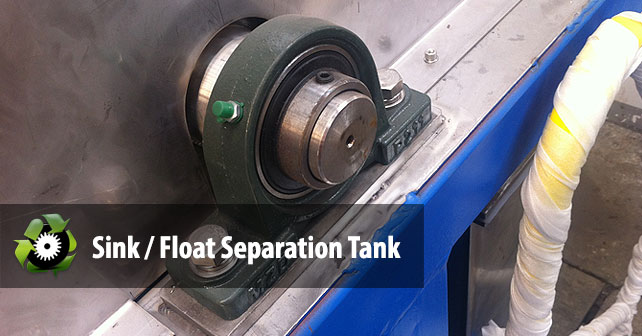
To ensure the durability of ASG’s water separation tank, the tank’s interior as well as the rotating drums on top are made with type 304 stainless steel that is strongly resistant to both oxidation (rust) and corrosion.
| Interior Width: | 1500mm – 2000mm |
| Total Length: | 4 – 6 meters |
| Interior Material: | Type 304 Stainless Steel |
| Exterior Frame: | Carbon Steel |
| Screw Conveyor Motors: | 5.5KW + 3.7KW |
| Rotating Drum Motors: | .37KW + 2.2KW |
Additional Images
Place An Order
The general lead time for all single-piece, standard equipment orders is 30 days. For custom orders or complete washing lines, the lead time is between 60 – 90 days. The actual lead time will depend heavily on the complexity of the project as well as the amount of machinery we have in queue at the time of your order.
Contact us to discuss pricing and ordering details. Here is a brief summary of our ordering procedures.
Frequently Asked Questions
How does sink-float separation work?
The tank uses the density of water (1 g/cm³) as the separation medium. When the shredded material stream enters the water-filled tank, denser PET plastic (about 1.38 g/cm³) sinks to the bottom while lighter PP/PE bottle caps (about 0.9 g/cm³) float to the top. Rotating drums move the floating contamination forward into a collection silo, while screw conveyors at the bottom collect the sinking PET flakes.
What materials can a sink-float tank separate?
In PET bottle recycling it separates PET flakes from PP/PE caps and labels. The same density principle applies to other plastic pairs with clearly different densities, but the tank is tuned for water as the medium, so materials must differ meaningfully from 1 g/cm³. Confirm your material pair with ASG before ordering.
What size tank do I need for my line?
ASG offers a standard 4-meter separation tank with an option to extend it to 6 meters, and interior widths of 1,500 to 2,000 mm. Longer tanks give the material more soak time, which improves cleaning and ensures all sinking flakes reach the bottom. Size the tank to your line’s throughput so it never becomes a bottleneck.
What are the power and construction specifications?
Screw conveyor motors total 5.5 kW plus 3.7 kW, and rotating drum motors total 0.37 kW plus 2.2 kW. The tank interior and rotating drums are type 304 stainless steel for resistance to rust and corrosion from wash water, while the exterior frame is carbon steel.
How does the tank integrate with a PET washing line?
The tank typically follows the granulator: shredded whole bottles enter the tank, caps and labels float off to a collection silo, and clean PET flakes discharge through the bottom screw conveyors toward the hot washer or friction washer. It connects with standard screw conveyors and operates on recirculated process water.
What maintenance does the tank require?
Inspect the rotating drums, bottom screws, and drive motors regularly, and check the stainless-steel surfaces for scale buildup from hard water. Clear settled sediment from the tank bottom and verify the floating-material discharge path stays unclogged. Standard single machines ship in about 30 days; custom or extended tanks take 60-90 days.