

Description
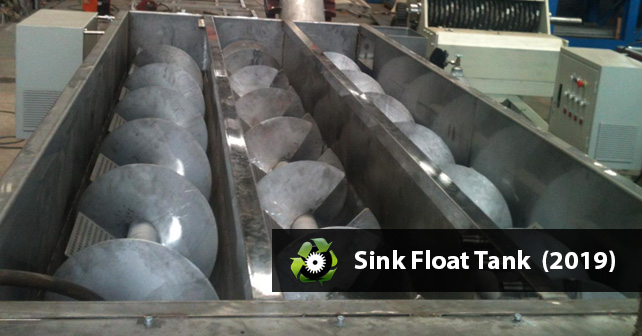
This tank is a special design, and one tank is equal to three normal floating tanks as the material is washed 3 times. Also, a screen is equipped under the three screws to filter small contaminations.
How It Works
A big motor drives three top screws, which push the material forward. It is suitable for the highly contaminated material as its washing time is longer. We can custom build the length and width as per your requirements.
Place An Order
The general lead time for all single-piece, standard equipment orders is 30 days. For custom orders or complete washing lines, the lead time is between 60 – 90 days. The actual lead time will depend heavily on the complexity of the project as well as the amount of machinery we have in queue at the time of your order.
Contact us to discuss pricing and ordering details. Here is a brief summary of our ordering procedures.
Frequently Asked Questions
What materials can a sink-float tank separate?
A sink-float tank separates plastics by density in water: materials denser than water, such as PET flakes (about 1.38 g/cm³), sink, while lighter materials such as PP/PE caps and labels (about 0.9 g/cm³) float and are skimmed off. It is commonly used in PET bottle recycling to remove caps and labels after granulation, and in film washing lines to separate heavier contaminants.
How does this tank differ from a standard sink-float tank?
This 2019 model combines three washing stages in a single tank body: three top screws push the material forward through three washing zones, effectively giving you three floating tanks in one footprint. A screen beneath the screws filters out small contaminations, and the extended residence time makes it suitable for highly contaminated feedstock.
What capacity can the sink-float tank handle?
Capacity depends on tank dimensions, screw speed, and the contamination level of your material. Because ASG can custom-build the length and width to your requirements, the tank can be sized to match your line throughput, typically from a few hundred kg/h up to several tons per hour. Share your target capacity when requesting a quotation.
What power and installation requirements does the tank have?
The tank is driven by a large motor powering the three top screws; exact motor sizing depends on the custom-built dimensions. Installation requires a level concrete pad, a water supply with recirculation, and drainage for the separation process. Stainless-steel contact parts are recommended where wash water is corrosive.
How does the sink-float tank integrate with a PET washing line?
The tank typically sits right after the granulator: shredded bottle flakes enter the tank, sink-float separation removes the floating PP/PE caps and labels, and the cleaned PET flakes discharge toward the hot washer or friction washer. It connects to standard screw conveyors and operates on recirculated process water.
What maintenance does a sink-float tank require?
Regularly inspect the three screws and the under-screw screen for wear and clogging, check the drive motor and bearings, and clear settled sediment from the tank bottom. Because the tank handles dirty wash water, periodic draining and rinsing prevent buildup. Replacement screens and wear parts are available from ASG.