

Product Description
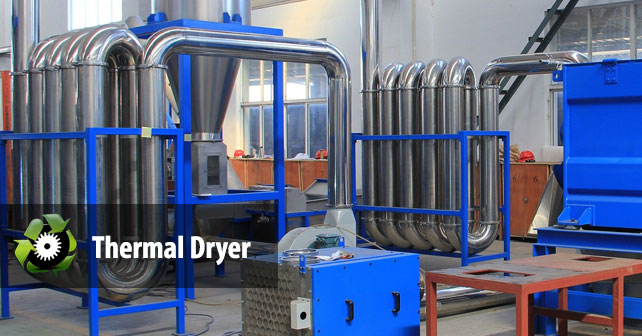
The final piece of drying machinery in our PE film washing line, the thermal drying system uses hot air to dehydrate moisture from the PP / PE film. This continuos drying system is strategically placed after the dewatering machine where moisture is initially reduced to approximately 20-30%. As moisture levels after dewatering is still too high for pelletizing, the thermal drying system is used to reduce moisture to below 3%.
 Our thermal drying system uses high heat to dry the PP / PE film, much like a hair dryer. After dewatering, the clean shreds of PE film are vacuumed out by a transport blower where it is mixed with hot air as it travels through a long set of stainless steel tubes. As the PP / PE film mixes and spins around within this lengthy transport tunnel, water is efficiently dehydrated. Ending with a cyclone separator where a stream of cool air is mixed in, the PP / PE film is cooled for storage. The cyclone separator is the last stand against any dust and fines within the material stream.
Depending on the capacity of the PP / PE film washing line, using one thermal dryer is sufficient. However, to ensure the lowest possible moisture levels, some PE film washing plants have requested the addition of one to two thermal dryers positioned in a row.
Specifications
| Model # | Blower Power | Heating Power | Pipe Diameter | Pipe Material |
| RSJ800 | 5.5 KW | 36 KW | ⌀159mm | Type 304 Stainless Steel |
Ordering
Our lead time for single pieces of equipment is 30 days from the signing of purchase contract. For custom orders such as complete washing lines, the lead time is between 60 – 90 days. Actual lead times will depend on the project’s complexity as well as our factory’s availability.
Contact us to discuss pricing and ordering details. Here is a brief summary of our ordering procedures.
Frequently Asked Questions
How does the thermal drying system work?
The system uses hot air to dehydrate moisture from PP and PE film, much like a hair dryer. After dewatering, the clean shreds of film are vacuumed by a transport blower and mixed with hot air while traveling through a long set of stainless steel tubes. A cyclone separator at the end cools the film and removes remaining dust and fines.
What moisture levels does it achieve?
It takes film from approximately 20-30% moisture after dewatering down to below 3%. Moisture levels after dewatering are still too high for pelletizing, so thermal drying is the final drying stage that brings the material down to a pelletizing-ready moisture level.
Where does it fit in the washing line?
It is the final piece of drying machinery in the PE film washing line, strategically placed after the dewatering machine. Depending on line capacity, one thermal dryer is usually sufficient, though some plants add one or two more in series to reach the lowest possible moisture levels.
What are the specifications?
Model RSJ800 has a 5.5 kW blower, 36 kW heating power, a 159mm pipe diameter, and type 304 stainless steel piping. The model and heating capacity can be matched to your film washing line capacity, so contact ASG to size the right unit for your project.
What are the lead times and ordering process?
Single pieces of equipment have a 30-day lead time from the signing of the purchase contract. Custom orders such as complete washing lines take between 60 and 90 days, depending on project complexity and factory availability. Contact us to discuss pricing and ordering details.
What maintenance does the thermal drying system require?
Regularly inspect the stainless steel transport tubes and the cyclone separator for wear and blockages, check the blower and heating elements, and verify the temperature controls. Keep the air intake filters clean and monitor dust collection at the cyclone to maintain drying efficiency and safety.