

Description
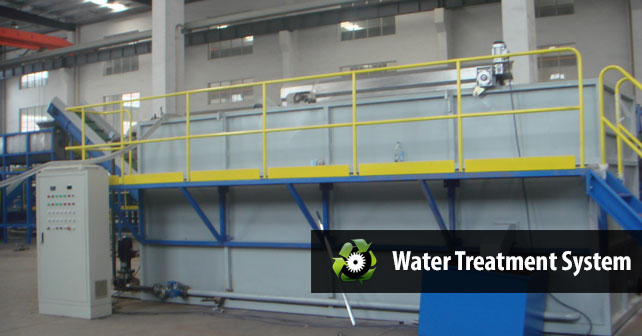
A water treatment is used to clean dirty water from a plastic washing line for reuse. ASG’s water treatment system can handle two washing lines at the same time.
How It Works
The first step is a primary filter with 60 mesh that can remove the large contaminations. Two air floating pumps are used to float contaminations to the top. Additionally, MPA and MPH are added into the water treatment to accumulate the contaminations.
The top accumulated contaminations are lifted by scrapers.
Models & Specifications
To ensure the durability of ASG’s water treatment system, the system is made from 304 stainless steel.
| Primary Filter: |
1) Main Motor Power: 4KW 2) Blower Power: 2.2KW 3) Screw Diameter: φ245mm 4) Screw Material: stainless steel 304 5) Screw Rotating Speed: 0~45rpm 6) Filtering Area: 2.5m2 7) Filtering Screen Size: 80mesh 8) Frame Material: A3 9) Water Tank Volume: 2m3 10) Water Tank Material: carbon steel 11) Water Pump Power: 2.2KWX2 |
| Intermediate Pump: |
1) Pump Power: 1.5KW X2 2) Flow Rate: 20 m3/h |
| Air Floatation Pond: |
1) Flotation Motor Power: 7.5KW 2) Flow Rate: 16 m3/h 3) Pressure: 0.4MPa 4) First Scrapper Power: 0.25KW 5) First Scrapper Speed: 1.6rpm 6) Second Scrapper Power: 0.37KW 7) Second Scrapper Speed: 2rpm |
| Clean Water Pond: | 1) Volume: 17 m3 |
| Clean Water Pump: |
1) Motor Power: 4KW 2) Flow rate: 20 m3/h |
| Air Floatation Pump: |
1) Motor Power: 1.1KW 2) Flow rate: 5 m3/h |
Place An Order
The general lead time for all single-piece, standard equipment orders is 30 days. For custom orders or complete washing lines, the lead time is between 60 – 90 days. The actual lead time will depend heavily on the complexity of the project as well as the amount of machinery we have in queue at the time of your order.
Contact us to discuss pricing and ordering details. Here is a brief summary of our ordering procedures.
Frequently Asked Questions
What does the water treatment system do in a plastic washing line?
It cleans dirty process water from the washing line so it can be reused in a closed loop. Water first passes through a 60-mesh primary filter that removes large contaminations, then air flotation pumps float finer particles to the surface where scrapers lift them off. Cleaned water collects in a 17 m³ clean water pond and is pumped back to the line.
Can one system serve multiple washing lines?
Yes. ASG’s water treatment system is designed to handle two washing lines at the same time, with intermediate pumps rated at 20 m³/h each and an air flotation pond processing 16 m³/h. This makes it a practical choice for plants running, for example, a PET bottle line and a film washing line side by side.
What chemicals are used in the treatment process?
The system doses MPA and MPH into the water to help fine contaminations accumulate into floatable flocs that the air flotation stage can lift. These are standard flocculants used in industrial water treatment, and the treated water is recirculated within the line rather than discharged. Confirm local discharge rules if you plan to release any water to drain.
What power and footprint does the system require?
Key drives include a 4 kW primary filter motor, a 2.2 kW blower, a 7.5 kW flotation motor, and several pumps from 1.1 to 4 kW. The main vessels are the primary filter with its 2 m³ water tank, the air flotation pond, and a 17 m³ clean water pond. Allow clear space around each vessel for inspection and maintenance access.
How does the water treatment system integrate with a PET washing line?
The treatment system connects to the line’s wastewater outlets, such as the pre-washer, washing tanks, and friction washer, and returns cleaned water to the same points. Wet sections are built from 304 stainless steel to resist corrosive wash water containing detergent. Plan your piping runs and pump heads carefully when laying out the plant.
What maintenance does the water treatment system need?
Clean the primary filter screens regularly, check scraper blades and flotation pump nozzles for clogging, and monitor chemical dosing levels. Drain and flush the ponds periodically to remove settled sludge. Because parts of the frame use carbon steel, inspect painted surfaces for corrosion in humid plant environments.