

Description
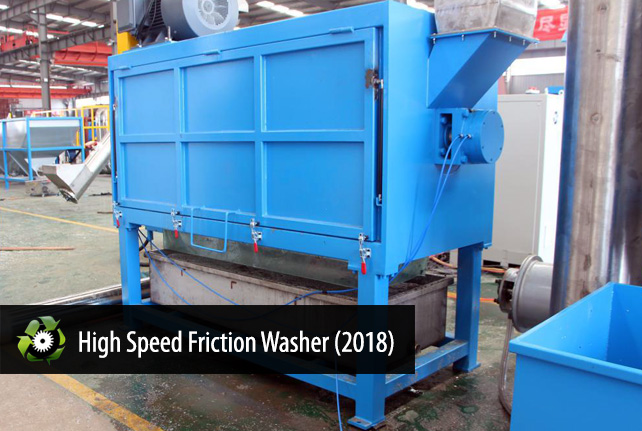
This is a brilliant cold-washing machine system for throughly cleaning PET flakes. The high speed friction washer is a highly efficient piece of machinery for cleaning plastic flakes via the use of friction. In the case of our standard PET bottle washing line, the friction washer used cold water to further scrub the dirt loose directly after the hot washing process — see our guide on proven PET flakes washing and drying methods for the full cleaning sequence.
How it works
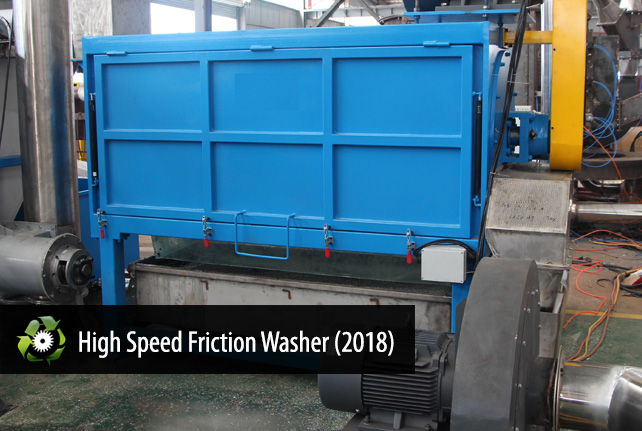
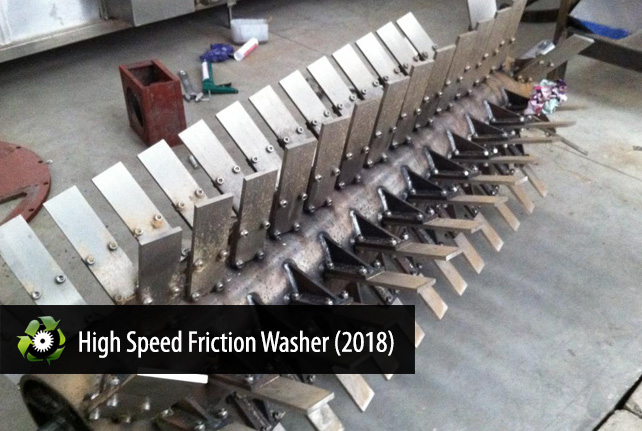
At the center of ASG’s high speed friction washer lies a long, fast-spinning shaft with many tilted panels / paddles mounted. Surrounding the rotating shaft is a mesh screen tunnel used for dewatering and filtrating small contaminants such as dirt. A large retangular case surrounds the entire apparatus where water jets and nozzles are aimed at the mesh screen. The entire machine is set at an incline, around 15 degrees, where the dirty plastic flakes are feed into a vertical feeder located on the lower end. The clean flakes exit through the higher end where they move onto the drying phase.
The rotating shaft within ASG’s friction washer spins at nearly 1,000 rotations per minute. As the Plastic flakes enter this machine, the material is mixed at high speeds within the washer where friction between each plastic flake helps scrub off dirt and debris. Water is continuously added via water jets that spray at the mesh screen preventing potential clogging that may occur.
Additional Images
Place an Order
The general lead time for all single-piece, standard equipment orders is 30 days. For custom orders or complete washing lines, the lead time is between 60 – 90 days. The actual lead time will depend heavily on the complexity of the project as well as the amount of machinery we have in queue at the time of your order.
Contact us to discuss pricing and ordering details. Here is a brief summary of our ordering procedures.
Frequently Asked Questions
What does the friction washer do in a PET washing line?
The friction washer performs cold-water washing of PET flakes after the hot washing stage. It uses friction between the plastic flakes themselves — along with tilted paddles on a fast-spinning shaft — to scrub dirt and debris loose. A mesh screen tunnel filters out small contaminants while water jets keep the screen clear, delivering cleaner flakes to the drying phase.
How does the high speed friction washer work?
At its center lies a long shaft spinning at nearly 1,000 RPM with many tilted paddles mounted. The whole machine sits at about a 15-degree incline: dirty flakes feed into a vertical feeder at the lower end, get mixed at high speed where flake-to-flake friction scrubs off dirt, and clean flakes exit through the higher end. Water is continuously added through jets aimed at the mesh screen to prevent clogging.
Which contaminants does the friction washer remove?
The machine targets dirt, loose debris, and small particulate contaminants that remain after hot washing. The mesh screen surrounding the rotor filters out fines as flakes pass through, while the continuous cold-water spray washes loosened soil away and helps dewater the flakes. It is especially effective on surface dirt and sand that hot washing alone may not fully release.
What utilities and installation space does it need?
The friction washer is a motor-driven machine that needs standard industrial power for its high-speed shaft, plus a clean water supply for the jets and nozzles and a drainage system for the dirty wash water. Allow floor space for the inclined unit, the lower-end feeder, and conveyor connections to the preceding hot washer and the following drying equipment. Confirm exact power figures with our team for your region.
What maintenance does the friction washer require?
Routine maintenance focuses on the wear components: inspect the paddles and tilted panels for wear, check the mesh screen for damage or clogging, and keep the water jets and nozzles clear so spray coverage stays even. Because the shaft runs at nearly 1,000 RPM, bearing condition should be checked periodically, and our guide on maintaining PET recycling machines covers the wider line upkeep.
Where does the friction washer fit in the washing line?
In ASG’s standard PET bottle washing line, the friction washer sits directly after the hot washing process and before the drying phase. Dirty flakes from hot washing are scrubbed cold, then discharge upward into dewatering and thermal drying. When sizing your line, match the washer’s throughput to the upstream hot washer and downstream dryer so the whole line runs balanced.