

In the competitive world of plastic recycling, effectively removing labels and contaminants from post-consumer films is critical to producing high-quality regrind and pellets. Labels — whether from supermarket cling film, handbags, or industrial packaging — pose significant challenges during washing. Standard washing equipment often falls short, leaving residual impurities that degrade material value and limit the applications the recycled pellets can serve.
ASG has engineered an advanced label separation system specifically for challenging materials like LLDPE wrapping films. This technology, also known as a paper-plastic separation system, ensures thorough cleaning, maximizes efficiency, and supports higher profitability for recyclers and international traders.
For recyclers selling into markets with strict recycled-content requirements, label contamination is often the single factor separating standard-grade from premium-grade pellets — and the price gap between those grades pays for the separation equipment many times over.
The Challenge of Label Contamination in Film Recycling
Labels, price tags, and adhesive residues are common on post-consumer plastic films. These contaminants reduce the quality of recycled material, leading to lower market prices and restricted end uses. Paper fibers are particularly troublesome: they break into tiny particles during washing, embed in the film, and show up as defects in the final pellets. Traditional washers alone rarely dislodge or separate these materials fully, which raises operating costs and wastes resources.
How ASG’s Label Separation System Works
ASG’s label removal system integrates into existing film washing lines and operates through a multi-stage process:
1. Pre-Treatment: Crushing and Soaking
The film is first crushed and soaked to loosen labels and adhesives. This pre-treatment prepares the material for efficient separation in the following stages and prevents large label pieces from blinding downstream equipment.
2. High-Friction Separation
The heart of the system is the paper-plastic separator: dual drums equipped with bidirectional conveyors. Each drum runs for a customizable duration — typically 3 to 5 minutes — depending on contamination level.
During operation, a high-speed rotor generates intense friction and mechanical action. Film is propelled upward along the rotor, thrown against the chamber walls, and subjected to continuous high-intensity kneading and impact. This vigorous action disintegrates labels into pulp while preserving the integrity of the plastic film.
3. Efficient Discharge and Collection
Once separated, the clean film is discharged via a hydraulic valve for further washing and processing, while the disintegrated pulp is channeled away for collection or disposal. The system achieves separation efficiency of up to 99%, drastically reducing impurity levels and raising final product quality.
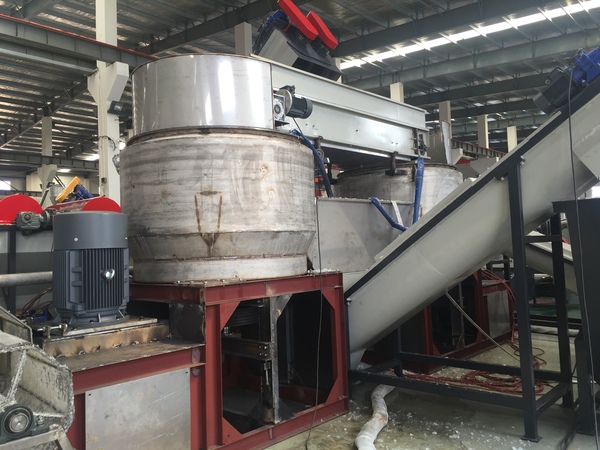
ASG’s high-efficiency label separation system in action.
Benefits of Advanced Label Removal Technology
- Higher quality output – Near-pure plastic film with minimal contamination, commanding better pellet prices.
- Increased operational efficiency – Less downtime and manual cleaning of downstream washers and screens.
- Cost savings – Optimized cycles use less water, chemistry, and energy per ton of clean film.
- Market advantage – Premium-grade pellets that meet stringent buyer specifications and open higher-value applications.
Where to Position the Separator in Your Line
Placement determines how much value the separator delivers. The recommended position is directly after the crusher and before the hot wash stage: crushed film enters the separator, loosened labels are pulped and removed, and the cleaned film then moves into hot washing where remaining adhesive traces dissolve. Installing it later — after hot washing — wastes the hot wash’s energy on material that a mechanical stage could have handled, and installing it before crushing leaves large label pieces intact that are harder to pulp.
For plants processing PP woven bags or running a film shredding and densifying line, the same logic applies: separate early, wash thoroughly after.
Applications Across Industries
This technology is particularly beneficial for:
- LLDPE stretch film recycling
- Agricultural film processing
- Consumer packaging and shopping bag recycling
- Industrial film reclamation
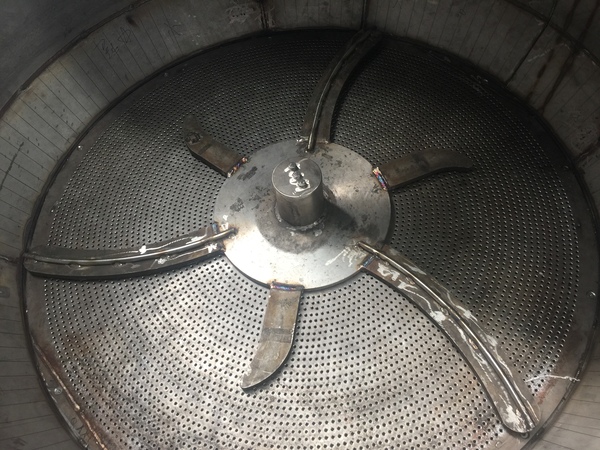
Close-up of the friction-based separation process.
Buyer’s Guide: Choosing the Right Equipment
When selecting a label removal system, consider:
- Throughput capacity – Match the machine’s processing ability to your volume requirements, with headroom for contamination spikes.
- Flexibility – Ensure compatibility with various film types and contamination levels, from lightly labeled post-industrial film to heavily contaminated post-consumer bales.
- Durability and maintenance – Robust construction, accessible service points, and wear parts that can be replaced without major disassembly.
- Integration – Verify the system fits your current layout without major modifications to conveyors or water circuits.
Budget for the separator as part of the washing line rather than as an add-on: plants that include it in the initial layout avoid the conveyor rework and downtime that retrofits require.
Industry Trends and Future Outlook
The global push toward circular economy models keeps raising the bar for recycled material purity. Brand owners specifying recycled content increasingly demand pellet quality that only dedicated contamination-removal stages can deliver. Extended producer responsibility (EPR) schemes and recycled-content mandates in North America and Europe are accelerating this shift: as more brand owners commit to specific recycled-content percentages, demand for high-purity film pellets keeps outpacing supply — rewarding recyclers who invested early in contamination removal. Innovations in label and fiber separation are setting new standards, and recyclers investing in them are better positioned to meet regulations, satisfy buyers, and capture premium pricing.
Frequently Asked Questions
What types of labels can this system remove?
The system effectively removes paper labels, price tags, adhesive residues, and similar contaminants from plastic films, pulping them for easy separation.
How does the separation process affect the plastic material?
The high-friction action targets the contaminants while preserving the film’s integrity — labels disintegrate into pulp, and the clean film continues to washing undamaged.
What is the typical efficiency of the label removal system?
ASG’s system achieves up to 99% separation efficiency, ensuring high-purity output from the separation stage.
Can the equipment be integrated into existing washing lines?
Yes. It is designed for seamless integration with most standard plastic washing and recycling lines, ideally placed after the crusher and before hot washing.
What maintenance does the machine require?
Routine maintenance covers inspection of rotors, sieve plates, and hydraulic components. ASG provides comprehensive support and service guidance for wear-part replacement intervals.
Is the system suitable for all film types?
It is highly effective for LLDPE, LDPE, and HDPE films. For specific materials or unusual contamination, consult ASG’s engineers for a tailored recommendation.
Where in the washing line should the label separator be installed?
Directly after the crusher and before the hot wash. This lets the separator remove the bulk of labels mechanically, so the hot wash works on adhesive traces rather than whole labels.
Does label removal work on woven bags as well?
Yes. The system handles PP woven bags effectively — an important capability since woven bags often carry printed inks and sewn-in labels that contaminate the regrind.
How does early label removal affect operating costs?
Removing labels mechanically before hot washing reduces chemical consumption, extends the service life of downstream screens and washers, and cuts the manual cleaning that contaminated lines otherwise require.
Conclusion
Effective label removal is essential for maximizing the value and usability of recycled plastic films. A dedicated separation stage placed early in the line takes the load off washers, chemistry, and manual labor — and the resulting purity is what unlocks premium pellet pricing. For more information on label removal technology, contact our team of experts or explore our complete film washing solutions.