

Rigid Plastic Recycling Line for HDPE, PP & PS: Clean Regrind, US-Ready
Turn dirty post-consumer rigid plastics — HDPE milk jugs and detergent bottles, PP crates and pails, HDPE drums, mixed MRF rigids — into clean, dry regrind that sells at a premium or feeds your extruder without screen-pack changes. Shredding, granulation, friction washing, sink-float separation, and drying, configured for North American plants: 480V 3-phase power, UL 508A panel option, US spare-parts support, and on-site commissioning.
A Rigid Line Configured for US Operating Reality
Buying recycling equipment from overseas raises the same five questions on every US project. We answer them in the proposal — not after the deposit.
480V 3-Phase Power
Motors, heaters, and controls specified for 480V/60Hz 3-phase — the US industrial standard — instead of a generic "customer voltage" footnote.
UL 508A Panel Option
Control panels available built to UL 508A industrial control panel standards for straightforward inspection and insurance sign-off.
US Spare-Parts Support
Wear-part kits (shredder blades, granulator knives, screens, seals) defined per line, with stateside stocking so a worn screen doesn't idle your plant for six weeks.
On-Site Commissioning
English-speaking engineers for installation supervision, commissioning, and operator training — plus remote diagnostics after handover.
Import & Duty Guidance
We walk through landed-cost planning with you — freight, Section 301 duty considerations, and documentation — before you commit.
Dual-Unit Documentation
Layouts, manuals, and spec sheets in kg/h and lbs/hr, metric and imperial dimensions — written for the crew that will actually run the line.
Designed Around Real Rigid-Plastic Contamination
Rigid streams look clean in a bale photo and arrive with everything mixed in. The line is configured for what actually shows up.
What Shows Up in the Bale
- HDPE bottles — milk jugs and detergent bottles with paper/plastic labels, caps, and residual product.
- PP crates & pails — bulky, stackable items that bridge in feeders; often carry sand and grit.
- HDPE drums & barrels — thick-wall parts needing serious size reduction; occasional chemical residue.
- Mixed MRF rigids — the #3–#7 bale: metals, film, wood, and fines mixed into everything.
How the Line Handles It
- Two-step size reduction (shredder + granulator) handles everything from thin-wall bottles to thick drums without choking.
- Friction washing + sink-float strips labels and glue while metals, stones, and heavy contamination drop out.
- Zig-zag classifier pulls labels and film out of the flake stream before drying.
- Centrifugal + thermal drying delivers low-moisture regrind that stores without clumping or odor.
Working Principle & Process Flow
Rigid plastics are reduced in size, washed and separated, then dried to produce a clean regrind for reuse in manufacturing.
-
Bale Breaking & Feeding
Opens incoming materials and stabilizes feed flow to downstream equipment.
-
Shredding + Granulation
Reduces rigid plastics into consistent flake size for efficient washing and separation.
-
Friction Washing
High-speed friction washers strip labels, glue, and surface contamination from the flakes.
-
Sink-Float Separation
Staged sink-float tanks separate clean polyolefin flakes from heavy contaminants — metals, stones, sand, PVC.
-
Centrifugal + Thermal Drying
Centrifugal dryers knock out bulk water; thermal drying finishes the regrind to low moisture for stable storage and extrusion.
-
Zig-Zag Classifier + Packing
Removes residual labels and film from the dry stream; clean regrind goes to silos or big-bag packing.

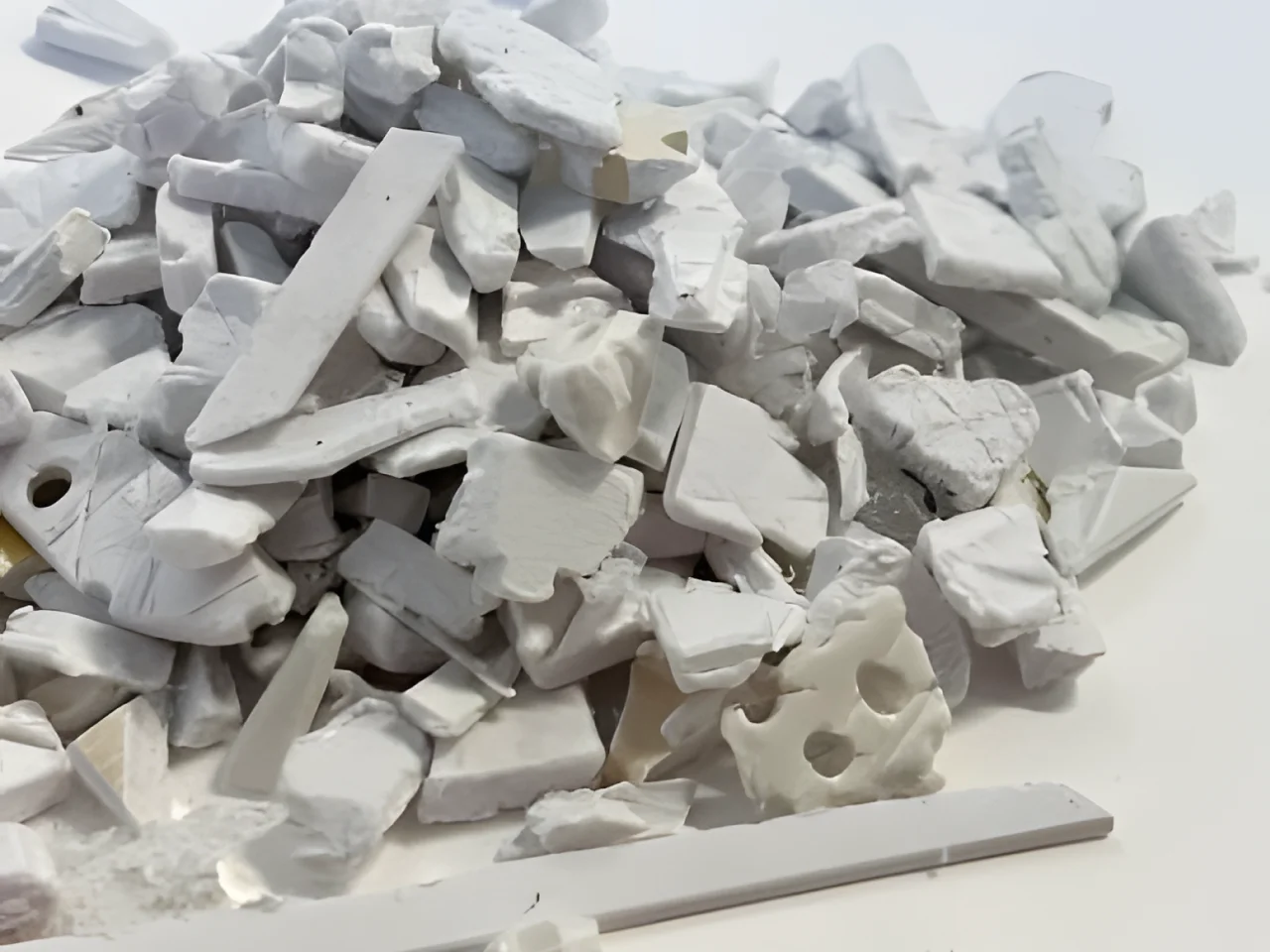
Clean Regrind Sells; Dirty Regrind Discounts
Buyers grade regrind on moisture, fines, metals, and residual labels. Every contamination point is a price deduction — or a rejected load. The line is configured so your regrind passes the checks buyers actually run.
Metals & Stones Out
Sink-float separation drops metals, stones, and sand before they reach the granulator knives — protecting blades and your extruder's screen pack.
Labels & Glue Stripped
Friction washers plus the zig-zag classifier handle paper and film labels that survive a single wash — the #1 reason loads get downgraded.
Consistent Flake Size
Granulation with screen control delivers uniform flakes that feed extruders steadily — no bridging, no surging.
Low Moisture, Stable Storage
Centrifugal plus thermal drying produces regrind that bags without clumping and stores without odor or biological activity.
Modular for Your Stream
Dirty MRF rigids get the full wash train; cleaner drum scrap gets a leaner configuration. Pay for what your feedstock actually needs.
Wear Parts That Last
Upstream contaminant removal reduces blade and screen wear; wear-part kits are defined per line and stocked stateside.
Plant Parameters (Reference)
Typical configuration data for rigid plastic recycling lines. Final specs depend on your feedstock and output requirement. Weights and dimensions available in metric and imperial in the proposal.
| Capacity | Install Power (kW) | Required Area (m²) | Staff | Steam (MPa) | Water (m³/h) |
|---|---|---|---|---|---|
| 500 kg/h (1,100 lbs/hr) | 162 | 500 | 4 | 0.6–0.8 | 3 |
| 1,000 kg/h (2,200 lbs/hr) | 250 | 800 | 4 | 0.6–0.8 | 4 |
| 2,000 kg/h (4,400 lbs/hr) | 368 | 1,000 | 4 | 0.6–0.8 | 5 |
What moves the price: number of wash stages, friction washer count, granulator configuration, drying level (centrifugal only vs. thermal), and automation (conveying, big-bag stations). Every proposal itemizes these so you can see exactly what you’re paying for — and what you can defer.
ASG vs. Conventional Rigid Lines
What we do differently, in practical terms — and where a conventional line is honestly enough.
| Item | Conventional Line | ASG Line |
|---|---|---|
| Label & glue removal | Single wash pass; labels survive on thick-wall parts | Friction washers + zig-zag classifier; configured to your label load |
| Heavy contaminant removal | One sink-float tank; metals still reach the granulator | Staged sink-float; magnets and metal detection upstream of knives |
| Moisture control | Centrifugal only; regrind stores damp | Centrifugal + thermal drying option for low-moisture, extruder-ready regrind |
| US plant readiness | "Customer voltage"; panels to local standard on request | 480V/60Hz 3-phase specified; UL 508A panel option; dual-unit docs |
| Commissioning | Remote guidance; local contractor installs | On-site supervision, commissioning, operator training, remote diagnostics |
| Honest fit | Running clean post-industrial scrap? A conventional line is enough — say so and we'll quote the leaner configuration. Dirty post-consumer streams are where the ASG wash train earns its price. | |
What It Costs to Run
Buyers who ignore operating cost buy twice. These are the line items to budget before you sign.
Power
500 kg/h lines install around 162 kW; 2,000 kg/h around 368 kW. Connected load varies with granulator count and drying level — we provide a load schedule in the proposal.
Water
3–5 m³/h makeup water depending on capacity, with recirculation and filtration. Dirty MRF streams need more filtration media; clean drum scrap needs less.
Wear Parts
Shredder blades, granulator knives, and screens are the recurring cost. Upstream metals removal extends their life; kits are priced per line and stocked in the US.
Labor
4 operators per shift at any of the three tiers. Presort labor depends on your bale quality — cleaner bales, fewer hands.
What We Need From You for a Real Number
A "price for the line" without your feedstock is a guess. Send these five things and the proposal comes back itemized.
-
Bale or material photos/video
The single biggest price driver. A 30-second phone video of your typical incoming material tells us more than a spec sheet.
-
Target capacity
kg/h or lbs/hr of regrind output — not input. We size the wash train to output.
-
End market
Selling regrind (which grade?) or feeding your own extruder? The cleanliness spec differs.
-
Site utilities
Available power (amps at 480V), water supply, and floor space with ceiling height.
-
Contamination you already know about
Metals, labels, film, wood, chemical residue — tell us and we engineer for it; don't and you'll pay for it later.
Frequently Asked Questions
Straight answers to the questions US buyers ask before requesting a proposal.
Can it handle mixed #3–#7 rigid bales from a MRF?
How clean is the regrind? Will it pass a buyer's lab check?
Can the line run on US 480V 3-phase power?
Are the control panels UL-listed?
What does installation and commissioning look like in the US?
Do you stock spare parts in the US?
How much water and power does it use?
Can it run post-industrial scrap, or only post-consumer?
How do you handle the import — freight, duties, paperwork?
What do you need from me for an accurate proposal?
Send Your Material Spec — Get an Itemized Line Proposal
Photos or video of your typical incoming material plus target capacity. We respond with a configuration and machine-by-machine pricing — not a lump sum.